We must create safer online spaces for women with disabilities

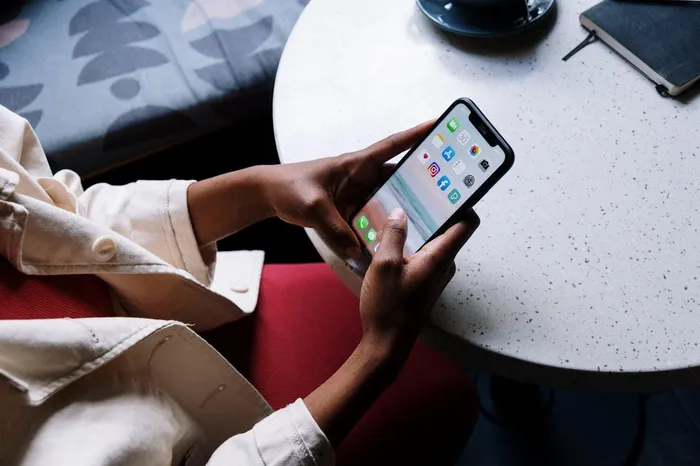
Digital platforms were once seen as gateways to empowerment but are increasingly becoming sites of harm. says the writers.
Image: Cottonbro Studio / Pexels
Reporting violence online is not accessible or inclusive for women with disabilities. Limited information and poor platform responses to violence make online spaces more dangerous for them. This is the harsh reality that we must also confront on the International Day of Persons with Disabilities today.
Our recent study on technology-facilitated violence against women with disabilities shows that many women with disabilities often receive demeaning and threatening messages. These messages are not uncommon. In fact, they reflect a disturbing reality for many women with disabilities navigating online spaces.
Digital platforms were once seen as gateways to empowerment but are increasingly becoming sites of harm. Technology-facilitated gender-based violence (TFGBV) is not just a virtual issue; it’s a deeply traumatic experience that mirrors and amplifies the misogyny and ableism of the offline world.
Technology-facilitated gender-based violence includes online harassment, doxxing, stalking, image-based abuse, and other forms of digital harm. For women with disabilities, the risks are compounded by several factors, including: a higher level of dependence on technology for work, communication and community, systemic and structural experiences of isolation and vulnerability, and overall inaccessible reporting and online safety systems within digital technologies. With all of these factors and intersecting vulnerabilities, women with disabilities are significantly disproportionately impacted by TFGBV, and yet their experiences are so frequently overlooked. As one participant in our study remarked: “I think I can speak on behalf of other women with disabilities that we have been really, really struggling on social media.”
Despite the growing prevalence of TFGBV, there is a critical lack of accessible, relevant information for disabled women and girls on this issue. Resources that address TFGBV from a gendered-disability-inclusive lens are scarce, and awareness campaigns rarely include disabled voices or experiences. We have learned that even when information does exist, it is often presented in formats that are not accessible for people with limited digital skills, and it also doesn’t consider the specific ways that violence is experienced by disabled women and girls.
And when further mental or emotional support is offered or available for TFGBV survivors, it rarely considers their unique experiences. In our research, many of the disabled women reported feeling lost and unsupported, unsure of where to turn when platforms and law enforcement dismiss their complaints or fail to take action. Another participant said,
“I feel very clueless and like… What do I do now? Because if I'm not feeling safe about this person being in my comment section, and TikTok says that they don't find any violation. It’s like, okay… I'm just blocking the person. And as far as the police are concerned… well, I don't believe it concerns them that much because it's a ‘social media thing’.”
Social media platforms have the potential to be inclusive and safe spaces, but they are consistently falling short. Algorithms often ignore or even exacerbate TFGBV, and reporting systems are frequently ineffective, inaccessible, or dismissive of disabled women and their experiences. While platforms claim to support “all women”, they routinely overlook the intersectional needs of disabled women.
This illusion of inclusion allows perpetrators to continue cycles of abuse with little to no consequence. Survivors are often forced to block abusers themselves, and platforms fail to recognise the severity of the harm. The lack of accountability emboldens perpetrators, who return under new screen names, perpetuating the trauma.
Many women we have spoken to have chosen to leave social media platforms altogether due to ongoing abuse by people online. In some cases, these women used social media as a platform for advocacy and to earn an income–but after feeling too unsafe online, they had to give it up.
Digital platforms must do more than just adapt existing tools; they must co-create solutions with disabled women. This means collaborating directly with disabled women, researchers, and activists to design safety tools and educational resources that are truly effective.
Empowering content needs to be co-designed and co-developed integrating easy to read language, captions, screen-reader compatibility, and other accessible formats that are responsive to all the needs of women and girls with disabilities.
Misogyny, ableism, and violence are taking over existing digital platforms more every day, and we need to stop it. So, what do we do now?
Moderators and developers of digital platforms must be trained on disability, intersectionality, trauma-informed care, and inclusive design. Reporting systems should be built to recognise and respond to TFGBV effectively, in order to avoid it being dismissed as a “social issue”.
So, the key question becomes: how do we actually ensure that women and girls with disabilities gain the opportunities and benefits of the digital world? We need to work together to fill this gap and promote safety for all. We are calling on software developers, researchers, activists, and organisations to prioritise inclusion in digital safety mechanisms and TFGBV reporting tools and education for women with disabilities.
We need to start by talking to women and girls with disabilities about their experiences of violence, and centering their voices. Together, we can:
- Raise awareness about online violence, and how women with disabilities might be more at risk.
- Push online platforms to improve accessibility and include safety policies and responses to violence
- Encourage and teach safe internet use in ways that protect and advocate for all people.
Let’s build inclusive digital spaces that are safe for all.
*Tungall and Soldatic are affiliated with the Canada Excellence Research Chair - Health Equity and Community Wellbeing at Toronto Metropolitan University. Ned heads the Division of Disability and Rehabilitation Studies at Stellenbosch University and Tyabashe-Phume lectures in the Department of Social Work at the University of Johannesburg.