Assessing the SANDF's redeployment: Is military force the answer to Cape Flats' crisis?

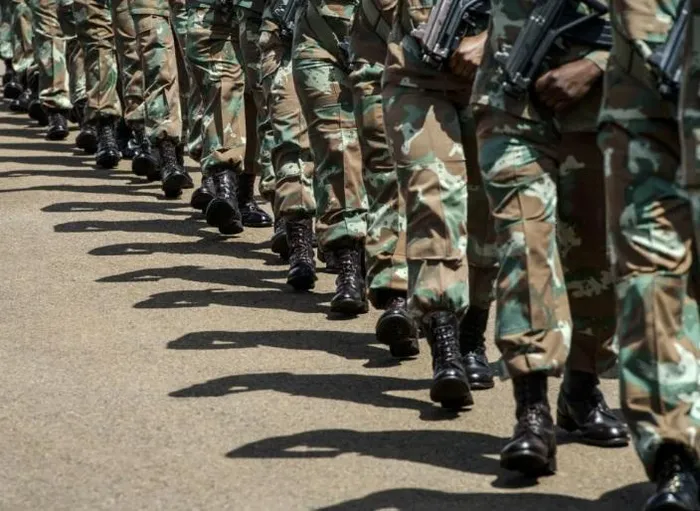
The call for internal sanctioned deployment stems from a heavily underfunded and understaffed police service who are currently spread very thin, says the writer.
Image: File
The South African National Defence Force (SANDF) have been called in once again to support the South African Police Service (SAPS) with armed peacekeeping in the Cape Flats. While this redeployment is not currently guaranteed, community and political leaders are divided on the long-term sustainability of this solution to the ongoing threat of gang and gun violence in South African civilian communities.
Philosophers of war are similarly divided on the safety of military deployment on noncombatants. Contemporary ethical debates on the justice of large-scale force remind us that these political decisions are multifaceted, require much consideration, and are potentially burdensome on civilians.
Recent repeated calls for the redeployment of the SANDF have been urged by the Cape Flats Safety Forum, despite the Western Cape Police Commissioner, Thembisile Patekile, refuting the need for redeployment to the area. The chair of this organization, Albie Isaacs, insists that military intervention is required to keep residents of the Cape Flats safe.
He emphasizes: “Again, this weekend, blood was spilling in and around the streets of the Cape Flats, people shooting openly in parking spaces, where our kids need to play. Again, we are saying that there is an urgent need for the South African Defence Force to be a force multiplier”
Contrarily, Premier Alan Winde, questions whether the South African military is sufficiently trained to take on the task of policing and patrolling in civilian areas beyond providing temporary assistance to the SAPS. While the Defence Act (2002) permits the temporary internal deployment of the military in times of crisis, the main role of the SANDF is interstate or external national security. So, while this may be a short-term solution, the continued enforcement of the SANDF in civilian areas is not sustainable.
The call for internal sanctioned deployment stems from a heavily underfunded and understaffed police service who are currently spread very thin. Winde notes the same of the SANDF: “I mean, the military system is totally underfunded and totally inefficient. And so, you're gonna add another inefficiency to another inefficiency.”
Given the potential risk to civilians, the role of the state in protecting its citizens, and the unlikely long-term success of military deployment to the Cape Flats area, is this purely political and operational approach a solid means to ensure safety for these communities in the future? Analytic philosophy on Just War provides us with a set of guidelines to measure the cost of peace against the necessity of justice in urgent cases of internally state-sanctioned military action on civilians or noncombatants.
Noncombatants in this context refer to the residents of the Cape Flats; civilians who have no political agenda and who have been perpetually affected by this crisis. These civilians or noncombatants have moral immunity according to most philosophers, which holds that they should be protected by the state.
Several Just War theorists have considered the ethics and justice of military deployment on noncombatants, but these discussions remain increasingly important given the reality of many South Africans and the current international political climate. These philosophical perspectives consider the ethics of military intervention from many angles.
Traditional Just War theorists, such as Michael Walzer, might ask a painstakingly relevant question: Does the potential (high) risk to civilians outweigh the need for military intervention on noncombatants? It seems community and political members alike are responding to this sort of question in different manners, some calling the possible deployment predictable or inevitable, while others are discouraged by previous attempts at ensuring peace.
The traditional view differs from revisionists, like Jeff McMahan, who might consult international law or consider additional risks by asking another vital question: Who bears the most moral responsibility for the current ongoing situation in the Cape Flats? A question that would be of great importance when finding and addressing root causes of violence for future prevention. Realists, such as Thomas Hobbes, would argue that state security is achieved through brute force and would urge the state of South Africa to act within its own national interest. While making the Cape Flats safer via military peacekeeping is well within the nation’s interests, the potential use of armed force in civilian communities carries grave risks for all parties involved. Therefore, realists would worry: What extent of brute force can be justified against civilians and in which context?
As we approach the end of 2025 with no significant progress on the condition of the Cape Flats, civilians are exhausted and want long-term change. Their safety is a national responsibility with no easy fix and while the redeployment of the military to the Cape Flats can potentially be a temporary fix, we have seen this fail as a long-term solution in the past. To address the core of this crisis, solutions must be considered from an ethical as well as socio-political perspective. Contemporary philosophical literature on war invites us to consider some of these perspectives. These ethical questions become more important now, when civilians feel unheard and communities are calling for safety.
* Linderoth is a Research Assistant in the Department of Philosophy at the University of the Western Cape, with a focus on political and ethical philosophy. This research was recently presented at a postgraduate conference for the Afterlife of Violence and Reparative Quest (AVReQ).