How outdated criminal justice systems fuel crime and the Cape Flats gang war

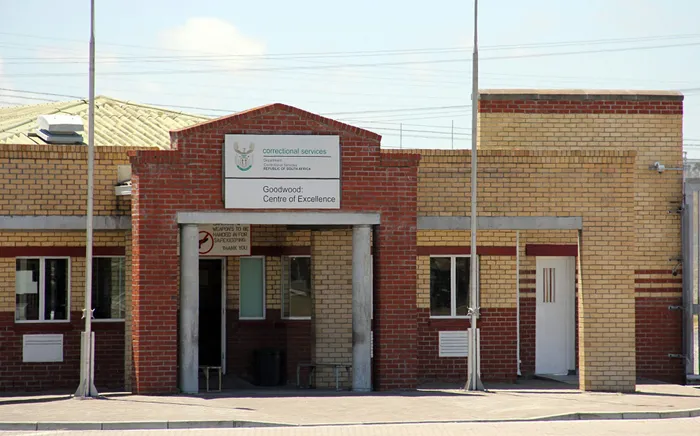
South Africans have a reason to worry as most contraband, being drugs and phones, enter facilities through remanded detainees, says the writer.
Image: supplied
The Western Cape Province is ravaged by escalating drug and gang war, worsened by severe failures by national government, especially within the South African Police Services (SAPS).
These wars are being fuelled from within our prison system – an institution meant to rehabilitate and reform. It is for this reason that I recently visited the Goodwood Correctional Centre to observe how remand detainees are processed upon arrival from court, specifically how contraband is detected and whether the system can reliably track who enters and exits.
The short answer is that it cannot. South Africans certainly have a reason to worry as most contraband, being drugs and phones, enter facilities through remanded detainees.
The SAPS and the Department of Correctional Services’ systems are antiquated and far from technological advancement. In fact, there is not a whiff of it.
At the core of it all lies a practice that defies reason: the fingerprints of each remand detainee who arrives at correctional facilities, taken earlier by the Police, are compared visually - by the naked eye - to those taken again, by Correctional Services officials upon arrival.
No digital scanner, biometric verification, or shared systems between SAPS, Justice, and Correctional Services. Just two wardens at a table, literally looking at fingerprint sheets, “confirming” that they match.
When detainees arrive from court, uncuffed, they are remanded to the centre under what is known as a J7 warrant of detention, waiting for their names to be called from the J7 list. This list is compiled at the court where they appeared, and apart from the fingerprint taken by the SAPS, the rollcall relies solely on the name and surname provided by the detained person.
Each person is then led to the “fingerprint table” where their identity is checked manually. This means that the entire confirmation of a detainee’s identity depends on eyesight and memory, not science or data.
The officials doing this work are not at fault; they are operating with what little they have. The system they work within, however, is indefensible.
Fingerprints are unique; no two people share the same pattern of ridges and loops. But it is this very uniqueness that makes verifying them accurately with the naked eye unreliable. Even the smallest misalignment, smudge, or partial print can lead to an error.
Expecting a human being to make this call without the aid of technology is like asking someone to match DNA strands by sight. Thus, the system’s reliance on “visual matching” doesn’t uphold the scientific reliability of fingerprints; in fact, it undermines it.
In a modern democracy with the capacity for digital integration, this practice should have been abandoned decades ago.
This is not an isolated failure. The SAPS, the Department of Justice, and the Department of Correctional Services all operate on separate, incompatible databases. Even within the various Correctional Services centres, there is not one single system; each centre operates on its own database.
Inmates are not identified by identity or passport number, but by whatever name they provide upon arrival from court. And the overall collapse of the broader criminal justice system is reflected in the absence of a single platform that is capable of verifying a detainee’s true identity, tracking their movement through the courts, and recording their custodial status.
The case of Xolani Du Preez, Mikyle Mentoor, and Me-Kayle Timmie, earlier this year, exposed how offenders can be “lost” between departments. These men, who were all convicted of serious violent crimes, were supposed to have been transferred from a youth care facility to Pollsmoor Prison, based on a court order. Instead, they slipped through administrative cracks, effectively vanishing between the databases of Justice and Correctional Services. This case exemplifies how a detainee misidentified by “eye” could be recorded under the wrong profile, released under the wrong name, or transferred to the wrong facility.
When they reappeared, it was not because of diligent tracking; in fact, neither of these departments knew they were erroneously released. They reappeared because one of them was caught reoffending – a predictable outcome of a criminal justice system in which each department works in isolation, relying on paper files and manual verification instead of interoperable data systems.
What might appear as administrative inefficiency is actually a gift to organised crime – and its origins lie in these centres dedicated to correction. Every cell phone that is slipped into a remand block, every gram of tik that bypasses inspection, and every identity mismatch creates opportunities for criminal networks to extend their influence inside and outside prison walls.
Prisons like Goodwood and Pollsmoor are not merely places of detention - they are hubs that fuel the gang and drug wars on the Cape Flats.
Fixing this problem requires more than new scanners or computers. It requires a unified criminal justice information system – built on the reliability of biometrics linked to all the available data of each person it engages. South Africa’s criminal justice system urgently requires a combined effort between the Departments of Justice, SAPS, and Correctional Services to create a single, integrated biometric and data platform that tracks every individual from arrest to trial, and from trial to incarceration. Every fingerprint taken at a police station should instantly link to court records, warrants, and correctional admission profiles. It should also be linked to the Department of Home Affairs.
The foundation for such reform already exists in DA-led departments, such as Home Affairs, and Communications and Digital Technologies. Minister Solly Malatsi’s recent demonstration of the MyMzansi app shows the potential of digital integration. Launched at the Global DPI Summit, the app is a one-stop, zero-rated platform for accessing government services. The Minister demonstrated a digital driver’s licence, fully linked to national databases including real-time updates on traffic fines. The successful pilot is fully functional and will be available next year.
Integrated biometrics will prevent wrongful releases, protect honest officials, and disrupt the criminal syndicates exploiting system failures fuelling the drug and gang wars on the Cape Flats.
Until these departments modernise and integrate their systems, South Africa will remain blind at the very point where it most needs to see.
* Gotsell is DA NCOP Member on Security & Justice