Cape social house ring-a-roses: Announcements on repeat, still no homes


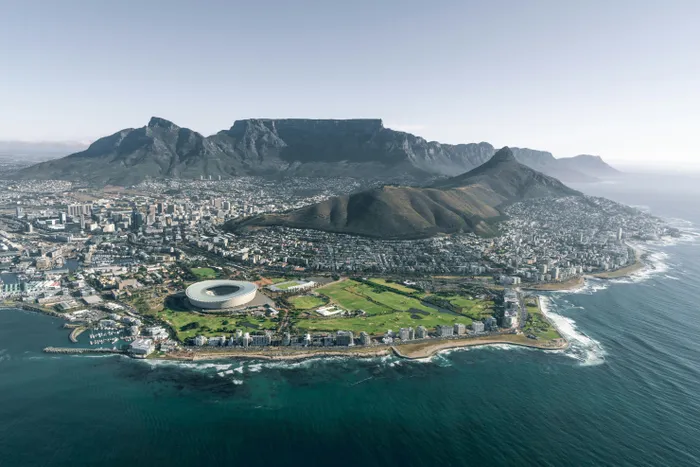
The Western Cape Premier re-announced the site next to the Artscape Theatre, first unveiled in 2010 as part of the Central City Regeneration Programme, says the writer.
Image: Unsplash
Over the past 15 years, at least 20 sites in the Cape Town inner city have been identified, proposed, planned, announced, postponed, cancelled and re-announced, and re-announced, again for affordable and social housing.
We’ve had a provincial Central City Regeneration Programme, and a municipal Inner City Affordable Housing project, both of which identified suitable sites. The number of homes actually built remains zero.
Last week, the Mayor of Cape Town was at it again, re-announcing the release of the “Fruit & Veg” site on Roeland Street for mixed-use development, including social housing. The “Fruit & Veg” site was first announced for release in the 2017 Inner City Affordable Housing Prospectus and released for bidding in September 2017. The project was cancelled in 2019. In February 2022, the City held a public ceremony, announcing it was releasing the site for social and affordable housing, and was “hitting the ground running”. Last week, Mayor Geordin Hill-Lewis announced it again.
Just weeks earlier, the Western Cape Premier re-announced the site next to the Artscape Theatre, first unveiled in 2010 as part of the Central City Regeneration Programme. In 2016, it was announced, again, and in 2019, the province announced that cabinet had resolved to release the land for social and affordable housing. In July 2025, it was re-announced with a name change: Founder’s Garden.
Another 2010 site, the Dorp Street Development, has been rebranded “Leeuloop” and trotted out once more.
In 2017, during Mayor Patricia de Lille’s tenure, the City made major changes to the City's spatial and housing planning. A new directorate was created to tackle apartheid spatial legacies and integrate public transport, spatial planning, and housing. I was appointed Mayoral Committee Member for Transport and Urban Development. That July, we announced a fundamental shift in our housing approach, followed by the release of five prime inner-city sites for mixed-income development in September. A competitive tender process closed in February 2018 with 13 bids across the sites. However, internal DA divisions and political interference meant the bids were never even opened. Both de Lille and I resigned. In 2019, the entire project was cancelled.
Since then, the DA-led City has re-announced the Fruit & Veg site, Pickwick Street (2023), and Newmarket Street (2024). All remain undeveloped - empty lots or parking spaces. The Salt River Market site, approved in 2019, took four years to transfer to a social housing company. It too remains untouched. The Pine Road sites, first announced 14 years ago, are still overgrown and fenced off.
In September 2024, the City told the National Council of Provinces that new social housing was planned for sites for Kromboom Road in Rondebosch East, Enslin in Ottery, and Eaon Way in Brackenfell. These sites were included in a 2018 presentation I did to the DA caucus on sites already allocated for Social Housing. Even projects outside the official programmes have stagnated.
Most egregious of all is the Tafelberg School site in Sea Point. After the school was closed in 2010, the Head of Department for Housing formally requested the transfer of the site to the Housing Department to develop a social housing project. An October 2011 report proposed that the site be used for mixed-use development, including housing. In 2015, the Province opted to sell it to the highest bidder. That decision is still under legal challenge, now before the Constitutional Court. Yet, in 2025, the Province announced a “new” planning exercise for the site - again rebranded “353-on-Main.”
According to the Western Cape Minister of Infrastructure, MEC Tertuis Simmers, there are presently 432,000 people looking for housing assistance in Cape Town, alone. (In 2017, the City’s policy unit estimated that 650,000 residents earning less than R13,000 per month would rely on government for some form of housing assistance between then and 2032).
While the City and Province have developed large-scale free housing projects (RDP then BNG) on the outskirts of the City, entrenching apartheid planning, it has ignored the needs of those who don’t qualify for free housing, and societal needs for integration. They have effectively blocked the aspirations of working-class people for entry into the middle-class and improved lives for their families.
Depending where you stand, public announcements and re-announcements by politicians either make for great PR ahead of next year’s local government election, or provide evidence of projects inexplicably and unacceptably delayed to the point where we can say they were deliberately withheld.
The DA has led Cape Town for nearly 20 years. It has a 100% record of not building a single social housing unit in the inner-city.
As Judge Dennis Davis might say: You be the judge.
*Brett Herron, GOOD Secretary-General & Member of the Western Cape Parliament
Get your news on the go, click here to join the Cape Argus News WhatsApp channel.
Cape Argus