Government undermining confidence in the police

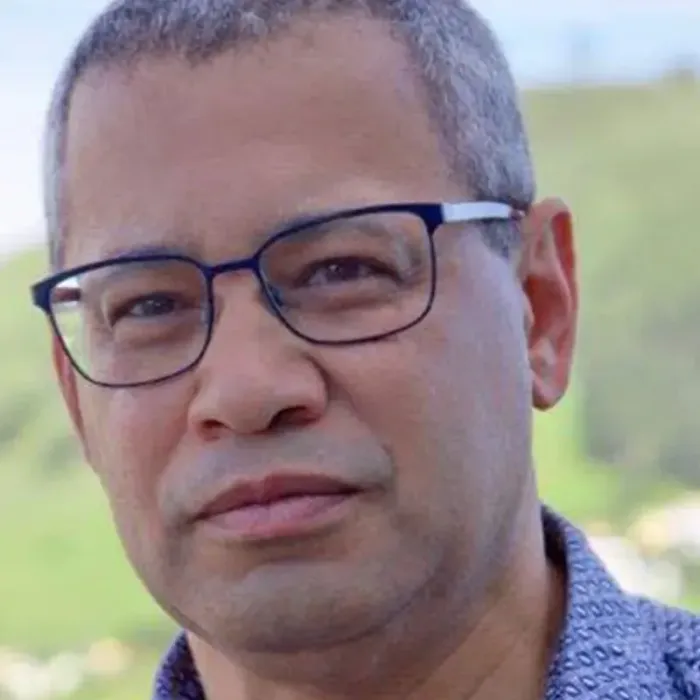
. Lorenzo Davids is the Executive Director of Urban Issues Consulting.
Image: Supplied
Thabo Mbeki dismissed Jacob Zuma in 2005 after Zuma's financial adviser, Schabir Shaik, was convicted of making corrupt payments to Zuma in connection with the Arms Deal. He later, in 2008, suspended Jackie Selebi as Police Commissioner on allegations of corruption. Tony Yengeni finally resigned from parliament after his fraud conviction in 2003.
The South African democracy is a prime target for the intersection of drugs, arms smuggling, political power and corrupt politicians, police officers, intelligence agents, and business. The money accessed by the mentioned actors in this nexus is greater than anything we can ever begin to understand. The Guptas are a Sunday school picnic in comparison.
These criminal syndicates are multi-country actors, managing trade routes, shipping industries, influencing elections, staging coups, owning politicians and bureaucrats, determining the price of certain goods and are more powerful and wealthier than most governments.
At the core of the criminal syndicates' power is a corrupt and enabling police force and intelligence industry. If we think that what we saw in Tony Yengeni, Jacob Zuma, and Jackie Selebi has all gone away, we are naïve. It is entrenched and is becoming more powerful than ever. What Lieutenant-General Mkhwanazi told the nation last Sunday is how large the belly of this beast has grown since 1994. We are being managed by criminal syndicates that have politicians, bureaucrats, businesspeople, police, and intelligence agents all on their payroll. A few weeks ago, I wrote in this column that the police, their oversight, and their intelligence counterparts all know where the drug houses and dealers in Cape Town and the rest of the country are. These houses have been operating for decades. They are raided and then reopened. Some relocate to the next street, to appear as if they have closed.
President Ramaphosa’s July 6 statement was most worrying. While confirming the rule of law and the matter being “of grave national concern,” he called on parties “to exercise discipline and restraint” and to “not trade allegations and counter allegations, as it undermines public confidence in the police.” Dear Mr President, we lost confidence in the police long before Apartheid ended. The TRC exposed its corruption. Eugene De Kock exposed its ugly underbelly for all to see. The ANC promised us a better police framework, calling it a ‘service’ and not a ‘force.’ Yet here we are. We have a police force, according to Lieutenant-General Mkhwanazi, that is thoroughly infiltrated by cartels and syndicates, directing critical decisions to influence politics and prosecutions. While his allegations are still to be tested, the daily lived experience of the people of South Africa is sufficient evidence of police corruption. Mr President, what has happened over the last thirty years is that the police services have shown us two things: they are still hellbent on being a ‘force’ and not a ‘service’ and that they are a front runner for being the most compromised government department in the country.
President Ramaphosa is not known for his decisive action. Especially when it comes to his own party’s people. But he will be closely watched by his GNU partners for how he treats the serious allegations against Police Minister Senzo Mchunu, compared to how he treated Deputy Minister Andrew Whitfield's misdemeanours recently. At a minimum, he needs to be decisive about suspensions for implicated parties while investigations are ongoing. The President has a duty to provide South Africa's people with a police service that can be trusted with the nation's safety from drugs, crime and extortion. His government should not undermine our confidence in the SAPS.
I have no idea what the President will say at 7pm on Sunday evening, as it's Sunday, 4am as I write this. But what I do predict is that it will be an invitation to South Africans to enjoy another nothing burger with him at the Sunday evening family dinner table. I pray to God I’m wrong.
Cape Argus