How Viktor Orban is using disinformation to influence Hungary's election


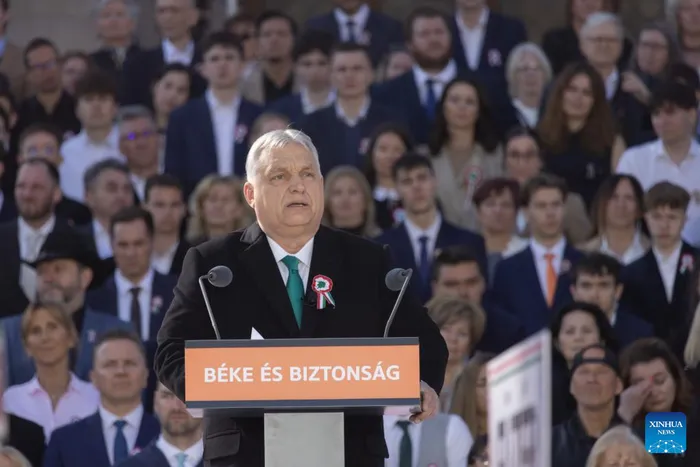
Hungarian Prime Minister Viktor Orban’s future is on the line as elections loom.
Image: Xinhua
Hungary’s Viktor Orban has used disinformation to make Ukraine the scapegoat of his election campaign, analysts said, with some suggesting he is receiving covert help from Russia against an unprecedented challenge to his 16-year rule.
The nationalist premier – Moscow’s closest ally in the EU – has used AI-generated images to help whip up sentiment against Kyiv, which is fighting off a Russian invasion.
Analysts argue Russia is aiding him in shifting the conversation away from the bread-and-butter issues that have propelled opposition leader Peter Magyar’s party to the top of the polls ahead of the April 12 vote.
“The campaign’s rhetoric is deliberately binary – peace versus war –portraying Ukraine as a risk and the incumbent Hungarian government as seeking stability and rationality,” Csilla Fedinec, a historian from ELTE University’s Centre for Social Sciences, said.
The two neighbours have been at loggerheads after Orban accused Ukraine of stalling the reopening of a pipeline carrying Russian oil to the landlocked EU state, with Kyiv saying the pipe was damaged by Russian airstrikes in January.
Hungary has also been holding up a e90-billion-euro (about R1.7 trillion) EU loan to the war-torn country and a new round of sanctions on Russia over the issue.
Earlier this month, Hungarian counter-terror forces temporarily detained Ukrainian bank employees, seizing valuables passing through the country.
Tabloids affiliated with Orban’s Fidesz party published AI-generated pictures exaggerating the amount of cash and gold involved.
Posts involving the images garnered unusually high engagement on Facebook, with many accounts having non-Hungarian names, lacking public information or profile photos – typical signs of fake profiles used in co-ordinated bot campaigns.
Weeks earlier, fake images began circulating online purportedly showing a Hungarian memorial in Transcarpathia – home to Ukraine’s ethnic Hungarian minority – defaced with anti-Hungarian and anti-Orban slogans, as well as Ukrainian nationalist symbols and a swastika.
While the monument has been vandalised several times in the past, the images were found to have been made by artificial intelligence.
Even so, their publication prompted some social media users to demand retaliation.
Experts argue that there is also evidence of ongoing Russian attempts to influence Hungarian voters in the run-up to the election, including through the use of deepfakes and disinformation couched as genuine news reports.
“There is constantly detectable disinformation campaign to influence the Hungarian election, much like it was during the Moldovan and Romanian elections,” Ferenc Fresz, the former head of Hungary’s Cyber Defence Service, said.
AFP