How rural voters in Hungary will shape Orban's political future


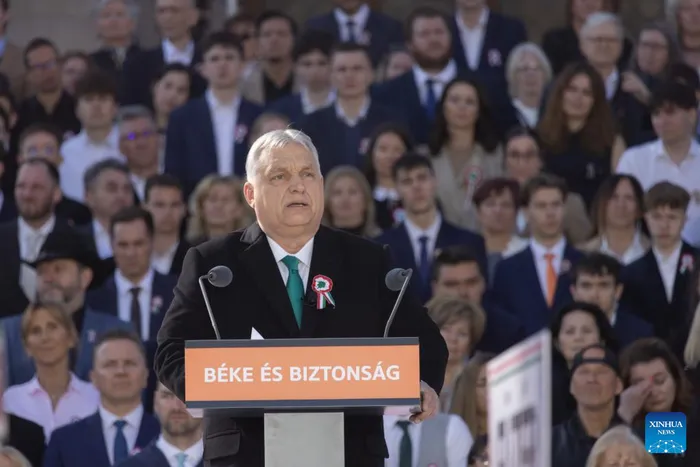
Hungarian Prime Minister Viktor Orban’s future is on the line as elections loom.
Image: Xinhua
In the village of Pusztavacs in central Hungary, election posters on electricity poles remind voters of a looming poll, where nationalist Prime Minister Viktor Orban’s future is on the line.
Small towns, villages and hamlets – home to around half of the central European nation’s 9.5 million people – have long been the bastion of the ruling Fidesz party. And analysts say the April 12 election will be decided in the countryside.
But the rise of charismatic challenger Peter Magyar – whose party is leading in opinion polls – has shaken Orban’s hold on the countryside in what has been dubbed a rural “political awakening” against a backdrop of economic stagnation and high-profile scandals.
“I’m really worried about which one would be better... I’ll keep racking my brain about it,” Eva Batta said near the grocery store at the edge of Pusztavacs.
The 71-year-old, who can no longer work to supplement her pension after surgery, said she feels the economy has worsened during Orban’s latest term.
She is also “afraid of (the) war” raging in neighbouring Ukraine since the Russian invasion in 2022.
Orban campaigned to galvanise such fears, flooding the media, which is largely controlled by his business allies, with claims that the EU and his rival want to drag Hungary into the conflict.
Both deny this.
Orban has repeatedly made overtures to rural communities, claiming that for his government “the village is not the past, but the future”.
Pusztavacs, which has 1 300 inhabitants, received state support to renovate its cemetery and church and got its first automatic cash machine last year as part of a government law to install machines in all villages.
Locals like Zsolt Szarnya are grateful to Orban. The 48-year-old firefighter, who is serving in the army, felt both the village and the whole country stagnated before the nationalist leader returned to power in 2010.
“Construction has been booming,” he said before withdrawing cash, crediting various family support programmes introduced for the upswing.
“Orban does not take away, but provides,” said 86-year-old Maria Balogh.
She was afraid that Magyar’s Tisza party would tax her pension, echoing a claim reported in pro-Fidesz media but ruled by courts to be groundless and defamatory.
The election will be “100%” decided in the countryside, according to Matyas Bodi, an analyst at the Electoral Geography website.
He compared Magyar’s stated goal of “system change” to a “Himalaya expedition”, where urban constituencies constitute just the “base camp” and rural constituencies are needed for victory.
Aware of this, Magyar has been highlighting the “conservative and nationalist elements” of his party’s values, attractive to rural voters, said sociologist Imre Kovach from the ELTE University’s Centre for Social Sciences, observing a “political awakening” on the countryside.
AFP