WATCH: Johnnie Walker booze worth R16k, Don Julio tequila worth R5k among liquor destroyed by CoCT


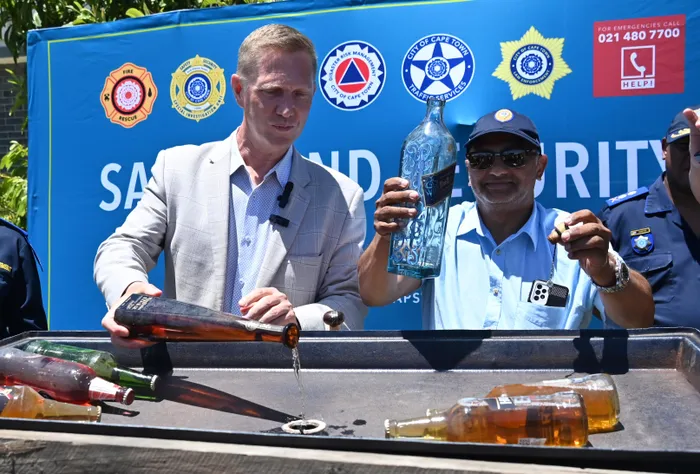
City of Cape Town's Mayco Member for Safety and Security, JP Smith, is seen emptying a bottle of Don Julio 1942. Beside him is the Executive Director for Safety and Security, Vincent Botto, holding an empty bottle of Johnnie Walker, roughly worth R16,000.
Image: Ayanda Ndamane/ Independent Media
Johnnie Walker Blue Label Xordinaire 1L, which can retail for between R9,900 and R16,400, and Don Julio Extra Anejo Tequila, retailing for R5,000, were among the pricey bottles of liquor destroyed by the City of Cape Town on Thursday.
Those two bottles contributed to the nearly 3,000 litres of alcohol which were destroyed at the City’s Ndabeni Pound on Thursday. Some of the other items included the ubiquitous bottles of Savanna, Castle, Black Label and SKYY Vodka, Jägermeister liqueur, Krone MCC, and Amarula liqueur.
The destruction of alcohol signifies the ongoing enforcement challenge of alcohol consumption in public spaces and its impact on public safety. The liquor that the City seized predominantly came from individuals, and the booze confiscated in terms of the Liquor Act goes to the provincial liquor pound.
The City said that in the first 11 days of December this year, the liquor pound received 1,814 units of confiscated alcohol, amounting to just under 740 litres.
They added that alcohol consumption in public spaces remains one of the biggest headaches for enforcement and emergency services, particularly over the festive season.
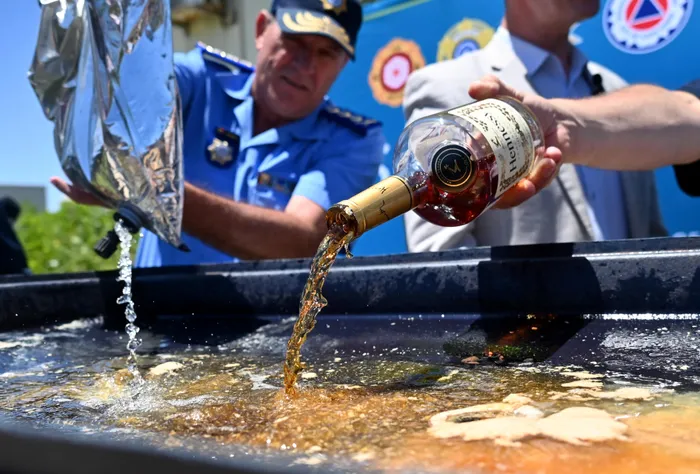
The City said that in the first 11 days of December this year, the liquor pound received 1,814 units of confiscated alcohol, amounting to just under 740 litres.
Image: Ayanda Ndamane/Independent Newspapers
Mayco Member for Safety and Security, JP Smith, said that the City’s Coastal by-law addresses the issue of alcohol on beaches, and signage is posted at all beaches and public amenities, outlining what visitors are able to do.
“It is a matter that has been communicated on extensively. On this matter, we can confidently say that public awareness has been extensively created. People know that they are not allowed to consume or bring alcohol onto our amenities, our beaches, and our swimming pools.
“This is again a necessity to communicate this issue at this time of year. We do at the start of the festive season, as over the next weeks, we will have a lot of people going to our beaches, and we want them to understand how they can help improve public safety.”
Smith said that they expect the total volume of alcohol confiscated to balloon over the coming weeks, and then in the new year, they will dispose of them all.
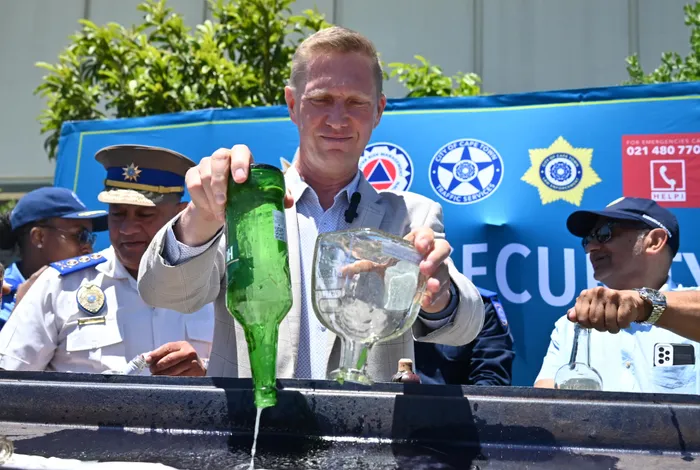
The City said that in the first 11 days of December this year, the liquor pound received 1,814 units of confiscated alcohol, amounting to just under 740 litres.
Image: Ayanda Ndamane/Independent Newspapers
Smith added that over the course of a year, the City destroys approximately 15,000 litres of confiscated alcohol.
“The City takes a lot of flak for the alcohol destruction, but the outrage around the destruction that irresponsible alcohol use causes is far more muted. We can significantly reduce incidents of interpersonal violence, drownings, road accidents and pressure on our trauma centres and enforcement services by making different choices, yet for many people this is simply too big an ask,” Smith said.
Anyone found in possession of alcohol or consuming alcohol will have their goods confiscated, in line with the City’s impoundment policy. They will also be fined R500.
The alcohol can be reclaimed, upon payment of the fine and the impoundment release fee, which is R835. The impoundment policy also guides the disposal of unclaimed alcohol.
“Disposal is the easiest option, as a legal opinion several years ago highlighted a number of complexities to the sale of impounded liquor.
“The City would need a liquor licence to dispose of the alcohol. We would need to apply for (a licence) and become a liquor seller ourselves, and it would immediately start creating he perception, and a plausible argument that we impound liquor for the purposes of selling it, and generating income from it, so unfortunately, this is the better way to do it,” Smith said.
He said that they could not tally the cumulative monetary value of the alcohol that is destroyed, as the range of items ranges from premium brands to cheap items, and all the items are in various stages of having been consumed.
Smith highlighted the deaths of a Cape Town cyclist, Idries Sheriff, and LEAP officer, Lyle Thomas, who died at the hands of drunk drivers in the last two weeks.
“These are not statistics, these are families who are shattered, and futures that are cut short, and their deaths remind us why responsible behaviour and firm enforcement in non-negotiable.
“In addition, our City also responded to 5188 requests related to people drinking in public spaces in the last six months. That is around 800 complaints a month of the public calling us to complain about people consuming liquor in a public space.
“As we head into the peak festive season, I appeal once more to the public to leave the alcohol at home and to keep our public spaces alcohol-free, for their own safety, but also that of others,” added Smith.