Everything you need to know about South Africa's new traffic law
Bribery and corruption


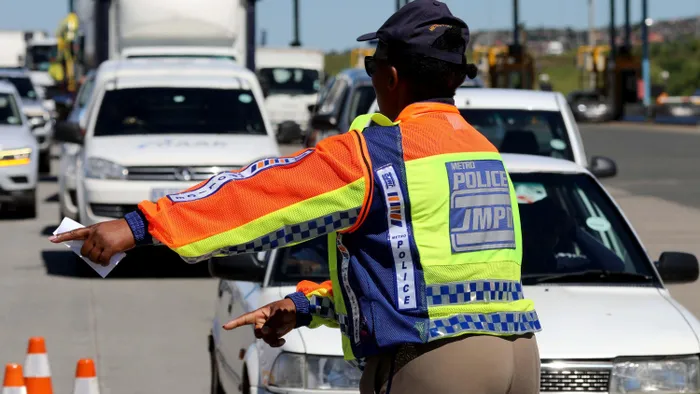
The AARTO system will decriminalise minor traffic infringements.
Image: Timothy Bernard / Independent Media
Reckless motorists may soon find themselves facing licence suspensions, compulsory rehabilitation programmes, or even permanent disqualification as sweeping traffic reforms take effect next year.
Traffic authorities say that under the new system, all traffic infringements will be recorded in a centralised online register, allowing both drivers and law enforcement officers to access up-to-date records during roadside stops.
Collen Msibi, spokesperson for the Department of Transport told the Independent on Saturday that the register is one of several initiatives designed to improve road safety across South Africa.
“It is essentially a system where you can view the history of your traffic offences. It doesn’t mean some people will be included and others won’t — everyone will appear on the system if they have committed a traffic infringement. Everything will be in one database,” he explained.
These changes fall under the Administrative Adjudication of Road Traffic Offences (AARTO) Act, which seeks to standardise how infringements are dealt with across the country. Already in operation in Tshwane and Johannesburg, AARTO is scheduled for full national implementation in July next year.
“AARTO means we are decriminalising the traffic offences system. You won’t be arrested, but you will be blocked from renewing your licence or vehicle disc,” Msibi said.
Under the revised system, motorists will receive a 50% discount on traffic fines if paid within 32 days. After this period, the full fine becomes payable.
A new tribunal will be introduced to resolve disputes, replacing the need to appear in court. “If you have a dispute, you’ll go to the tribunal rather than court,” Msibi noted.
The third phase of the process involves an “administrative mark” being placed against a motorist’s name, effectively blocking all licensing transactions until outstanding fines are paid.
The fourth phase is the demerit point system. “You start with 15 points. Once you’ve used all 15, you’ve exceeded your threshold and your licence will be suspended for three months,” Msibi explained.
If a driver’s licence is suspended three times, they will be declared a habitual offender. Their licence will be cancelled, and they will be required to reapply and undergo a rehabilitation programme.
“It’s an educational programme designed to reorientate motorists — counselling them on the behaviours that led to the infractions and helping them to prepare for retaking their licence,” said Msibi.
He also warned of the potential for bribery as stricter enforcement measures are rolled out.
“Once people realise that repeated offences could cost them their licences, some may be willing to ‘empty their bank accounts’ to avoid losing points or to influence traffic officers,” he cautioned.
The concern is not unfounded. “Last Easter and December, a significant number of people were arrested for attempting to bribe traffic officers. This marks a cultural shift in law enforcement. While we acknowledge that some ‘rotten potatoes’ exist, many officers are committed to their duties and will take action against bribery,” he said.
Originally introduced in 1998, AARTO aims to improve road safety, discourage traffic violations, and establish a uniform demerit-point system. Its nationwide implementation has faced several delays, largely due to concerns over municipal readiness. However, a recent government notice confirmed the system will come into effect on 1 July next year.
In the meantime, traffic enforcement has intensified as the December holiday season begins. Motorists with unpaid fines are being urged to settle them promptly, or risk serious consequences — including potential arrest if court warrants have been issued.
According to FINES SA, an organisation assisting motorists with fine payments, there are currently 32 million unpaid fines in South Africa, amounting to billions of rand. Co-founder Barry Berman said both national and municipal systems now flag outstanding fines during routine eNaTIS transactions and at roadblocks.
“In many cases, motorists only become aware of unpaid fines when stopped at roadblocks — risking licence suspensions, penalties, and disrupted travel plans,” he said. “Even ahead of the full AARTO rollout, real-time data integration means your driving record follows you wherever you go. That’s why we strongly advise drivers to check their records regularly and settle outstanding fines.”
The eThekwini Municipality confirmed that the non-payment of traffic fines significantly affects its revenue collection. However, an exact total remains elusive.
“Fines are issued daily, and many are still being processed. The figures fluctuate as new fines are added, others are paid, and some are contested,” said spokesperson Gugu Sisilana.
“Non-payment undermines road safety initiatives and negatively affects municipal revenue collection. We urge motorists to settle their fines promptly to avoid additional penalties and to contribute to safer, law-abiding road use,” she added.
IOL