Mixed views on City of Cape Town's MOA for 'community-led upgrade' of informal settlements


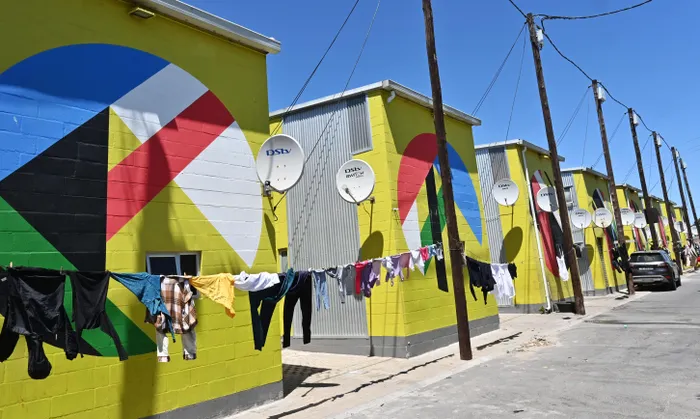
“BT Soweto Pilot Project” will encompass seventy-two row-house duplexes built, four commercial facilities, one Community Centre housing a crèche, football academy, tutoring facilities, urban farm and ancillary facilities, and also a playground and public open space.
Image: City of Cape Town/Supplied
While the City of Cape Town’s Memorandum of Agreement (MOA) with partner NGO Urban Think Tank Empowerment (UTTE) for a community-led upgrade of identified informal settlements across Cape Town has been welcomed, some still have their reservations.
Human Settlements Mayco Member, Carl Pophaim, said this MOA is one of the interventions that the City believes could change the face of informality in the identified informal settlement areas in the future.
“BT Soweto Pilot Project” will encompass seventy-two row-house duplexes built, four commercial facilities, one Community Centre housing a crèche, football academy, tutoring facilities, urban farm and ancillary facilities, and also a playground and public open space.
The City will assist with all civil infrastructure and service installation, reserve and manage the site for the work to be done, assist with subsidy administration and registration, fund and develop bulk infrastructure, and help with development management and planning processes.
UTTE will assist with trust building and a ‘bottom-up’ approach to create a site-specific solution, local construction labourers employed from the community, and a socio-spatial sense.
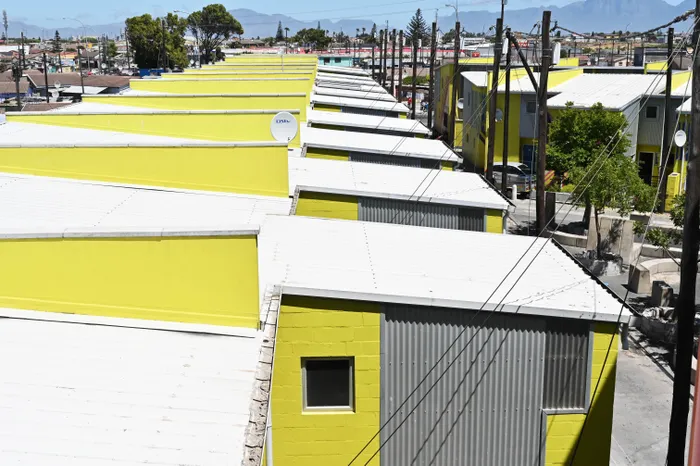
“BT Soweto Pilot Project” will encompass seventy-two row-house duplexes built, four commercial facilities, one Community Centre housing a crèche, football academy, tutoring facilities, urban farm and ancillary facilities, and also a playground and public open space.
Image: City of Cape Town/Supplied
Their spatial development model also replaces each single-storey structure with a similar or greater home area by building row-house typology duplex units, through which contextual risks– typically from township flooding and fire damage as well as socio-economic opportunistic crimes – can be reduced.
“What is happening here is really special, and the pilot project in BTT Section and Vukani informal settlements in Site C Khayelitsha is just the beginning, as we plan to tackle the upgrading of identified informal settlements in other metro areas at scale.
“Spread over three phases, this innovative community-led upgrade programme is foreseen to improve the lives of more than 5,000 households,” Pophaim said.
Pophaim said that the MOA with UTTE holds potential for similar partnership roll-outs with other organisations.
“The City’s Human Settlements Strategy is specifically founded on the principle of partnership across types of housing delivery – where the City plays an enabling role to unlock and drive housing delivery at scale. A local government on its own simply cannot solve the housing challenges. Teamwork is absolutely necessary, and a private-public partnership, community-led approach enhances the chances of success.”
He said they have been working with partners in areas as Khayelitsha and others for more than a decade to enable community-led upgrade projects, and that they continue to explore all avenues to find ways to provide hope and dignity through affordable housing of all types.
UTTE Managing Director, Delana Finlayson, said: “We’re super excited to sign this partnership with the City to significantly change housing conditions in informal settlements. We have a proven model that works, and we are ready to scale it up with our partner, the City.”

Informal Settlement Director, Lawrence Valeta, Human Settlements Mayoral Committee Member, Carl Pophaim, UTTE MD, Delana Finlayson, and Director at UTTE, Ben Kollenberg.
Image: City of Cape Town/Supplied
Housing lobby group Ndifuna Ukwazi's spokesperson, Yusrah Bardien, said while they commend the City and its partners, they must remain critical of “such announcements that celebrate progress, because simultaneously, they speak volumes about what is omitted”.
“What this statement omits are the decades of denial and delay of access to basic services, incessant tenure insecurity, the violent and sometimes illegal destruction of homes and the criminalisation of landless people. Upgrading settlements is urgent and long overdue, but it cannot and must not be the final goal,” Bardien said.
“When upgrades are located in remote areas, they simply reinforce the spatial apartheid of the past, locking people away from economic opportunities and perpetuating the struggle of being Black. Similarly, for people previously classified as Coloured.
“As Ndifuna Ukwazi, we urge the City to apply the same, if not greater, commitment to dismantling spatial apartheid. A humane standard of living requires more than upgrades; it demands integration. For equitable growth, people need access to economic opportunities, which can be achieved by realising affordable housing in well-located areas. Without this integration, we perpetuate the divisions of the past and deepen inequality,” Bardien said.
“To actively pursue a just city, the City must implement concrete policies for spatial integration with the necessary political will and urgency. A key intervention is an Inclusionary Housing Policy, mandating affordable units in private market-rate developments near economic hubs. Every intervention must be judged not only by its immediate relief, but by whether it dismantles division and builds an integrated society.”
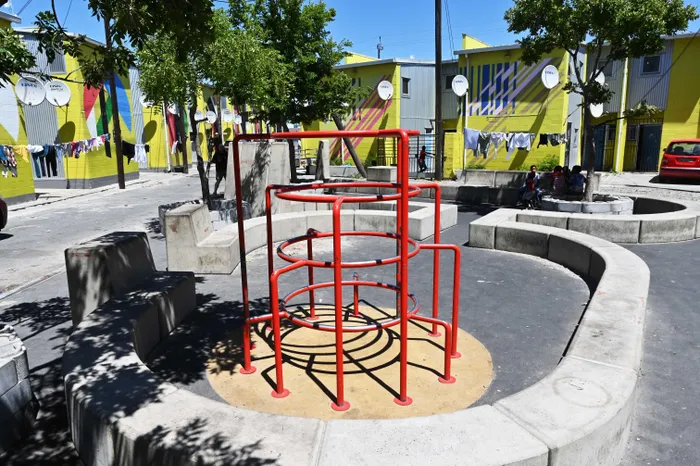
“BT Soweto Pilot Project” will encompass seventy-two row-house duplexes built, four commercial facilities, one Community Centre housing a crèche, football academy, tutoring facilities, urban farm and ancillary facilities, and also a playground and public open space.
Image: City of Cape Town/Supplied
GOOD Party City of Cape Town Councillor, Axolile Notywala, the MOA is a welcome intervention and long overdue, considering that 21% of Cape Town’s population lives in squalor in informal settlements.
“The scale is too big for normalcy, and we need creative solutions to address the many challenges faced by those living in informal settlements. However, such interventions need money, without which they will remain lip service and PR exercises in the context of urbanisation.
“The City’s past and current budgets do not prioritise people living in informal settlements, where less than 1% of the City’s total capital water and sanitation budget is spent on direct water and sanitation infrastructure in informal settlements.
“It is also important, in the context of spatial segregation in Cape Town, that the City and current administration does not perpetuate this by focusing on investing in housing infrastructure in areas that are already overcrowded… meaning we need to densify the CBD rather than densifying the already over-densified Cape Flats.”