Phala Phala ruling: A new dawn for judicial independence in South Africa


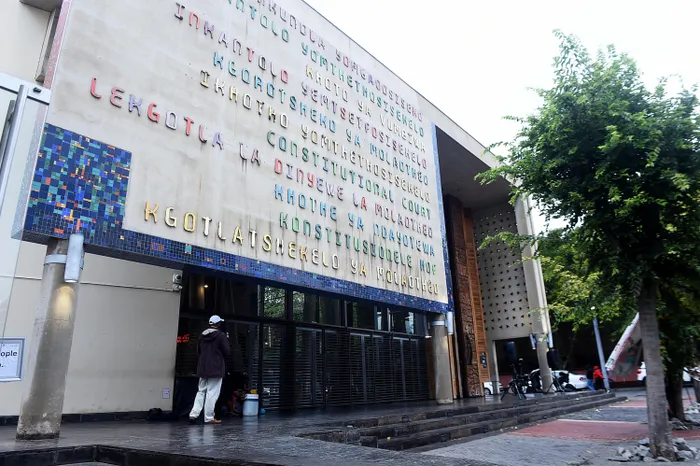
The Constitutional Court has reinforced judicial independence by compelling President Cyril Ramaphosa to face impeachment proceedings over the Phala Phala matter, signalling a crucial moment for democracy.
Image: Itumeleng English / Independent Newspapers
Friday's Constitutional Court (Concourt) ruling, which found that the National Assembly's vote against adopting the Section 89 panel report on the Phala Phala matter was inconsistent with the Constitution, has been interpreted by legal experts as a significant vote of confidence in the independence of the judiciary and the resilience of South Africa's constitutional democracy.
The majority judgment compels President Cyril Ramaphosa to face an Impeachment Committee regarding the alleged cover-up following the 2020 burglary at his farm. It emphasises the principle that no institution or individual is beyond the scrutiny of the law.
According to legal expert Mpumelelo Zikalala, the ruling sends an unambiguously positive signal regarding the democratic foundations of the nation.
“It shows that no one is above the law. Every action and every decision taken, even by Parliament and by the president, will be under scrutiny of our legal principles, and the court will decide upon it,” Zikalala stated.
He further emphasised the importance of the ruling in setting precedents for the future.
“We must also remember another thing that we are trying to do is fix what is required for future generations, so if a matter like this were ever to come, at least we will be able to handle it because we have done it thus far and we know exactly what needs to be done moving forward, especially when it comes to allegations against a president, allegations against anyone who is in Parliament,” he said.
Zikalala added that if current rules are inadequate, they must be developed to ensure the desired outcomes for future goals are met.
Constitutional law expert and former acting judge Professor Karthy Govender echoed this sentiment, highlighting the court's established track record.
“I think the South African judiciary has established its independence and added competence on many occasions. And to my mind, I think it is probably the best functioning institution of the state in our constitutional democracy, and this ruling is an indication of the court grappling with what, having read some summaries of the judgment, is quite a difficult issue,” Govender said.
Govender noted the complexity of the matter, pointing out that the court was sharply divided, with three judgments handed down, and four justices effectively dissenting. The majority found that the vote, which terminated the impeachment process before it could begin, was unconstitutional, setting it aside and directing that the matter go back to Parliament.
These divisions and technicalities were the cause of the matter being prolonged, he argued.
He also used the opportunity to address the inconsistent responses of some politicians to judicial outcomes.
“I think the lesson we should as a society learn is that when the judiciary has spoken, it's binding and we accept it. I think it's a dangerous tendency for populist politicians, when judgments go against them, to try and undermine the independence and effectiveness of our judiciary and only celebrate when judgments that are in favour of their political inclinations go in their favour,” Govender cautioned.
Emphasising the fundamental role of the courts, Govender stressed that the judiciary is merely performing its constitutional duties by determining cases brought before it. He highlighted the importance of transparency in the legal process.
“The reasons that are provided really support the conclusions that have been reached. And so I think that it's important to emphasise that, because I think our constitutional democracy is dependent on respect for the judiciary, and too often, I find politicians, when it's convenient, undermining the integrity of the judiciary is not a benefit to anyone,” he concluded.
The ruling, which stemmed from a case brought by the EFF and the African Transformation Movement (ATM), found the National Assembly's December 2022 vote, and the Rule 129(i) that facilitated it, invalid.
Chief Justice Mandisa Maya confirmed the majority found the vote was influenced by a “material error of the law” and must therefore be set aside. The panel report, which had found prima facie evidence of potential constitutional violations, must now be referred to an Impeachment Committee.