Gaza Democratic Front emerges as a new political voice for voiceless


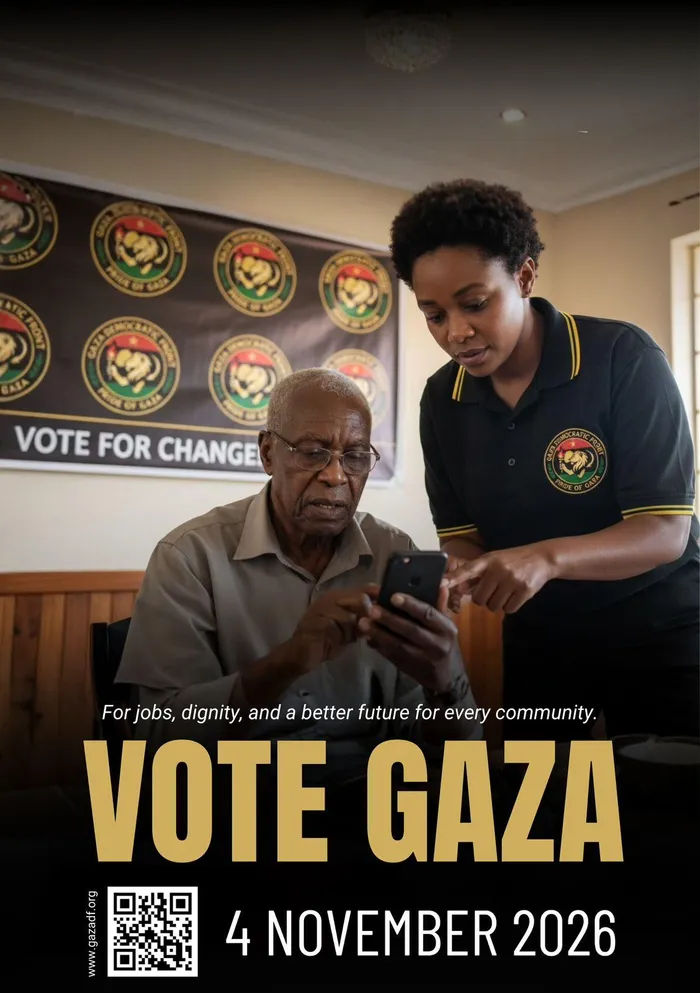
A new political party, the Gaza Democratic Front (GDF), wants to return service delivery to the people on the ground.
Image: Picture: Supplied/GDF
Across the towns and rural areas of Limpopo, a quiet yet determined political movement is beginning to gain traction.
From Giyani to Polokwane, from the farming communities of Molemole to the mining belts of Lephalale, a new party, the Gaza Democratic Front (GDF), is positioning itself as a vehicle for something many residents say they have waited years for, practical change that touches everyday life.
At the centre of it is Reason Mthombeni, a relatively unknown figure outside local circles, but one who speaks with the urgency of someone who has seen the gaps in service delivery up close. His message is not wrapped in grand ideological language. It is direct: people need food security, functioning services, access to land, and dignity in their daily lives.
“We cannot keep normalising broken systems,” Mthombeni said in an interview this week. “People have adapted to dysfunction for too long. My focus and that of GDF is simple: restore dignity by fixing what the government is supposed to deliver.”
That message is now being carried across a wide geographic footprint.
From the Capricorn District to Mopani, Sekhukhune, Vhembe, and Waterberg, the GDF’s footprint spans almost every municipality in Limpopo. Names that often appear in audit reports and service delivery protests, such as Blouberg, Lepelle-Nkumpi, Greater Giyani, Fetakgomo Tubatse, and Musina, are now central to a political campaign that is trying to convert frustration into organisation.
For Mthombeni, the strategy is deliberate. Start local, build trust, and scale.
“Change in South Africa will not come from speeches in Parliament alone. It must start in municipalities, where people feel the failure of the system every day, when there is no water, no refuse removal, no jobs. That is where GDF is focusing its energy,” he said.
What stands out is how the GDF frames its mission. Rather than speaking in abstract policy terms, it grounds its promises in lived realities. In villages where water tankers are still a way of life, “services for every village” is not a slogan. It is a demand. In communities where land ownership remains contested or inaccessible, “land for every dispossessed family” resonates with a long-standing grievance.
The GDF’s messaging, captured in its campaign material, leans heavily into this human-centred approach. It speaks of food for households, justice in communities, and dignity for workers and elders. These are not new political ideas, but the difference lies in how deliberately they are tied to specific places and municipalities.
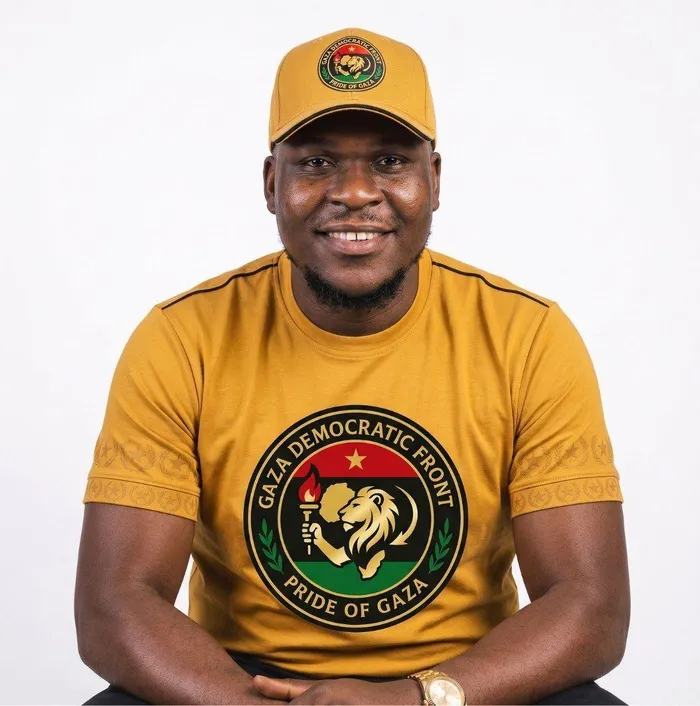
Gaza Democratic Front founder, Reason Mthombeni
Image: Picture: Supplied/GDF
Mthombeni is clear that the intention is not just to compete politically, but to disrupt what he calls a “cycle of low expectations.”
“We are not entering politics to occupy positions. We are entering a challenge to the status quo, where communities expect less and leaders deliver even less. That contract must change,” Mthombeni said.
He further explained that he was pooling together like-minded people and business players who want to see changes in their communities to uplift people in all the areas where the party has a footprint.
There is also an ambition that goes beyond Limpopo. The movement is already casting its net into Mpumalanga, targeting municipalities in Ehlanzeni, Gert Sibande and Nkangala. Areas like Bushbuckridge, Nkomazi, Emalahleni and Steve Tshwete, each with its own mix of rural challenges and industrial pressures, are being drawn into the same narrative: that local government can work better, and that communities should expect more.
In Gauteng, the tone shifts slightly, but the message remains the same. Here, the focus is on metros and economic hubs, Johannesburg, Tshwane, Ekurhuleni, as well as districts like Sedibeng and the West Rand. The language becomes sharper: “Gauteng Forward.” It signals an understanding that urban voters are less concerned with access and more with efficiency, governance, and economic opportunity.
For many residents, especially younger voters, the appeal of a new party often lies in its distance from established political structures. In conversations on the ground, there is a recurring sentiment, not necessarily ideological, but practical. People want working infrastructure, responsive municipalities, and visible accountability.
Mthombeni believes that sentiment is the foundation the GDF will build on.
“People are not asking for miracles. They are asking for competence, honesty, and consistency. If we can deliver that at a local level, trust will follow. And once trust is restored, real development becomes possible,” he said.
What the GDF is attempting to do is bridge that gap between expectation and delivery, using local government as the primary battleground.
Whether it succeeds is another question. South Africa’s political landscape is crowded, and new entrants often struggle to convert visibility into votes. A total of 508 political parties are currently registered to contest the 2026 South African Local Government Elections.
Gaza Democratic Front logo
Image: Picture: Supplied/GDF
The Electoral Commission (IEC) recently confirmed this record number, which includes 62 new parties that have registered since the 2021 municipal elections. Despite this, organisation, funding, and credibility remain significant hurdles. There is also the challenge of moving from broad promises to detailed, implementable policy, something that voters are increasingly scrutinising.
But human interest stories in politics are rarely about immediate success. They are about momentum, about the early signs of a shift.
In Giyani and Malamulele, where Reason Mthombeni’s journey begins, that shift is still small, still forming. Community meetings are modest. Structures are still being built. Yet there is a sense, tentative but real, that something is being attempted.
Not a reinvention of politics, but a return to its most basic contract: that governance should improve people’s lives in visible, measurable ways.
“The goal is not just to win elections. It is to rebuild belief, belief that government can work, and that it can work for everyone,” Mthombeni said.
For now, that idea is enough to draw attention. The real test will come when it meets the ballot box.
IOL