Nzimande breaks silence, says he has nothing to add beyond SACP position on ANC rift


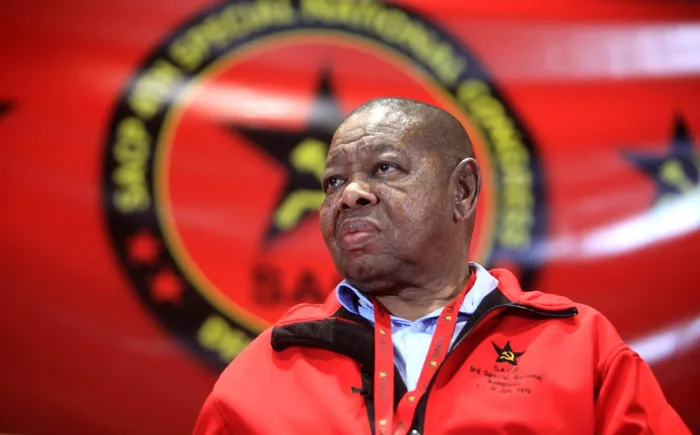
South African Communist Party (SACP) chair Blade Nzimande has called for a stronger alliance between the SACP, ANC, and Cosatu in order to tackle the country’s socio-economic problems. Picture: Supplied Senior ANC and SACP member Blade Nzimande has declined to comment beyond the SACP’s position as tensions escalate between the two allies over a directive compelling dual members to declare allegiance ahead of the 2026 local elections.
Image: Picture: Supplied
Senior ANC and SACP member Blade Nzimande says he has nothing to add beyond the SACP’s position, as the communist party insists it will not descend into “abuse” of the ANC while requiring members with dual membership to choose sides ahead of the 2026 local government elections.
SACP general secretary Solly Mapaila said the party would not engage in “abuse” of the ANC, even as it requires members with dual membership to decide where their allegiance lies.
He was speaking at a media briefing in Johannesburg last Thursday.
The remarks came before the ANC sent letters to members holding dual membership following a National Executive Committee’s (NEC) decision to enforce constitutional provisions barring members from joining or supporting another political party.
The ANC has told members who also belong to the SACP to indicate, within 10 days from Thursday, which party they will support in the 2026 local government elections.
The move is based on a rule that does not allow members to campaign for another political party.
The directive affects several senior leaders, including Mineral and Petroleum Resources Minister Gwede Mantashe, Higher Education Minister Buti Manamela, Deputy Finance Minister David Masondo and Deputy Police Minister Dr Polly Boshielo, all of whom belong to both organisations.
Mapaila said the SACP has never objected to the ANC contesting elections in its own right.
“The SACP has never regarded the ANC as an enemy for contesting elections in its own right. The SACP has never disciplined or threatened any of its members for participation in building, voting for and campaigning for the ANC.
“The SACP has insisted it will contest the elections independently while remaining within the tripartite alliance with the ANC and Cosatu.”
Mapaila has long rejected the Government of National Unity (GNU), formed after the May 2024 general elections. He said the GNU, which includes the DA and FF Plus, does not represent the interests of black people and the working class.
He said the SACP has survived repression, including a ban under the Suppression of Communism Act imposed by the apartheid regime in 1950.
“No aspect of such a ban, or anything similar, however it is branded under our hard-won democratic dispensation, can succeed in instilling fear in the SACP.
“Our decision to contest the forthcoming elections directly was not taken lightly, emotionally or adventurously.”
He said the SACP would not accede to ultimatums.
“All SACP members who are also ANC members must continue to conduct themselves with dignity, discipline and revolutionary ethics.
“We will not answer provocation with provocation. We will not descend into abuse, mudslinging or anti-ANC rhetoric.”
He urged members to support one another and intensify political work.
“The answer to intimidation is not paralysis. It is an organisation.”
Mapaila also defended dual membership.
“Dual membership is not a favour granted by one organisation to another.
“To reinterpret the alliance or dual membership as an arrangement valid only when the SACP is electorally subordinate is to empty it of all its historical mission or political meaning.”
Meanwhile, in a separate media briefing on Thursday afternoon, the ANC’s NEC issued a directive requiring members who hold dual membership with the SACP to declare their allegiance.
This followed the ANC’s media briefing at Luthuli House in Johannesburg, where the NEC outlined its response to the SACP’s decision to contest elections independently.
The SACP, in its own briefing, rejected the ANC’s instruction for members to declare their allegiance.
ANC secretary-general Fikile Mbalula said the NEC had clarified that the SACP’s decision to contest elections independently carries clear organisational consequences.
“These include that the SACP will not participate in ANC election structures, processes, campaign activities or candidate lists, and that all ANC members are required to act in full compliance with the Constitution,” he said.
He added that, to ensure clarity, consistency and discipline, the NEC had directed that all ANC members, including those in leadership structures and public office, must declare whether they will campaign for the ANC or any other political formation.
“Failure to do so will be interpreted as a commitment to campaign for the ANC in accordance with the Oath of Membership.
“Any conduct that undermines the ANC’s electoral campaign will attract immediate organisational action to safeguard the integrity and cohesion of the movement.”
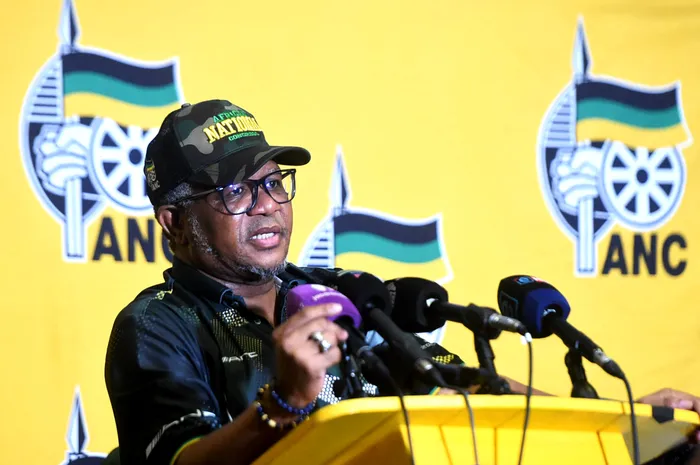
Tensions between the ANC and SACP have escalated after the ANC instructed members with dual membership to declare which organisation they will support, following the SACP’s decision to contest elections independently.
Image: Itumeleng English / Independent Newspapers
“The secretary-general has been mandated to communicate this position as a directive to all structures and members of the organisation, ensuring full organisational alignment as the ANC prepares for the upcoming electoral cycle,” Mbalula said.
Nzimande, who serves as Minister of Science, Technology and Innovation in the GNU and is SACP national chairperson and an ANC NEC member, declined to comment further.
His spokesperson, Veli Mbele, said, “Minister Nzimande has nothing to say other than what the SACP has said.”
Pressed on whether Nzimande would campaign for the SACP or the ANC, Mbele declined to elaborate.
“The same reply applies,” he told IOL News.
Manamela’s spokesperson, Matshepo Seedat, referred queries to the ANC and SACP.
Police ministry spokesperson Kamogelo Mogotsi said Boshielo would not comment.
“Kindly be informed that this matter raised has already been fully addressed in the media space yesterday.
“As such, we will not be providing any further comment at this time. SG (secretary general) has spoken on the matter. SACP has spoken on the matter. (The) DM (Deputy Minister) has nothing to say,” she said.
Mantashe, who is also ANC national chairperson and a senior SACP member, was unavailable.
“(The) minister is attending a funeral. He’s commented on this publicly, several times. Other media houses have carried his POV (Point of view); check if you have not published anything on this,” his spokesperson Yolanda Mhlathi said.
Political analyst Professor Thoe Neethling, from the University of the Free State, said the long-simmering contradiction at the heart of the ANC–SACP alliance has come to a head.
“The issue is not simply ideology, but political practicality: you cannot convincingly campaign for two competing parties at the same time,” he said.
“The issue exposes what is essentially a conflict of interest built into the alliance model. SACP members who occupy ANC leadership positions - or serve in government through ANC deployment - now face contradictory loyalties if they are expected to advance the SACP electorally against the ANC. ANC secretary-general Fikile Mbalula has distilled the party’s position bluntly: members cannot ‘serve two bosses’.”
He said political allegiance must translate into organisational discipline, especially during elections.
“Beyond principle, the ANC’s concern is also strategic. It fears that dual members could leverage ANC resources, networks and institutional access to benefit a rival campaign. In a competitive electoral environment, that is not just awkward - it is politically self-defeating.”
He added that the SACP’s decision to contest elections independently, partly in protest against the ANC’s GNU arrangements with parties such as the DA, is seen as a direct challenge to alliance cohesion.
“It also comes at a time when the ANC needs every possible vote following the party’s weak performance in recent elections,” Neethling said.
He described the ANC’s response as decisive.
“Its National Executive Committee has effectively issued a ‘pick a side’ ultimatum: dual members must declare, in writing, which party they will campaign for. Those opting for the SACP must step down from ANC leadership roles or face removal - a clear tightening of internal discipline. In practical terms, this marks the end of the long-standing informal tolerance of dual campaigning.”
He said the SACP has pushed back strongly.
“Under general secretary Solly Mapaila, it has framed the ANC’s directive as an attempt to subordinate the party and suppress its independence. From the SACP’s perspective, dual membership is not a contradiction but a founding principle of the alliance, and contesting elections is a legitimate extension of its political agency.”
“What emerges, then, is more than a procedural dispute - it is a moment of reckoning for the tripartite alliance. The ANC is not demanding that members abandon the SACP altogether, but it is drawing a hard line against dual electoral politics. Whether this results in a managed recalibration or a deeper rupture remains uncertain. What is clear is that the once-comfortable ambiguity of ‘one person, two parties’ is no longer sustainable.”

SACP General Secretary Solly Mapaila has told party members holding dual ANC membership to not abandon their deployments despite being informed by the ANC to indicate which party they will campaign for in the run-up to the local government elections.
Image: Itumeleng English / Independent Newspapers
Another political analyst Goodenough Mashego said the ANC directive should have come in 1994, though perhaps not as a directive.
“The SACP and Cosatu were supposed to have left the alliance in 1994 because the objective was to defeat apartheid. Once that was achieved, they could have gone their separate ways,” he said.
“But after apartheid was defeated, their missions diverged. SACP is aspiring towards a socialist society; ANC is not aspiring towards that. So it will always be difficult for SACP members to implement the aims and objectives of the ANC, which does not share their vision. So the directive itself is an important one, and SACP should not take it the way they are.”
Mashego said the directive should be seen as an opportunity for the SACP to redefine itself.
“Well, this incident is not going to influence voter dynamics because the SACP has never had a voting membership. Voting membership has always been ANC support. The ANC has always been the party that people vote for. People have always identified with the ANC.
“People will say, ‘I want the party of Nelson Mandela’ when they go to the ballot. No one says, ‘I want the party of Joe Slovo or Blade Nzimande.’ So the party of Nelson Mandela is the ANC.”
He said it might only influence some SACP members.
“It might only assist some SACP people who are really communists, not leaders, because leaders are going to follow the ANC either way.
“It has some ANC members deciding either to stand as independent candidates, not as SACP, because SACP has good baggage, as independent candidates, or it might actually make some of them decide to vote for other parties like-minded or what they believe to be like-minded like EFF and MK Party, which is not going to have a dent on the ANC because at the election it's not the ANC membership that votes, it's the people that vote.”
He said the overall impact would be minimal.
“So their absence from the ballot is not going to have an impact on the ANC. The ANC is not going to do well because of lack of service delivery, because of protest, because of many other things that we see happening. So the SACP's absence is not going to do much damage.
“In the same way, the last election they did contest in some areas. I think they won an award or something or a PR role, but I think they did contest. I don't know how they performed and it didn't dent the ANC, you know, it didn't benefit anyone else.”
Mashego said he doubted the SACP would ultimately contest independently.
“I think they’re going to have a meeting with the ANC, they’ll come out and say they’re giving the ANC a final chance. I don’t think they are actually going to go out and contest because once they do that, it means the alliance is finished.”
Meanwhile, questions were sent to Masondo, but no response was received by the time of publication.
“Kindly note that your inquiry has been shared with DM (Deputy Minister) Masondo’s office. DM’s office will respond to you directly,” the National Treasury media unit told IOL News.
IOL Politics