Naledi Pandor: Survival of GNU shows political maturity, not a failed State


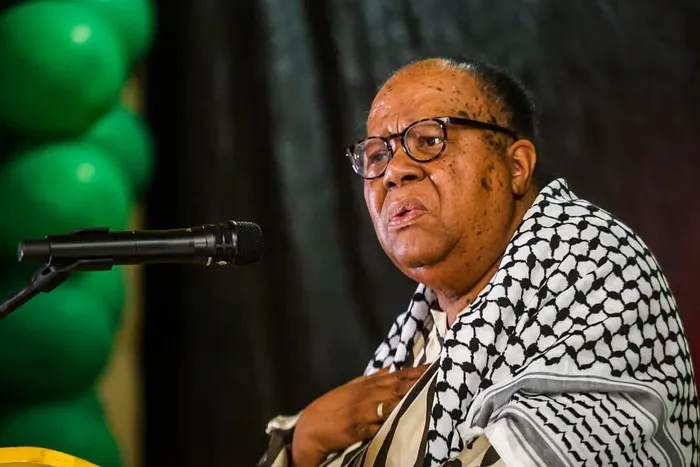
ANC veteran and former International Relations Minister, Naledi Pandor, praised the GNU but said more work was needed to improve the country’s economy.
Image: Facebook/ANC
Former International Relations Minister, Naledi Pandor, has described the survival of the Government of National Unity (GNU) as a "sign of political maturity" and not a failed state.
But, she cautioned that the coalition must now focus more sharply on urgent economic reforms and job creation.
Speaking in an interview on the SABC’s "Face the Nation" this week, Pandor reflected on the country’s evolving political landscape, especially the significance of a multi-party coalition at the national level.
“The fact that the GNU has survived thus far indicates a useful level of political maturity in South Africa,” Pandor said.
“It is the first time we've had a national coalition of this kind, apart from, of course, at the inception of our democracy.”
While commending the coalition's endurance, Pandor stressed that rising unemployment, sluggish economic growth, and limited policy clarity required more determined leadership and action.
“There’s still a sense of instability… One is not always clear: when we take this step, what is the actual goal we intend to achieve?” she asked.
According to the former minister, South Africa’s economy recently posted a 0.8% growth rate, far below what is needed to combat the country’s record-high unemployment rate, especially among youth.
Pandor questioned the lack of visible strategic interventions to support high-potential sectors like agriculture and tourism—both of which could help stabilise the economy and boost employment.
“What form of support in logistics terms is being provided to the agricultural sector, which is showing that it is robust? How do we assist agriculture to retain jobs? And in the tourism sector, how do we grow it?” she posed.
She also rejected the increasingly popular description of South Africa as a "failed state", arguing that despite inefficiencies, key systems remain functional.
“We continue to have an economy that functions, a revenue service that collects revenue, a public service that functions—not satisfactorily, but it continues. Children go to school, salaries are paid, and we have a very active private sector,” she explained.
Pandor’s remarks come amid tensions between the ANC and Democratic Alliance (DA)—two of the primary parties in the GNU.
The DA, which joined the ANC-led GNU after the 2024 elections, has clashed with the ANC on policy direction, cabinet appointments, and governance priorities.
Recent disputes include accusations by DA leaders of being sidelined in key decisions, and ongoing disagreements about the pace of economic reforms and appointments in strategic departments.
Despite these squabbles, Pandor's measured optimism suggests that with clearer leadership and accountability, the GNU can still steer the country toward a more inclusive and resilient future.
“I think South Africa is confronting complex problems... but leadership must now push harder and smarter. We need to intensify the effort to expand success where it exists,” she added.
IOL Politics