The UN Forum on Business and Human Rights Must Finally Confront a Global Failure

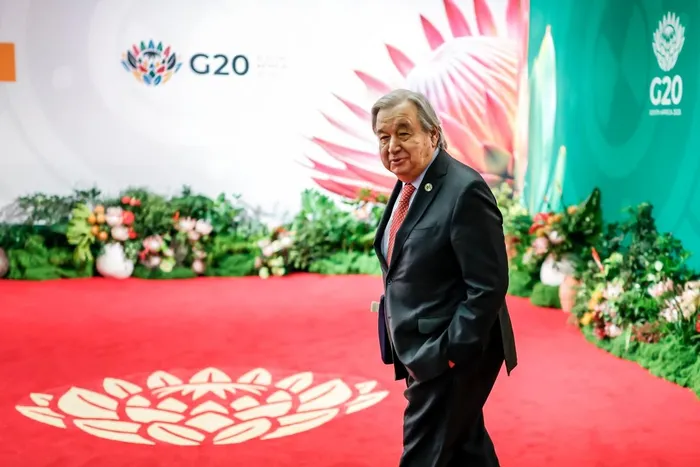
Secretary-General of the United Nations Antonio Guterres arrives for the second day of the G20 Leaders' Summit at the Nasrec Expo Centre in Johannesburg on November 23, 2025.
Image: Marco Longari / AFP
More than seven decades after the adoption of the Universal Declaration of Human Rights, and 36 years after the world agreed on the Convention on the Rights of the Child, the global economy continues to run on the labour, suffering, and invisibility of millions. As delegates gather once again for the UN Forum on Business and Human Rights, the numbers speak to an undeniable truth: the system is failing.
Today, more than 140 million children work in the supply chains of corporations—producing food, textiles, minerals, metals, and the everyday goods that fill the homes and supermarkets of wealthy nations. Tens of millions of these children are engaged in the most hazardous forms of labour. We also have nearly 50 million modern-day slaves, trapped in forced labour and other forms of coercion.
Even more staggering: over 75 million of these exploited children work in global supply chains that benefit the 2,500 participants of the World Economic Forum—leaders who have been claiming to “Improve the State of the World” for nearly 56 years, even as they preside over economic systems that exploit tens of millions of children.
But the responsibility does not fall on corporations alone. States—and their sovereign investors—are deeply complicit. Norway, the largest investor in the world, manages more than $2.1 trillion in assets through its sovereign wealth fund and holds shares in nearly 9,000 corporations. This enormous state-owned investor, celebrated globally for ethics and transparency, nevertheless profits from the exploitation of tens of millions of children working in the supply chains of the companies it invests in. It is a painful paradox: a nation that presents itself as a champion of human rights is simultaneously one of the world’s largest beneficiaries of supply-chain exploitation.
And children are not the only victims. Hundreds of millions of farmers and workers live in misery, trapped in poverty by supply chains intentionally designed to extract maximum value from their labour while denying them a dignified income. These exploitative and neocolonial business models are not accidents. They are deliberate, profitable, and shielded by political and financial power.
Hundreds of corporations operate with business models that are the direct opposite of the Sustainable Development Goals. Far from advancing human development, these corporations sustain misery, hunger, infant malnutrition, child labour, forced labour, and conditions that contribute to high rates of infant mortality. This is not a side effect—it is a built-in feature of supply chains engineered to extract value from the world’s poorest communities while guaranteeing record profits for executives, shareholders, and global investors.
What makes this appalling state of affairs possible—decades after universal commitments to human rights—is not only corporate greed or political inaction. It is also the failure of the UN system itself, including the very agencies responsible for defending human rights and protecting children: UNICEF, ILO, UNDP, OHCHR, and others. This terrible reality is living proof that the United Nations, despite decades of declarations, programs, and conventions, has failed to protect the most vulnerable from exploitation at the hands of global business.
The silence of journalists compounds the problem. As a journalist, I say this with deep sadness: thousands of my fellow journalists are looking the other way while tens of millions of children and hundreds of millions of adults are exploited every day. Corporate ESG claims are repeated without scrutiny; glossy sustainability reports are treated as evidence rather than propaganda.
The UN Forum on Business and Human Rights was designed to address this global contradiction. Yet after years of panels and declarations, the fundamental structures of exploitation remain untouched. Voluntary guidelines have failed. Self-regulation has failed. Certification schemes have failed. And year after year, the victims—especially children—continue to pay with their health, their safety, their education, and their futures.
We must stop pretending that this economic system is accidental. It is not. It thrives because wealthy nations, powerful corporations, sovereign wealth funds, pension funds, and global asset managers benefit from it. Those who profit from child labour, forced labour, and extreme poverty wages are not bystanders—they are active participants in structural injustice on a planetary scale.
If the UN Forum is to have any meaning, it must stop legitimizing corporate narratives and finally confront the architecture of exploitation underpinning global supply chains. We need binding international rules, strict liability for corporations and their investors, and real legal consequences for those who profit from human rights abuses.
Children must not remain the hidden workforce sustaining global consumption. Journalists must stop being complicit through silence. And the UN system, which was created to protect human rights, must finally take responsibility for its failure.
Seventy-plus years after the Universal Declaration of Human Rights, and 36 years after the Convention on the Rights of the Child, the world has run out of excuses. The question now is whether the UN Forum on Business and Human Rights will remain an annual ritual of comforting rhetoric—or finally become a turning point in the struggle to end the exploitation it has tolerated for far too long.
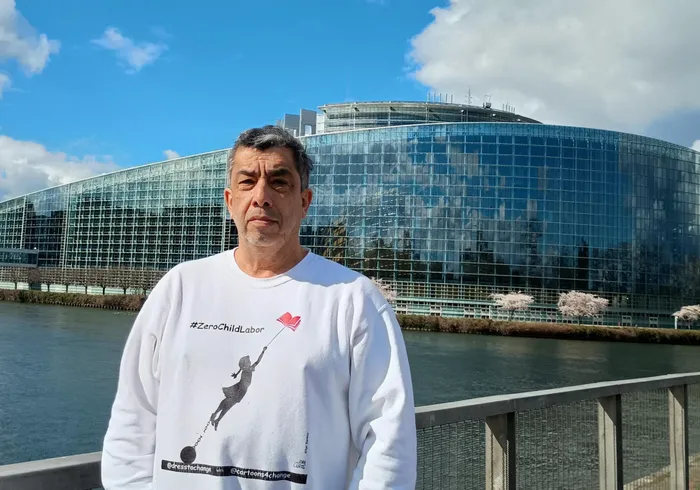
Despite over 70 years of human rights declarations, why do millions still suffer in global supply chains, asks Fernando Morales-de la Cruz
Image: Supplied
* Fernando Morales-de la Cruz is a journalist, activist and campaigner for an end to child labour and slavery worldwide.
** The views expressed do not necessarily reflect the views of IOL or Independent Media.