SANDF refutes deployment claims for 30 June protests


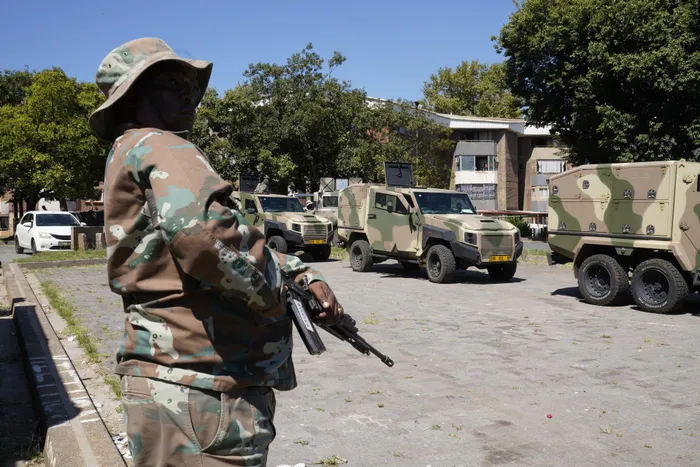
Tensions rise as SANDF dismisses military deployment ahead of protests.
Image: Timothy Bernard / Independent Newspapers
The South African National Defence Force (SANDF) has refuted claims that soldiers will be deployed ahead of planned protest action linked to the June 30 "deadline" for undocumented foreign nationals to leave South Africa, while police say they remain on high alert for any violence, intimidation, or acts of vigilantism.
The June 30 date has gained traction on social media and in public mobilisation campaigns across the country, following a wave of protests by movements calling for the removal or repatriation of undocumented foreign nationals.
In recent weeks, the campaign has spread across communities and provinces, with posters, videos, and public statements circulating widely online and fuelling fears of possible unrest.
However, the SANDF has denied reports suggesting that soldiers were being prepared for deployment in anticipation of protest action on Saturday.
"The South African National Defence Force has noted with concern misleading reports on social media suggesting that the SANDF will be deployed in anticipation of planned marches and protest action on June 30, 2026, by various civil society groups calling for the repatriation of illegal nationals," the SANDF said.
"The SANDF dismisses these claims as false, unfounded, and deliberately misleading. At no stage has the SANDF issued any directive or made preparations for deployment in relation to these activities."
The defence force said while the Constitution allowed for peaceful protest, the spread of unverified claims risked creating unnecessary public panic.
"The SANDF appreciates that the Constitution of the Republic allows peaceful protest marches. The SANDF distances itself entirely from these claims and cautions against the dissemination of unverified information that undermines public trust and creates unnecessary alarm."
The denial comes as March and March, one of the movements at the centre of the anti-undocumented immigration campaign, has continued to attract public attention over its position on the June 30 date.
At a media briefing earlier this week, March and March founder Jacinta Ngobese-Zuma said the movement supported the broader concerns being raised, but denied that it had set the deadline.
"We are a team, and we support each other in the same ideology. We as March and March did not issue the June 30 deadline," Ngobese-Zuma said.

Promotional material shared on March and March social media platforms to encourage participation for protest action against undocumented African nationals.
Image: Supplied
According to Ngobese-Zuma, the date was issued by others who shared the same ideology.
National police spokesperson Brigadier Athlenda Mathe said the National Joint Operational and Intelligence Structure, known as NATJOINTS, was aware of and monitoring public mobilisation and campaigns linked to illegal immigration, including activities being promoted ahead of June 30.
She said police were assessing possible risks to public safety, public order, and community stability.
Mathe said the SAPS Public Order Policing units, Crime Intelligence, and other operational environments, through NATJOINTS, remained on high alert nationally to ensure that any gatherings stayed within the law.
"SAPS will act decisively against any acts of vigilantism, criminality, threats, assault, malicious damage to property, or conduct that undermines the rule of law and the constitutional rights of others, irrespective of nationality."
She said issues relating to undocumented foreign nationals remained the responsibility of law enforcement agencies and the Department of Home Affairs, and had to be dealt with through lawful processes.
"SAPS calls on all communities, organisations, and stakeholders to act responsibly and to refrain from taking the law into their own hands," Mathe said.