More woes for consumers as interest rate hike looms and fuel levy relief comes to an end


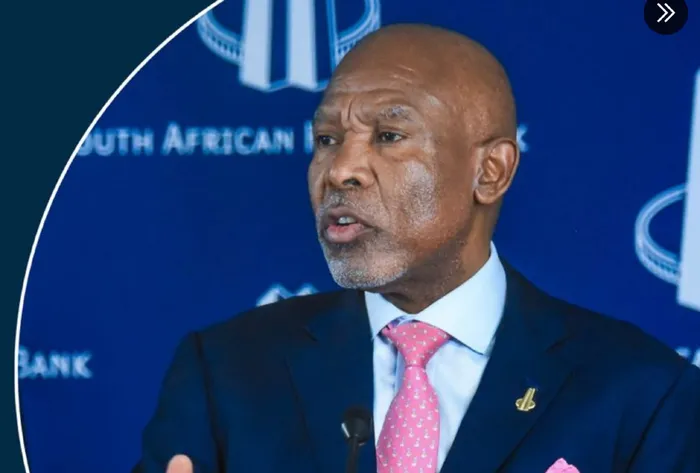
South African Reserve Bank governor Lesetja Kganyago. The Sarb already warned in March that the ongoing Middle East conflict is a clear instance of a supply shock, which raises prices while weakening demand.
Image: Supplied
South African consumers could face a double blow in June as economists predict the South African Reserve Bank (Sarb) to raise interest and the government will end the R3-per-litre fuel levy relief.
The recent relief has helped motorists cope with rising global oil prices. The Sarb's Monetary Policy Committee (MPC) is likely to take a hawkish stance on Thursday after inflation rose from 3.1% in March to 4.0% in April, mainly due to increasing fuel costs linked to the ongoing Middle East conflict.
Several economists now warn that inflation could climb closer to 5% in the coming months, increasing pressure on the Sarb to act pre-emptively to prevent higher prices from becoming entrenched in the economy.
The Sarb already warned in March that the ongoing Middle East conflict was a clear instance of a supply shock, which raises prices while weakening demand. The central bank said waiting for clear evidence risks leaving the policy response too late.
According to Nedbank economists Johannes (Matimba) Khosa and Nicky Weimar, the sharp jump in petrol and diesel prices has already started filtering through to broader transport and operating costs, pushing core inflation higher and increasing the risk of second-round inflation effects.
Nedbank acknowledged that the MPC had some space to wait and see how the global supply shock unfolds, as monetary policy remained moderately restrictive and the usual accelerants of spiking risk premia and significant rand weakness have not yet materialised.
“Despite these valid considerations, our analysis suggests that inflation expectations are particularly sensitive to petrol price increases, and we, therefore, see a relatively high risk of second-round effects,” they stated.
“As such, tightening monetary policy now would ensure that the inflationary consequences of the supply-side shock are temporary and likely minimise the need for more severe tightening later in the cycle.”
Nedbank expected the Sarb to raise the repo rate by 25 basis points to 7%, which would push the prime lending rate to 10.50%.
Adriaan Pask, chief investment officer at PSG Wealth, said the Sarb faced a difficult balancing act between protecting economic growth and defending its inflation credibility.
He argued that while higher fuel and electricity prices were largely supply-side shocks that interest rates could not directly solve, the Sarb could not risk appearing complacent about inflation drifting away from its preferred 3% target.
“The more durable solution lies in reforms that reduce supply-side costs, improve productivity and give South Africa a stronger, more sustainable growth platform,” Pask said.
However, the prospect of another rate increase is likely to deepen pressure on already heavily indebted households.
Workers and consumers are simultaneously facing rising transport costs, electricity tariff increases and expensive food and credit costs, while economic growth remains sluggish.