Claremont eviction: Authorities dismantle illegal structures to reclaim public space


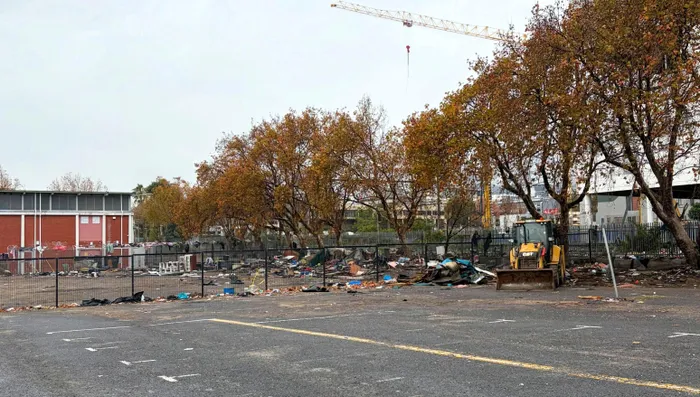
The parking area at Stegman Road and surrounding areas has been cleared by the city after it received a court order to evict the illegal occupants living there.
Image: Supplied
Illegal structures that encroached upon a vital parking area in Claremont have been removed by the City of Cape Town following a court-ordered eviction process.
The operation involved various enforcement agencies, including the City’s Law Enforcement, Metro Police, Traffic Services, and police supported by other municipal departments, last week.
For the past eight years, the parking area behind the Al-Jaamia Mosque on Stegman Road, Claremont, has become home to the large homeless encampment.
Illegal, informal structures and tents had been erected against the mosque fencing and along the fencing near the Claremont railway station.
Residents and nearby organisations raised concerns over unhygienic living conditions, a build-up of waste and litter, anti-social behaviour linked to substance abuse, and alleged criminal activity.
The City’s Law Enforcement spokesperson, Wayne Dyason, said the operation addressed the unlawful occupation of the property where structures had been erected without authorisation.
“A total of 25 structures and six tents were identified and dismantled in accordance with the court order. The site was cleared of all unlawful occupation and associated materials,” he said.
Dyason said the City’s Community, Arts and Culture Development Department had engaged with occupants a week before the eviction to offer alternative accommodation, but the offer was declined.
“During the eviction, alternative accommodation was again offered on-site; however, this was also declined,” he said.
He added that by May 22, eight individuals eventually accepted the offer of alternative accommodation and were processed accordingly.
Ward 59 councillor, Mikhail Manuel, described the eviction as a significant milestone for the Claremont area.
The site, commonly referred to as the Palmyra Encampment, had a major impact on the surrounding community, he said.
“I am well aware that this encampment has been a source of significant frustration, many hygiene concerns, legitimate safety concerns, and significant fire risk,” said Manuel.
He added that the site posed a risk to high-voltage electricity infrastructure and public transport services, while the local mosque experienced the worst, and nearby businesses had to employ extra security measures.
“Eviction is normally the last option. However, no one is entitled to illegally occupy public land while indefinitely refusing assistance,” he said.
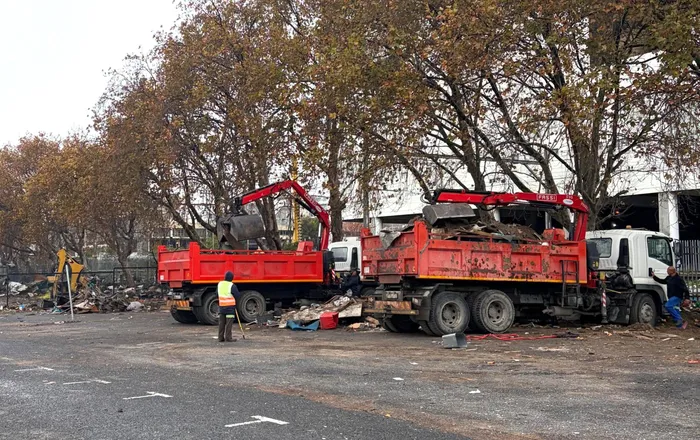
City trucks on the scene clearing up the litter and rubble at the scene.
Image: Supplied
Chairperson of the executive committee of the Al-Jaamia Mosque, Nazeem Jamie, said the mosque recognised the complexities surrounding homelessness, but that the encampment had created severe challenges.
“The mosque frequently stepped in at its own expense bi-monthly to remove the rubble and manage basic cleanliness,” he said.
Jamie said that with no toilet facilities available, an estimated 60 to 80 people staying at the site used the surrounding area for sanitation purposes.
He also alleged that criminal activity, including drug dealing and possession of stolen property linked to house break-ins, had become common at the site.
“Incidents of violence and assault associated with either alcohol or drugs were also witnessed on multiple occasions,” he said.
Jamie said the mosque had already implemented measures to prevent reoccupation of the site, including hiring additional private security and repairing fencing damaged during previous forced entries.
Chairperson of the Claremont Community Policing Forum (CPF), Carla Williams, welcomed the eviction.
“Over time, the CPF made numerous efforts to assist and engage with individuals at the site. However, it became increasingly concerning that a significant portion of crime affecting the Claremont area was linked to the encampment,” she said.
Dyason said the property had since been handed back to the City, with post-operational monitoring and enforcement measures put in place to prevent reoccupation.
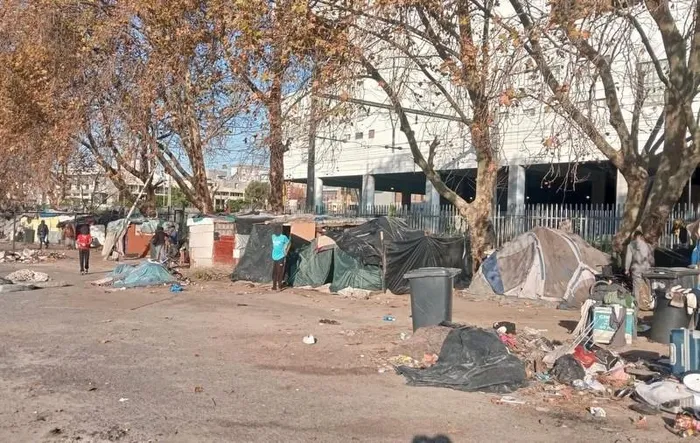
How the area looked before the eviction process began.
Image: Supplied