R800 000 fine looms for koesister and vetkoek home bakers in Cape Town



The City has threatened to fine a resident in Hanover Park for selling koesisters from their home.
Image: Supplied
A CRACKDOWN by the City of Cape Town targeting koesister and vetkoek vendors in Hanover Park has left many aunties fearing for their livelihoods
This, after they were served with City of Cape Town notices warning them to stop operating business from their homes or face possible fines and imprisonment.
The drama started when a husband and wife in the area were served with the notice stating that an inspection was carried out at their property on March 6.
The findings of the inspection were that the couple was operating a “house shop” from their home.
The notice said: “The property is a Resident 1 Zone in terms of the development management scheme, which constitutes schedule 3 of the City of Cape Town Municipal Planning By-law, 2015.
“You are hereby instructed to cease the unlawful conduct and to comply with the provisions of the By-Law/zoning of the property within 30 days by ceasing to operate the house shop.
“In terms of section 133(2) of the By-Law, a person is liable to a fine of R800 000 or imprisonment not exceeding 20 years, or to both a fine and such imprisonment.”
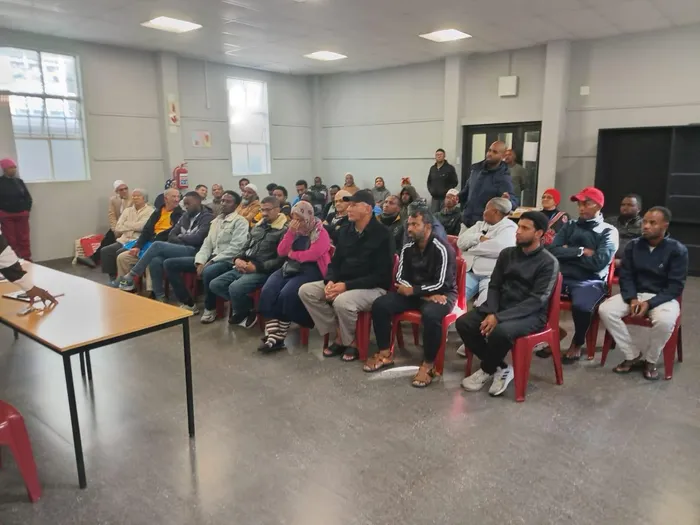
Concerned business owners meet in Hanover Park.
Image: Supplied
Chairperson of the Newfields Village Community Representative Forum and land and housing coordinator of the Hanover Park Civic Organisation, Gary Hartzenberg, said the forum was disgusted and dismayed by the City’s “threat” against residents and uncles trying to make ends meet by selling koesisters and vetkoek.
“The City of Cape Town cares nothing for the poor and the working class," Hartzenberg said.
“We want to know, if I sell koesisters for 20 years, why must I adhere to the bylaw now?
"Just because I have a separate entrance built next to my house, because it is on my property?”
On May 9, a meeting was held between homeowners and foreign national spaza shop operators, where residents heard that approximately five landlords had allegedly received the same notice.
The City of Cape Town denied targeting residents selling koesisters, vetkoek and other baked goods from home, saying enforcement action relates to “house shops” operating as formal businesses in residential areas.
Deputy Mayor Eddie Andrews took to breaking down the technicalities in defence of the City's action.
He said: "A home occupation would be a small-scale business activity conducted inside a dwelling. It is primarily secondary to residential use and has limited external impact (traffic, signage, customers, noise). A house shop is more retail-oriented activity conducted from a dwelling. It often includes direct sales to walk-in customers and has higher external impact in terms of increased foot traffic, deliveries, signage and stock storage. A house shop requires additional approval (consent use) under zoning rules.”

Gary Hartzenberg, the chairperson of the Newfields Village Community Representative Forum.
Image: Phiri Cawe