837 rape cases closed in Western Cape due to 'untraceable victims'


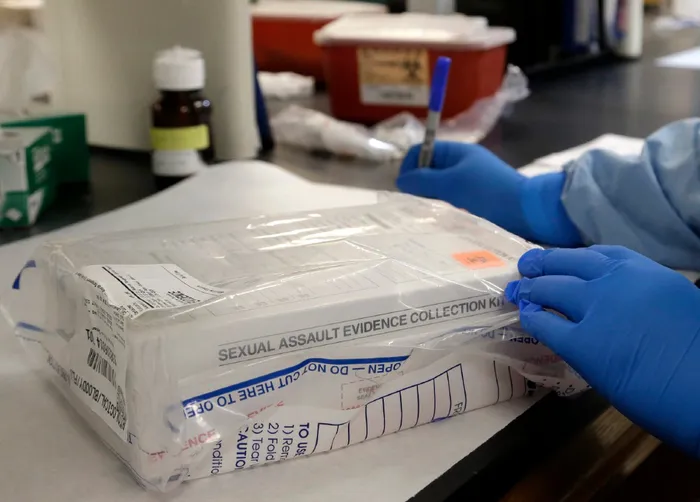
Alarming shortages of rape kits at police stations in the Western Cape hinder survivors' ability to provide crucial evidence, despite SAPS's denial of the claims.
Image: File
In a shocking revelation during a parliamentary session, police disclosed that 837 rape cases were closed in the past three financial years because the victims could not be traced.
This alarming statistic follows a recent report indicating that rape survivors in the Western Cape had been struggling to provide necessary evidence due to alleged shortages of rape kits at numerous police stations — a claim that SAPS had previously denied.
The reported shortage sparked a sharp debate between police and GBV organisations, while the SAPS insisted the thousands of Adult and Pediatric Sexual Assault Evidence Kits were in stock.
Sources at the time claimed over 20 police stations and FCS units lacked D1 (adult) and had few D7 (child) kits.
This month, DA MP and member of the Portfolio Committee on Police, Lisa Schickerling, argued via a parliamentary question that the 837 rape cases were closed due to victims not being traced, while the police stated in response that 781 were withdrawn and 105 were undetected.
Schickerling remarked that the numbers did not add up: “These are not minor administrative files. These are rape cases. Behind every docket is a victim, a family, and a justice process that should have been handled with urgency, care and precision. The SAPS reply raises two immediate red flags. First, SAPS says 837 rape cases were closed because victims could not be traced. But in the same reply, SAPS then says 781 were withdrawn and 105 were undetected. That adds up to 886, not 837.
“That is a 49-case discrepancy in one parliamentary answer.
“Second, SAPS says none of these cases involved incorrect or incomplete recording of victims’ contact details, and therefore no consequence management was required.
“That answer is difficult to accept without a proper audit trail.”
Schickerling said if a victim in a rape case cannot be traced, SAPS must be able to show exactly what was done before the docket was closed.
“Were addresses verified? Were phone numbers checked?” she asked.
“Were family contacts followed up? Were FCS commanders involved? Were victim support records checked? Were prosecutors consulted? Were any of these cases reopened?
"The public cannot be asked to simply accept that hundreds of rape victims have become untraceable, while SAPS simultaneously insists that no contact details were incorrectly recorded and that nobody was negligent.
“This is exactly why parliamentary questions matter. They force information into the open and allow Parliament to test whether SAPS systems are working as they should.
"The Portfolio Committee on Police must now demand a corrected answer, a station-by-station breakdown, and a full explanation of the tracing process used before rape dockets are closed.
“Justice for victims requires more than slogans. It requires disciplined case management, proper supervision, and real accountability when the system fails.”
The Cape Argus approached Acting Minister of Police, Firoz Cachalia’s office for their response and has yet to receive feedback.
MEC for Police Oversight and Community Safety, Anroux Marais, aired her concerns, stating that more should be done during the investigating stage and she understood that detectives worked under strain.
The Western Cape is facing a severe shortage of detectives, with a shortfall of 791 and a 28% vacancy rate.
“Any criminal case that is closed without the full process being properly assessed on its merits through a thorough investigation and the correct application of the law is a direct slap in the face of victims of crime,” she said.
“Detectives across the country are operating under immense pressure with extremely high caseloads, and this undoubtedly impacts the quality and efficiency of investigations, including victim tracing and follow-up processes. This remains an ongoing discussion we are having with the police. It is deeply unfair that victims are denied proper closure because justice is not ultimately served on alleged perpetrators due to investigative shortcomings or system failures.”
Activists agreed that the numbers were troubling, causing victims secondary trauma.
Siyabulela Monakali, spokesperson of Ilitha Labantu, said: “Equally concerning is SAPS’s assertion that none of these cases involved incorrect or incomplete recording of victims’ contact details, and that no consequence management was required. The inability to trace victims in cases of this nature cannot be treated as a routine administrative matter. It raises serious concerns about whether sufficient measures were taken before these dockets were closed, including whether contact details were verified, whether alternative contacts were pursued, and whether the necessary oversight mechanisms were followed. This matter once again highlights the ongoing institutional shortcomings that continue to undermine access to justice for survivors of gender-based violence. Public declarations and expressions of concern cannot continue to exist without meaningful implementation and measurable accountability.”