Cape Town rental crisis: Affordability pressures escalate


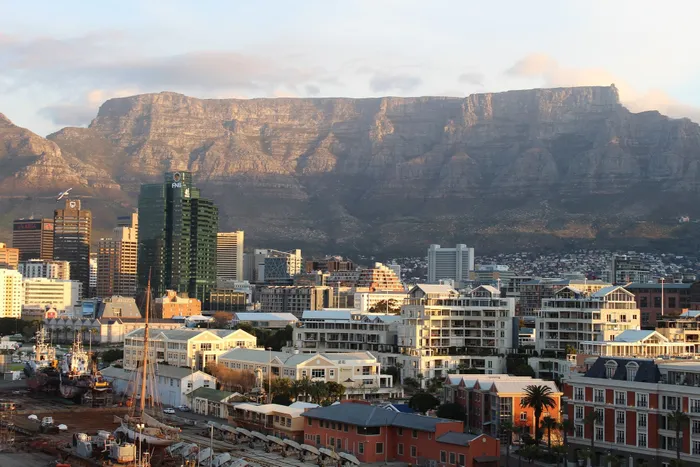
A healthy property market is one where investors, homeowners, tenants and working families can all participate.
Image: Picture: ALDK/Pixabay
While it is true that not every household will be able to live in every high-demand suburb, cities must still be intentional about ensuring that people who work in economic centres have reasonable access to housing, transport, and opportunity, says Eva August, CEO of Century 21 South Africa.
As Cape Town remains one of South Africa’s most desirable residential markets, August says that demand continues to place upward pressure on rentals, especially in the CBD, City Bowl, and Atlantic Seaboard.
“In the Cape Town CBD, rental pricing varies significantly depending on the size, building, amenities and location, but current market listings commonly start from around R12 000 to R15 000 per month for smaller apartments, with two-bedroom units often moving closer to the R18 000 to R25 000 range and above.”
The real estate agency says once rental, transport, school fees, utilities, food and general living costs are considered, living in the CBD becomes increasingly out of reach for ordinary working households.
The CEO says the solution is not rent control in isolation, because that can discourage investment and reduce supply over time.
She says the more sustainable answer is to increase appropriate housing supply, speed up planning approvals, release well-located land for mixed-income development, encourage private-sector participation and improve reliable transport links between residential nodes and employment hubs.
“Cape Town’s strength has always been its desirability, but desirability must be matched with accessibility. A healthy property market is one where investors, homeowners, tenants and working families can all participate.
"That balance will require partnership between government, developers, banks and the property industry.”
There is a strong rental demand in Cape Town, with a median enquired price of R12 350/month-58% above the national median of R7 800 that we get on the portal, says Adriaan Grové, CEO of MyProperty.
He says Cape Town renters are also notably more prepared than the rest of South Africa, which points to genuine urgency:
- 74% indicate their supporting documentation is ready to apply, vs 62% nationally.
- 50% are looking to move in immediately (vs 43% nationally), with a further 35% planning to move within a month, meaning 85% of enquirers are ready to move within 30 days.
“When the people who staff a city's economy-nurses, teachers, paramedics, junior professionals, retail managers, hospitality workers, public-sector clerks-can't afford to live in or near it, the city stops functioning as an integrated economic and social system. It becomes a place that consumes labour without housing it.”
The consequences cascade across transport, public services, social cohesion, business costs, and ultimately the city's economic competitiveness, Grové says.
“Transport quietly becomes a second rent.”
Rental prices in the Cape Town CBD and broader City Bowl have increased materially over the past few years due to sustained demand, semigration into the Western Cape, limited housing supply in central areas, and ongoing demand from both local and international tenants, says Fritz Swanepoel, CEO of Leapfrog Property Group.
He says current 2026 market indicators suggest:
- A typical 1-bedroom apartment in the CBD/City Bowl now rents for approximately R10 000 to R18 000 per month, depending on location, building quality and furnishing.
- A 2-bedroom apartment in the CBD/City Bowl generally ranges between R14 000 and R25 000+ per month.
- In premium Atlantic Seaboard areas such as Sea Point, Green Point, Clifton and Camps Bay, rentals can increase significantly beyond these levels.
The Western Cape remains South Africa’s most expensive rental province, with average rental levels materially above the national average, he says.
According to Leapfrog Property Group, the commonly used affordability benchmark globally is that housing costs should ideally not exceed around 30% of gross monthly household income.
Using that benchmark:
- Rental of R18 000 per month would require a household income of roughly R60 000 gross per month to remain financially sustainable.
- Rentals in the R25 000+ range require significantly higher household incomes that fall outside what many traditional middle-income families earn.
As a result, the group says many working professionals and middle-class families are increasingly being pushed toward surrounding suburbs or alternative residential nodes where rental costs are lower, and space offers better value.
“Importantly, this trend is not unique to Cape Town. Similar affordability pressures are being experienced globally in highly desirable urban lifestyle cities where demand consistently exceeds housing supply.”
Cape Town’s attractiveness, including semigration trends, lifestyle appeal, tourism demand, international investment, and perceptions around governance and infrastructure, continues to place pressure on pricing upward, says Swanepoel.
He also described a situation where the middle-class workers cannot afford to live in or near the CBD as ultimately both an economic and urban-planning challenge.
When middle-income workers cannot afford to live near economic centres, he says cities typically experience longer commuting times, increased transport costs, greater traffic congestion, pressure on surrounding suburbs, and gradual socioeconomic displacement from high-demand urban nodes.
Over time, the CEO says this can create a disconnect between where people work and where they can realistically afford to live.
“However, from a property market perspective, pricing is fundamentally being driven by supply and demand dynamics rather than purely speculative pricing. Cape Town currently faces exceptionally strong demand combined with constrained housing supply in high-demand areas.”
In their view, Swanepoel says the long-term solution is unlikely to come from direct rental price controls alone. He says international experience has often shown that excessive regulation can unintentionally reduce investment and housing supply.
According to them, more sustainable long-term solutions are likely to include:
- Increasing residential housing supply.
- Faster approvals for higher-density developments.
- Improving public transport connectivity.
- Encouraging mixed-income housing.
- Unlocking new residential nodes around transport corridors and business hubs.
Cape Town remains one of South Africa’s strongest-performing property markets, but affordability and accessibility will increasingly become key issues requiring coordinated planning between the private sector and government, according to the Leapfrog Property Group.