Rising rent forces locals out of City Bowl


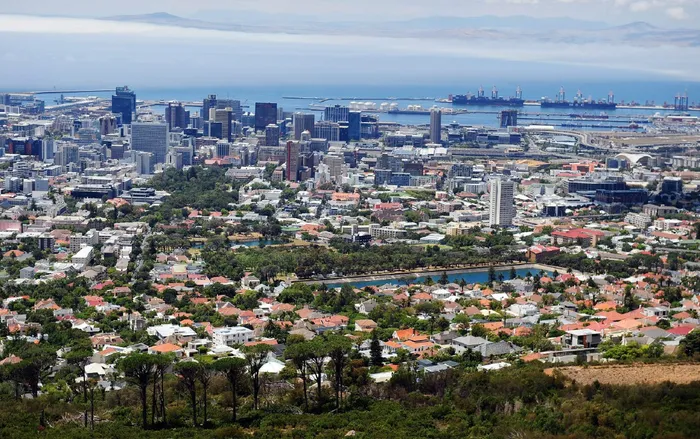
Rising rental prices in Cape Town's City Bowl and Atlantic Seaboard are pushing residents further from job opportunities, exacerbating the housing crisis.
Image: File
Rising rent prices in Cape Town’s City Bowl and Atlantic Seaboard are increasing monthly housing costs for residents and placing further pressure on households trying to remain close to employment hubs.
In suburbs such as Sea Point, Green Point, Clifton and Camps Bay, two-bedroom flats are regularly listed above R35 000 a month.
In parts of the CBD, rentals commonly start at around R15 000, with demand remaining strong in well-located areas close to business districts and transport routes.
The City of Cape Town says rental pricing is driven by supply and demand and falls outside municipal intervention.
Mayor Geordin Hill-Lewis said the main pressure on the housing market is driven by demand, as people continue to move to Cape Town for work opportunities, without enough new housing supply to match growth.
The mayor has pushed back on how his remarks were reported, saying Cape Town remains a city where many suburbs still offer more affordable accommodation and that debate is often focused too narrowly on high-demand areas such as the City Bowl and Atlantic Seaboard.
He said he was not referring only to those areas, adding that many neighbourhoods across the metro offer “value for money” housing options.
Hill-Lewis said the main pressure on the housing market is driven by demand, as people continue to move to Cape Town for work opportunities, without enough new housing supply to match growth.
He said the City’s focus has been on enabling private development rather than intervening in rental pricing, arguing that regulatory intervention in rents does not work and can worsen shortages.
The City pointed to its infrastructure investment programme, saying it is expanding capacity in water, sewage and transport systems to support new development. It said this includes a R40 billion infrastructure budget over the next three years aimed at enabling more housing supply.
It also said it has released more municipal land for affordable and social housing, with a pipeline of about 12 000 units intended to be located closer to economic hubs across the metro.
Planning reforms have also been introduced to reduce approval times and make it easier for smaller developers to build housing in high-growth areas.
On rental regulation, the City said price controls have failed internationally, arguing that capping rents reduces supply and entrenches inequality by protecting existing tenants rather than expanding access.
Community representatives, however, say rising transport and fuel costs are making relocation further from employment hubs increasingly difficult.

Mayor Geordin Hill-Lewis faces criticism for his stance on the city's rental market.
Image: File
Community representatives say rising transport and fuel costs continue to add to monthly household expenses.
They say relocation away from economic hubs often increases the overall cost of living rather than reducing it.
Michael Jacobs from the Mitchells Plain United Residents Association said residents are being pushed further from job opportunities as affordability tightens.
“Ordinary South Africans already under severe financial strain are forced to seek accommodation elsewhere,” Jacobs said.
Jacobs said the knock-on effect is longer travel times and higher transport costs, particularly as fuel prices continue to rise.
He said many working households are now spending a larger share of their income on transport than on housing in some cases, as commuting distances increase.
On the Atlantic Seaboard, Chris Willemse of the Clifton, Camps Bay and Bantry Bay Residents Association (CBCRA) said short-term rentals continue to reduce the stock of long-term housing, pushing up prices in already constrained suburbs.
“Short-term rentals are driving up property prices and rendering fewer properties available for local residents,” he said.
Housing advocacy group Ndifuna Ukwazi said the gap between incomes and rental prices is locking most residents out of well-located areas close to the CBD.
It said about 76% of Cape Town households earn below R22 000 a month, while CBD rentals commonly start from around R15 000, placing inner-city housing out of reach for most residents.
The organisation said this reflects a structural shortage of affordable housing in well-located parts of the city and has renewed calls for the City to release more public land for housing development and implement an inclusionary housing policy requiring affordable units in new developments.
Stop CoCT said municipal charges are also contributing to rental pressure, with landlords passing them on to tenants.
“The City of Cape Town itself has been contributing to this with its myriad of fixed charges which is directly passed on to tenants by landlords,” said Sandra Dickson.
The City maintains that housing affordability is best addressed through increasing supply rather than regulating prices.