Western Cape taxi fares rise by R3 amid fuel cost pressures


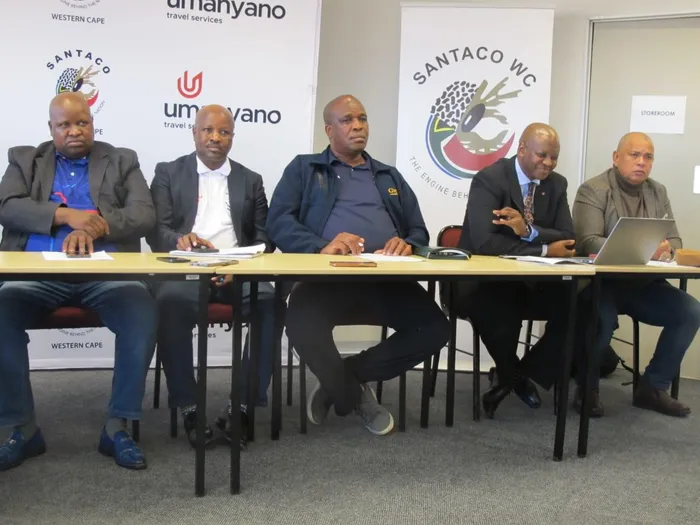
SANTACO leadership meet in the Western Cape. From left: CODETA chairperson Nceba Enge, CODETA secretary Mxolisi Liwani, CATA secretary Nelson Mayezana, SANTACO chairperson Besuthu Ndungane, and SANTACO second deputy chairperson Nazeem Abdurahman.
Image: Sibulele Kasa
Taxi commuters will be expected to pay between R2 and R3, and more, from Monday.
This comes as the SA National Taxi Council (SANTACO) in the Western Cape said rising fuel prices and mounting operational costs are being faced by operators.
According to the taxi council, fare increases will vary by route and distance, with some commuters expected to pay between R2 and R3, and more.
Speaking at a media briefing on Thursday, Nceba Enge, chairperson of the Cape Organisation for the Democratic Taxi Association (CODETA), said operators were left with little choice but to increase fares.
"We want to apologise to the commuters for maybe not giving them enough notice. But prior to this increase, we issued a statement where we notified our commuters that prices will increase because operators cannot pay for their vehicles."
Enge said CODETA and the Cape Amalgamated Taxi Association (CATA) had previously met in Nyanga to discuss concerns around rising fuel costs and fare hikes before consulting regions across the Western Cape.
He added that long-distance taxi fares would also increase from next week.
The single trip to the Eastern Cape will increase from R1 000 to R1 150.
The special Thursday trip will increase from R1 250 to R1 400, while the special Wednesday trip will rise from R1 200 to R1 350.
The Saldanha single trip fare will increase from R1 000 to R1 200, while the special trip fare will increase from R1 300 to R1 450.
These fare increases will take effect from Thursday, May 21.
The joint regional statement was delivered by Nelson Mayezana, who said SANTACO represents eight regions in the province, including Boland, CATA, CODETA, Eden, Greater Cape Town, Mitchells Plain, Northern, and Two Oceans.
Mayezana said the taxi industry continued to face significant financial pressure beyond fuel costs alone.
“A taxi operator must carry the cost of vehicle finance payments, insurance, vehicle registration, licensing fees, services and repairs, fuel driver costs, relief driver costs, rank marshals, payments to sliding door operators or conductors, association fees, and operational expenses,” he said.
Nazeem Abdurahman, the second deputy chairperson of SANTACO in the province, said the industry had attempted to shield commuters from frequent fare increases despite continuous fuel hikes.
He said SANTACO Western Cape had approached the government to request financial relief or subsidies for the minibus taxi industry.
“We have written to our national Minister of Transport to look into this, so that at least we can subsidize in this crisis period to the minibus taxi industry, because we don't enjoy the subsidy that other modes of transport enjoy.
“We are losing drivers almost every day because they can't make those targets,” he said.
Meanwhile, SANTACO Western Cape chairperson, Besuthu Ndungane, said discussions were ongoing with the Western Cape Government regarding possible relief measures for the industry.
He added that SANTACO was optimistic about engagements with both provincial and national transport authorities regarding future support measures for the taxi sector.