Western Cape flood disaster claims 10 lives and displaces thousands


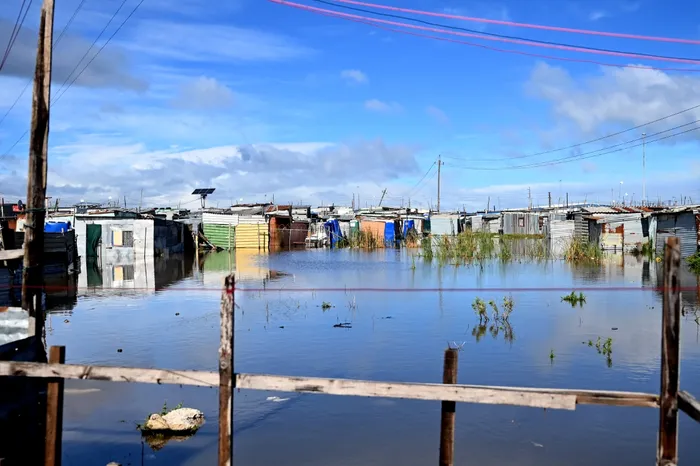
Severe weather in Cape Town has caused significant flooding in the Qandu Qandu Informal Settlement in Greenpoint, Khayelitsha.
Image: Ayanda Ndamane/ Independent Newspapers
The death toll from the severe storms that have struck the Western Cape has risen to 10, with more than 2 000 residents displaced in the Cape Winelands as floodwaters continue to cause significant damage across the province.
Western Cape Minister for Local Government, Environmental Affairs and Development Planning, Anton Bredell, confirmed on Wednesday that emergency response and recovery operations are at a “critical level,” despite some improvement in weather conditions.
“The Provincial Department of Health and Wellness has confirmed 10 fatalities across the province related to the recent severe weather conditions,” Bredell said.
He conveyed the provincial government’s condolences to grieving families, saying the Western Cape Government extends its “sincerest condolences to the families who have lost loved ones during the recent storms”.
Disaster management teams remain on high alert as rescue operations continue in flood-hit communities, particularly in the West Coast and Cape Winelands districts, where widespread flooding and severe infrastructure damage have left thousands affected.
“More than 2,000 people have been displaced in the Cape Winelands alone, with additional evacuations and shelter operations ongoing across multiple districts,” Bredell said.
Authorities warned that river systems across the province remain dangerously swollen following days of heavy rain. The Clanwilliam Dam has exceeded capacity at 103% full, forcing officials to open all sluices while downstream communities are closely monitored.
Meanwhile, the Breede River continues to pose a major threat after flow volumes of 1,655 cubic metres per second were recorded at Swellendam on Wednesday morning.
“As a result, downstream flooding remains a significant risk,” Bredell warned, urging residents to avoid flooded roads, rivers and low-water crossings.
Humanitarian organisations, NGOs and community groups have been deployed to provide emergency relief, including food parcels, blankets and hygiene supplies to displaced families sheltering in temporary accommodation.
Electricity restoration efforts are also underway, although Eskom has warned that damaged infrastructure and inaccessible areas are slowing progress in some communities.
Despite the scale of the disaster, health services remain operational across most affected areas, with contingency plans activated where facilities have been impacted.
The provincial government said all spheres of government and partner organisations remain fully mobilised, with rescue operations, humanitarian relief and infrastructure recovery now the top priorities as communities begin the long road to recovery.