South Africa's unemployment rate rises, leaving 8.1 million people without jobs


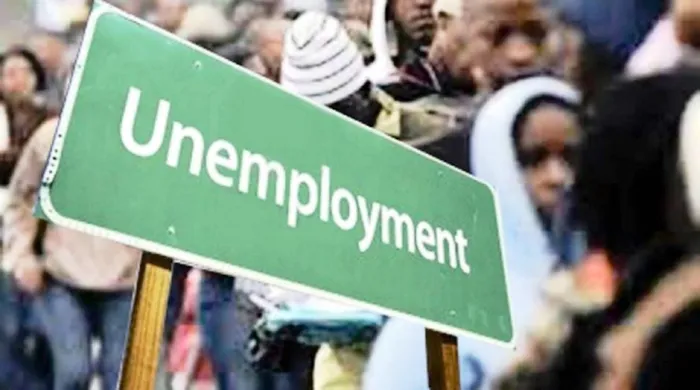
The labour force survey also revealed worsening conditions for young people, with youth unemployment climbing to 45.8%.
Image: File
South Africa's unemployment rate has risen to 32.7% in the three months of 2026, according to the latest Quarterly Labour Force Survey from StatsSA.
The economy shed 345 000 jobs during this period, resulting in a decrease in the number of employed individuals to 16.8 million.
Additionally, the number of unemployed South Africans increased by 301 000, reaching a total of 8.1 million.
This pushed the official unemployment rate up by 1.3 percentage points from 31.4% recorded in the fourth quarter of 2025.
The labour force survey also revealed worsening conditions for young people, with youth unemployment climbing to 45.8%.
The number of unemployed youth between the ages of 15 and 34 increased by 181 000 to 4.7 million, while employed youth fell by 258 000 to 5.6 million.
Speaking during the release of the survey, StatsSA's deputy director for labour statistics, Kwena Marevhula, said the latest figures reflect deteriorating labour market conditions across the country.
“The results of the quarterly labour force survey for the first quarter of 2026 indicate that the working age population in South Africa currently stands at 42.2 million and the labour force which includes those who are employed and unemployed is 24.9 million,” Marevhula said.
The survey showed that the number of people outside the labour force also continued to rise.
According to Stats SA, the number of people outside the labour market increased by 164 000 to 17.3 million in the first quarter.
This includes discouraged work seekers and people who are available for work but not actively searching for employment.
New labour underutilisation indicators introduced by Stats SA painted an even bleaker picture of the labour market.
The combined rate of unemployment and time-related underemployment rose to 35.9%, while the combined rate of unemployment and the potential labour force climbed to 43.7%. The broad composite measure of labour underutilisation stood at 46.3%.
“These labour underutilisation measures highlight people in different situations with different degrees of attachment to the labour market,” Marevhula said.
Job losses were concentrated in key sectors of the economy.
Community and social services recorded the largest decline with 206 000 jobs lost, followed by construction with 110 000 and transport with 30 000 fewer jobs.
However, manufacturing added 38 000 jobs, mining gained 32 000 and agriculture increased employment by 10 000.
Employment declined in every province except KwaZulu-Natal, which added 6 000 jobs during the quarter. The biggest employment declines were recorded in North West, Gauteng and Mpumalanga.
Marevhula noted that both formal and informal sector employment weakened during the quarter, underscoring the broad-based pressure facing South Africa’s labour market as economic growth remains sluggish.