Western Cape High Court calls for fresh hearing in attorney disbarment case


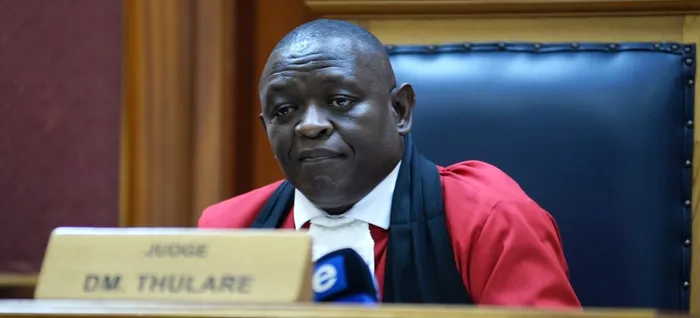
Judge Daniel Thulare said there was no proper investigation by the investigating committee, on the complaint lodged.
Image: File
The South African Legal Practice Council's (LPC) attempt to disbar an attorney due to a flawed disciplinary procedure has been sent back to its Disciplinary Committee (DC) for a new hearing.
Judge Daniel Thulare described the original proceedings as a "pro forma ritual," noting that the attorney was not properly sworn in, which undermined the legitimacy of the process.
In the first charge against the attorney, it related to his failure to respond to LPC correspondence. The second charge related to paying out the executor’s remuneration of R68,984.70 to himself before lawfully being entitled to do so.
The attorney, after being asked to plead to the charges, pleaded guilty to both.
However, in respect of the second, he gave an explanation that the Master of the High Court was aware, but that he proceeded with the administration of the estate as a duly appointed executor.
It was, however, during the disciplinary proceedings that the attorney, on his own volition, offered information to the committee in which he admitted to a “misappropriation of funds from my side, where I withdrew funds that weren’t supposed to be withdrawn from the estate”.
The attorney’s confession was that he misappropriated an estimated amount of R500,000 that he then subsequently repaid back into the estate.
In light of the confession, which was done in the absence of the attorney being properly sworn in under oath, the chairperson of the Disciplinary Committee immediately said another charge (charge 3) should be added. The attorney did not plead to the added charge.
After the sanction, the attorney raised issues around the procedure of sanctions, especially the decision to apply for him to be struck off from the roll of legal practitioners, and due to his confession during disciplinary proceedings.
Judge Thulare said: “There was no proper investigation by the investigating committee, on the complaint lodged… with specific reference to bank statements that underpinned charge 3. If there was, charge 3 would have been part of the notice served on the respondent.
“From the transcript, it cannot be said that the DC also considered the evidence, in particular the bank statements, in any detail either before or during the framing of charge 3 against the respondent or before the pronouncement of their findings at the hearing, if the bank statements were before them at that stage.”
Judge Thulare said that after he carefully considered the transcript, he was unable to locate where charge 3 is put to the respondent, and where the respondent pleads guilty to count 3.
“A transcript of a disciplinary hearing conducted by a Disciplinary Committee of the South African Legal Practice Council must, when read by a university law student, teacher of law, employer, union representative, and any other interested party, in itself serve as some form of study guide on how such a process demonstrates the formalities of such forums and how the management and application of discipline translates into substantive and procedural justice, upholding the dignity, equality, and fairness of and in the legal profession.
“In these circumstances, a court cannot simply play along when the conduct of a DC and the processes that followed have the tendency to erode the legitimacy of a disciplinary process of a legal practitioner, where such practitioner was denied genuine participation on a serious charge, which charge sounds in misappropriation of funds in a late estate account,” Judge Thulare said.