Boyes Drive alien invasive project makes strides in vegetation clearing


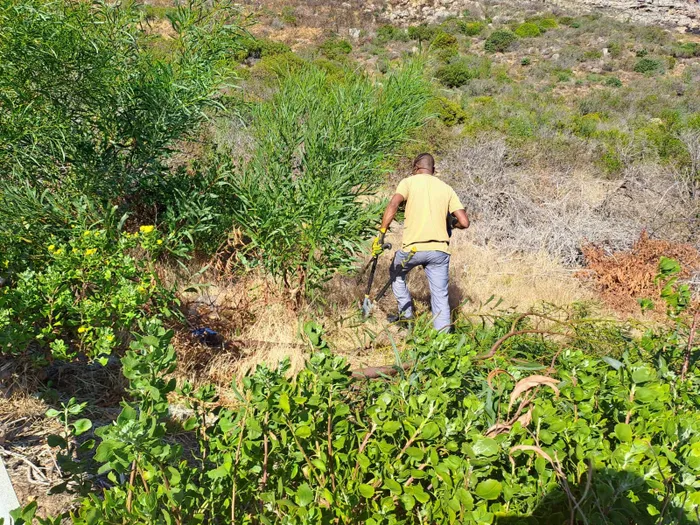
Geoffrey Kusamba working in Nbal 085 near the fire break on Boyes Drive as part of ongoing alien invasive clearing efforts.
Image: Supplied
The Boyes Drive Alien Invasive Hacking Group says it has continued clearing invasive vegetation along Boyes Drive and surrounding slopes.
The group, which works closely with SANParks, reported steady progress through 2025 and into 2026.
According to founder Karen Hart, work has focused on several areas between Lakeside, Boyes Drive and Steenberg, including sites affected by recent fires and regrowth over the past two years.
A key focus has been the burnt section near the Steenberg Plateau car park (Nbal 245), where teams cleared regrowth following the January 2023 fire.
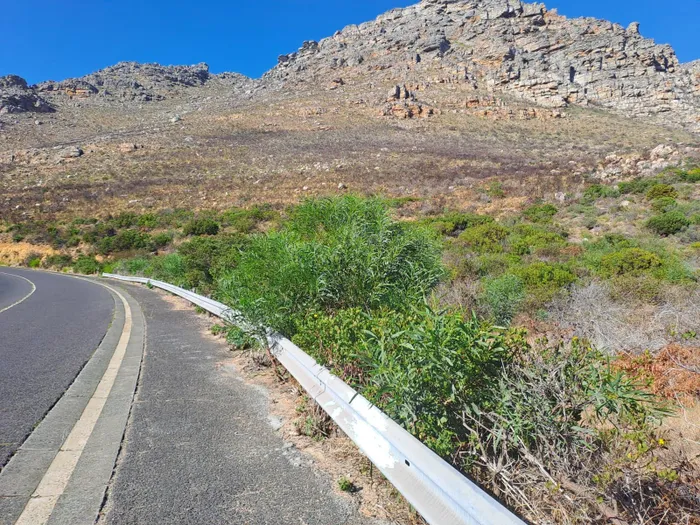
Before clearing at the Lakeside corner of Boyes Drive.
Image: Supplied
Further clearing was conducted below Boyes Drive, between Lakeside and the steps at Bunker Road, following the April 2025 fire.
The group has targeted invasive plants such as lantana and lavender, which have spread into the area.
Work has also taken place around the climbers’ path on Lakeside Pinnacle and nearby slopes, with assistance from the Traffic Department on several occasions.
This included the temporary closure of the northbound lane at Old Boyes Drive, with traffic diverted to Main Road to ensure safe working conditions.
SANParks assisted with biomass removal during operations.
Further clearing was carried out in November and December 2025 in a newly burnt section near a water collection point, with follow-up work continuing into early 2026 on a plot next to Stonehurst at the corner of Westlake Avenue and Boyes Drive.
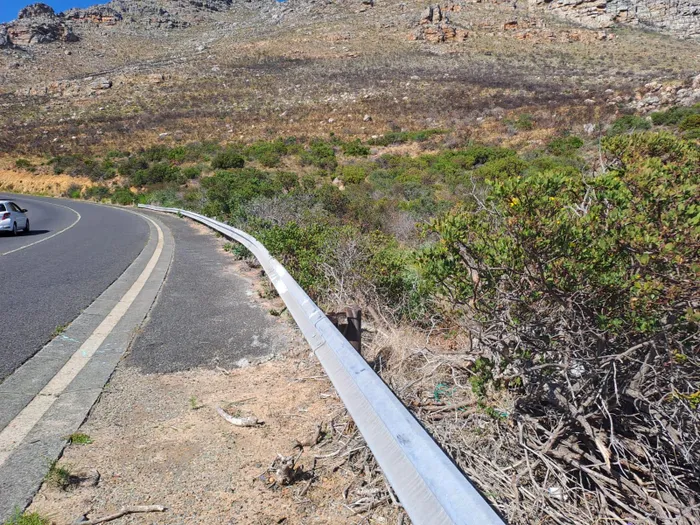
After clearing operations at the Lakeside corner of Boyes Drive, part of ongoing efforts to remove invasive vegetation in the area.
Image: Supplied
Maintenance follow-ups have also been done in previously cleared areas, including Nbals 091, 092 and 093, covering nearly 36 hectares.
Hart said results in cleared areas remain strong.
“We have had about an 80% success rate where we have cleared,” she said.
“What is also really encouraging is that it seems the fungus is starting to do its job.
“Trees that would previously have had seed pods in Jan / Feb haven’t had any, so we are just dealing with what is in the ground.”
Between March 2025 and February 2026, volunteers contributed 1 438 hours of work — equivalent to about 180 full working days.
On funding, the project received R96 880 over the period, with R81 860 spent on three gardeners.
Additional costs included tools, protective equipment and travel, while SANParks covered herbicide costs.
The remaining balance carried forward is R21 954.68.
Looking ahead, Hart said focus will shift to larger priority areas, including Nbal 274 (19.13 ha), Nbal 245 (38.33 ha), and burnt zones in Nbal 085 and Nbal 086 affected in April 2025.