Is Cape Town becoming unaffordable? A look at rising property prices


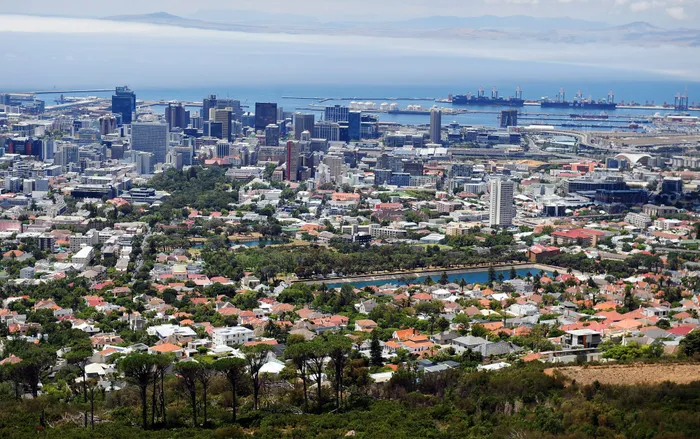
Is Cape Town becoming a premium lifestyle market rather than a broadly accessible one?
Image: File Picture
Cape Town's property market is facing a critical change as rising prices are forcing buyers to look beyond the city limits. Frans Stander, a property partner at Lew Geffen Sotheby's, reports that towns like Tulbagh, Barrydale, Paternoster, Bonnievale, and Kleinmond are shifting from weekend getaways to serious lifestyle investment options.
Shift drivers include:
- Buyers are chasing more space, natural surroundings and a slower daily rhythm,
- Remote and hybrid work has made "distance from the office" less relevant.
- Value for money is significantly better outside the Cape Town metro.
Does Cape Town still make financial sense?
According to the property practitioner, a growing number of middle-class buyers are now re-considering Gauteng, drawn by lower property prices, more accessible rentals, and a realistic entry point for first-time buyers.
He says in other words, the affordability conversation is no longer just about where in Cape Town, it's about whether Cape Town still makes financial sense at all.
He adds that they are seeing two parallel shifts:
- Semigration within the Western Cape (towards smaller towns).
- Reverse interest in Gauteng as a value-driven alternative.
He says this raises some important questions:
- Is Cape Town becoming a premium lifestyle market rather than a broadly accessible one?
- Will small towns be able to handle increased demand and infrastructure pressure?
- Could Gauteng quietly become attractive again for a new generation of buyers?
History will repeat itself
History will repeat itself, as once upon a time, Camps Bay was a small coastal village, says Regan van As, a commercial real estate professional.
He says the Garden Route has already exploded. “George will become a massive player, and the West Coast is following suit, showing rapid growth.
Cape Town is no longer for the middle-class family looking for value
He adds that functioning municipalities, quality of life, price arbitrage and safety will drive semigration to the Western Cape, but Cape Town is no longer for the middle-class family looking for value at a fair price (geographic arbitrage no longer exists).
Meanwhile, Finella Botes, the high-value property consultant at Seeff Atlantic Seaboard, says she has had a few comments recently around pricing on the Atlantic Seaboard.
She says, "Of course, agents support higher prices... it benefits them."
“And I understand where that comes from, but the reality is prices in this market aren't being set by agents. They're being driven by what buyers are willing to pay-and right now, those buyers are very specific.
"Not everyone is buying everything. So the idea that prices are just being pushed up without resistance... It's not quite accurate.”
The other assumption that Botes says she often sees is that because she works in this market, she must be completely removed from it. “That's not the case. I work in the Atlantic Seaboard every day, but like many people, I've had to make practical decisions about where I live and what I buy.
"This market affects me too. My partner and I don't even live there.”
The Atlantic Seaboard market has become selective
The Atlantic Seaboard has always been a premium market, the consultant says. She says that has not suddenly changed.
“What has changed is how selective the market has become. And that's where the real conversation should be. Not whether prices are "high" or "low" - but whether they are justified. Because in this market, if they aren't... buyers simply don't engage,” says Botes.