CoCT weighs appeal after court strikes down property-linked tariffs


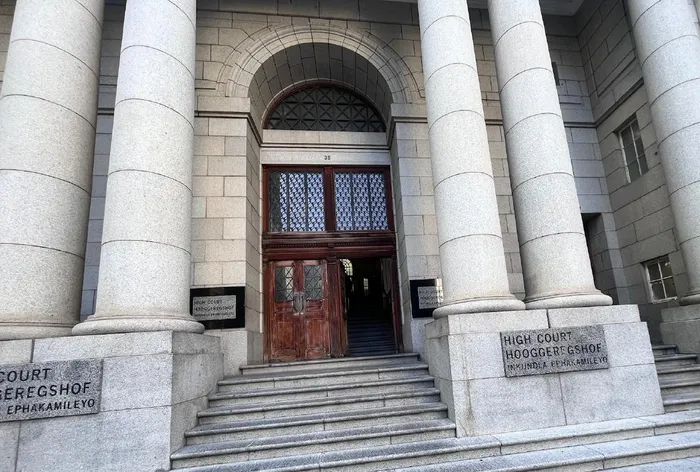
The City of Cape Town said that it is considering its appeal options after the Western Cape High Court ruled that certain fixed charges should not be linked to property value.
Image: File
The City of Cape Town is weighing its appeal options following a Western Cape High Court ruling that declared certain fixed charges unconstitutional.
The court's judgment on Thursday deemed the City's fixed tariffs unlawful and invalid, citing inconsistencies with the Constitution, national legislation, and the City's own tariff by-law.
Judge President Nolwazi Mabindla-Boqwana, as well as presiding judges Judge Andre Le Grange and Judge Katharine Savage, heard arguments by the City, SAPOA, and AfriForum over the fixed charges in the 2025/2026 budget.
South African Property Owners’ Association (SAPOA) and AfriForum challenged the City’s fixed tariffs and their decision to link certain fixed charges to property values. In its main application, SAPOA asked for the three tariffs in the budget, namely the Cleaning Tariff, the Fixed Water Charge, and the Fixed Sanitation Charge, to be declared unconstitutional and invalid.
The City has maintained that its fixed charges are not rates but service charges.
The court also ordered that those charges are to be set aside with effect from June 30, 2026.
Upon hearing the judgment, the City said it will analyse it and consider its options for appeal. They said that the court order will, however, be suspended should they choose to appeal.
Mayor Geordin Hill-Lewis said: “The point of using property values to determine fixed charges is to protect lower- and middle-income homes. The only alternative to this is for everyone to pay a flat charge regardless of whether they are low-income or affluent.
“The implication of today’s ruling might be that fixed charges go up for many families, and go down for more affluent families. That is the perverse implication of this ruling, and why we will have to carefully consider how best to protect middle and lower-income families going forward.
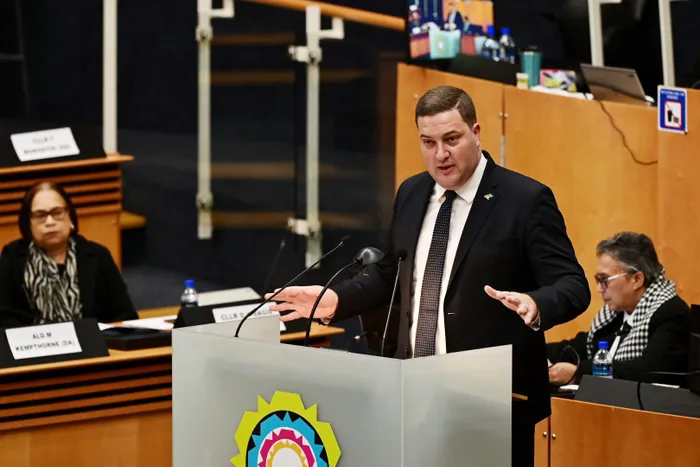
Mayor Geordin Hill-Lewis said the City cannot agree that wealthy property owners should be charged the same as lower-income or middle-class households.
Image: Supplied
“The only other option would be to cut our infrastructure budget - I see already that the organisation StopCOCT is arguing for precisely that. This would lead to a less functional city with less basic dignity for residents - a terrible and indefensible implication,” Hill-Lewis said.
“We do not agree with this course of action at all. Investing in infrastructure is the core of what makes a city work for all, and a growing economy. The City will carefully model the potential impact of this ruling on lower and middle-income households – who we will keep striving to protect,” said Hill-Lewis.
AfriForum said that the ruling confirms the fair core principle of charging services based on usage.
AfriForum Regional Head for the Southern Region, Jurie Ferreira, said that the ruling confirms that tariff structures must be transparent, rational and legally justifiable.
“Any attempt by municipalities to generate revenue through arbitrary or indirect measures falls squarely outside the framework of the law – and the court has now reaffirmed this position,” Ferreira said.
Manager of Local Government Affairs at AfriForum, Morné Mostert, emphasised that the ruling specifically concerns the application of this tariff model in the City of Cape Town, but the decision also has important implications for municipalities in the rest of the country.
“Municipalities across the country will now have to re-evaluate their tariff structures based on the clear standard that the court has now set, namely, that tariffs linked to consumption are not optional but a legal requirement,” explains Mostert.
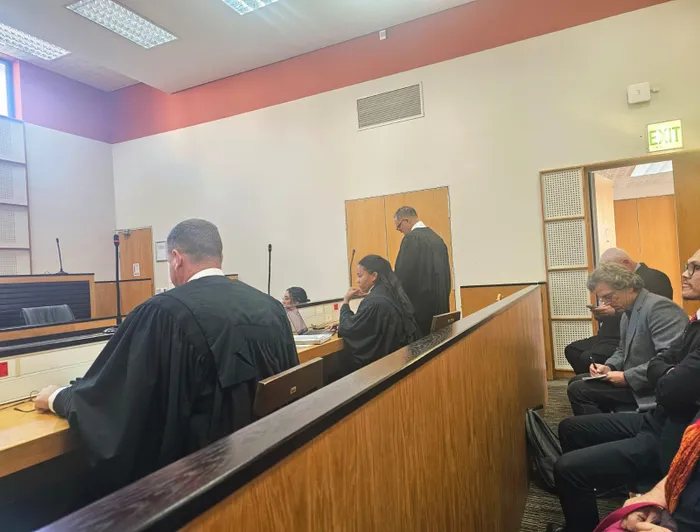
The High Court Bench handed down its judgment declaring the City fixed tariffs unlawful and invalid as they are inconsistent with the Constitution, national legislation and the City's tariff by-law.
Image: Theolin Tembo/Independent Newspapers
CEO of SAPOA, Neil Gopal, said: “SAPOA has found no joy in litigating against the City of Cape Town, with whom it enjoys a very warm relationship. Having said that, however, SAPOA is happy that it was vindicated in its views that the impugned tariffs are unlawful, as it had argued all along.”
Gopal added that SAPOA looks forward to constructive consultation with the City in order to arrive at a lawful budget for the next financial year, which meets the needs of both the City and its residents.
SAPOA also urged the City not to waste further taxpayer money, to accept the Court’s well-reasoned judgment, and to instead focus its attention on delivering a lawful budget for 2026/27.
The GOOD Party has called on the City to stop pretending that it cares "about redistributive and social justice, and actually do something real to narrow inequality”.
GOOD Secretary-General, Brett Herron, said: “Rather than waste more ratepayers’ money on misleading PR or lodging an appeal to the Appeal Court, the City must prepare a new budget without delay and get it out for public comment.
“The GOOD Party was granted leave by the court to intervene in the application brought against the City‘s unlawful tariffs by SAPOA. Now the City must actually do something to narrow inequality. It must stop its fixed tariff nonsense and develop a system that charges more to those who can truly afford to pay – most of whom live in areas that receive a superior basket of services from the City, anyway,” Herron said.
Get your news on the go, click here to join the Cape Argus News WhatsApp channel.