Stellenbosch CBD intensifies efforts against the Polyphagous Shot Hole Borer


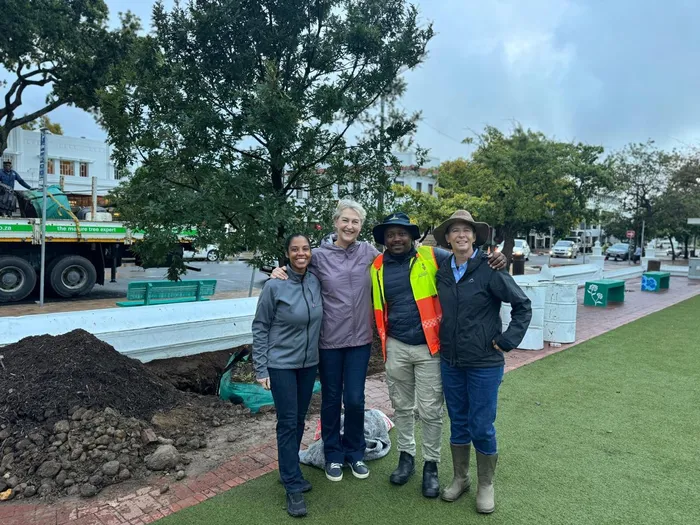
Core members of the tree-planting project aimed at mitigating the effects of the Polyphagous Shot Hole Borer (PSHB) in Stellenbosch. From left: Tammy Leibrandt, environmental manager at Stellenbosch Municipality; Francé Beyers, project coordinator; Alungile Nondlwana, assistant superintendent in the urban forestry department; and botanist Liesl van der Walt.
Image: Supplied
Efforts to combat the spread of the Polyphagous Shot Hole Borer (PSHB) in the Stellenbosch central business district are gaining momentum, with a second round of tree planting recently completed.
Following the planting of two Turkish oak trees in front of the City Hall last month, a further six trees were planted on Thursday, April 16.
The tree-planting project coordinator, Francé Beyers, said the latest trees were planted along Plein and Andringa Streets, as well as at the corner of Dorp and Drostdy streets.
This project aims to combat the impact of the PSHB beetle through protection, removal and strategic replanting. Phase one will focus on the CBD with plans to expand across the municipality as the infestation evolves.
Key interventions include strengthening the resilience of existing trees through improved care and nutrition, while ensuring the safe removal of dead trees in accordance with municipal and heritage guidelines.
Beyers said the team is facing challenges with two planting sites in Plein Street, where dense root systems have proven too tough for the stump grinder. The team was set to request permission from the municipality to excavate next to the existing tree pits.
She added that 15 additional trees have been identified for planting in Dorp Street, pending the necessary approvals. Future phases may extend to side streets such as Ryneveld and Andringa Streets, and, subject to funding, Bird Street.
Beyers, who initiated the project, said she took it on because she believes each generation has a responsibility to care for the environment and improve communities for those who follow.
She grew up on a farm in Worcester. She said there was a big old oak tree outside her bedroom window, and the guineafowls would sleep there at night. Their chirps and calls would be the first thing she heard as she woke up in the mornings.
“I know oak trees are not indigenous trees (in South Africa), but they have become such an important part of our cultural heritage. They are so majestic and live for hundreds of years. I almost feel like a lot of our old oak trees are like our ancestors keeping watch over us,” she said.
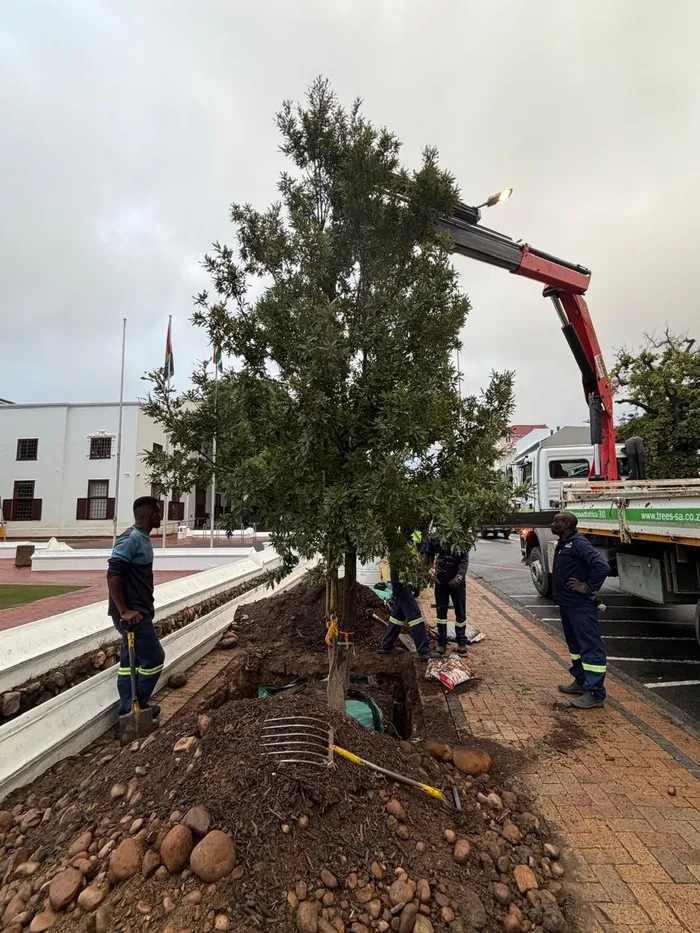
Tree-planting underway in the Stellenbosch CBD.
Image: Supplied
She is also involved in the Stellenbosch Outdoor Sculpture Trust, which hosts annual outdoor exhibitions to bring art into public spaces.
Assistant Superintendent Alungile Nondlwana from the municipality’s Urban Forestry Department said the project plays a key role in preserving the town’s identity.
“It’s about ensuring continuity. We are investing in the future by replacing vulnerable trees and maintaining the character that has earned Stellenbosch its reputation as the “City of Oaks.” It’s also a proactive response to an environmental challenge, showing commitment to biodiversity, urban greening, and long-term resilience,” he said.
The initiative is funded through donations rather than municipal resources. For more information, residents can email [email protected].