SABC reassures parliament of editorial independence amid commercial pressures


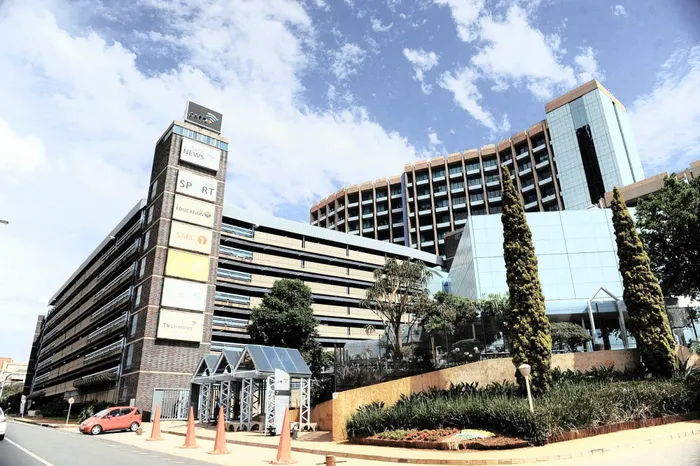
SABC Group CEO Nomsa Chabeli gave the breakdown of the revenue sources that indicated 79% of the revenue came from advertising and sponsorship.
Image: Bhekikhaya Mabaso / Independent Newspapers
The SABC has reassured parliament that its editorial independence will remain intact despite its heavy reliance on commercial advertising for revenue.
Board Chairperson Khathu Ramukumba provided these assurances during a parliamentary briefing on Thursday, while responding to concerns raised by ANC MP Imraan Subrathie regarding potential influences from private interests on the public broadcaster's editorial policy.
Standing firm on the SABC's commitment to maintaining a strong editorial policy, Ramukumba said: “We are confident that the safeguards are sufficient to make sure that the independence of the SABC is secured at all times.”
His statement comes in the wake of SABC Group CEO Nomsa Chabeli indicating that approximately 79% of the broadcaster's revenue is drawn from advertising and sponsorships, a situation she described as “highly unusual” for a public entity.
Chabeli presented a breakdown of the broadcaster's financial standing, revealing that the commercial revenue reached R3.9 billion, while licence fees and government grants contributed R790.7 million and R238.7 million, respectively.
Despite this significant commercial dependency, Chabeli emphasised the SABC's unwavering dedication to the public good.
Chabeli noted an unfunded mandate nearing R7.9 billion, indicating that while the SABC has stabilised financially, systemic issues remain.
Key among these challenges is the broadcaster's inability to consistently invest in innovative content and vital infrastructure.
Acting CFO Tendai Matore outlined a budgeted revenue target of R5.8 billion against the anticipated expenses of R6.1 billion, underscoring the financial constraints still faced by the organisation.
“We have not received finalisation of the local election funding. Those (funds) have not been factored in the budget,” Matore said.
He highlighted that the SABC remained financially constrained in meeting its liabilities as they arise.
DA MP Shara Singh urged the SABC to capitalise on its archive content, suggesting potential partnerships with global streaming companies to monetise historical assets.
Committee Chairperson Khusela Sangoni-Diko wanted to know whether there was a plan to monetise the SABC Plus channel.
In response, Chabeli said they have partnership with the likes of Netflix, which used its studios for sound.
“For 2026/27, we plan to upgrade our studios and enter the market to ensure we monetise them by partnering with other broadcasters.”
Chabeli confirmed existing arrangements with MultiChoice to secure carriage fees for the channel and disclosed recent contracts with three digital agencies to promote SABC Plus to advertisers.
Ramukumba cited a significant decline in losses and improved cashflow.
“We can begin to repay the debt owed to Sentech. That debt is something that worries us and we are committed to attend to it,” he said.
Ramukumba expressed a willingness to explore partnerships for archiving, aiming to retain intellectual property and ownership of the archives, while enhancing revenue opportunities.
Chabeli reiterated this vision, mentioning plans to utilise artificial intelligence in archival processes.
“We see it as the real asset for the SABC, and it is something we are to focus on in this current financial year,” she said.