From ‘kaalvoet laaitie’ to codifying Kaaps, Williams’ journey meets woriboek milestone


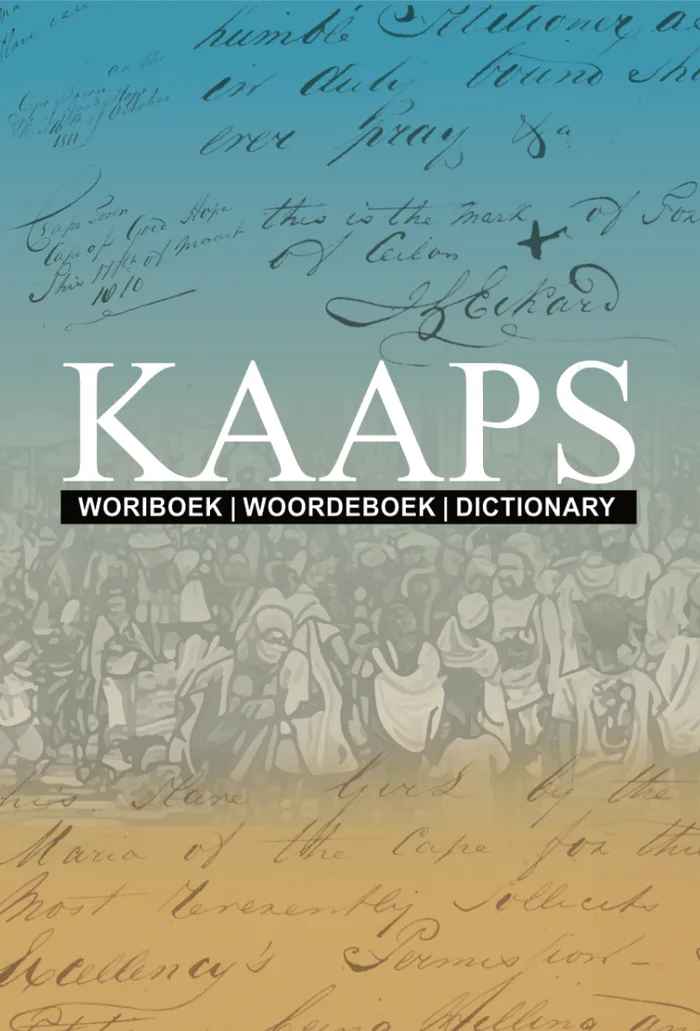
Launch of the Kaaps Woriboek at the Castle of Good Hope, marking a step in documenting Kaaps as a written language.
Image: Supplied
A language widely spoken in homes and communities across Cape Town is now being formally documented, with the release of the Kaaps Woriboek at the Castle of Good Hope yesterday.
Professor Quentin Williams, director of the Centre for Multilingualism and Diversities Research at the University of the Western Cape, who grew up in Bishop Lavis, described his background during his inaugural lecture as that of a “kaalvoet laaitie vannie Bishop Lavis”.
“We all grew up speaking Kaaps,” he said during the lecture, reflecting on his early experiences of language and education.
He said that, in school, Kaaps speakers were often taught in what he described as “two foreign-sounding languages: standard Afrikaans and English”.
“I set the task for myself to advance an approach to multilingualism that emerges from society, from speakers,” he said.
According to organisers, the Kaaps Woriboek is the result of years of linguistic research and community engagement, aimed at formally documenting the lexicon of Kaaps.
The project, led by the Castle of Good Hope in partnership with the University of the Western Cape, the Heal the Hood Project, the Societie Virrie Advancement van Kaaps (SAK), and Shofar Books, is intended as both a reference resource and a contribution to ongoing discussions around language recognition.
The publication builds on earlier work launched in 2021 by the Centre for Multilingualism and Diversities Research at UWC and the Heal the Hood Project, which initiated a trilingual Kaaps dictionary project. That initiative was supported by the Western Cape Department of Cultural Affairs and Sport and the Centre for Language, Race, and Ethnicity at the University of California, Los Angeles.
In earlier project material, Williams said Kaaps “remains one of the oldest and most marginalised ways of speaking”.
“For decades, activists, academics, artists, authors campaigned for the empowerment of Kaaps speakers,” he said.
“With this dictionary project, we are taking the first real step in that direction.”
Williams’s research focuses on the history and use of Kaaps, as well as how speakers engage with language in social and educational contexts.
He has also referred to the concept of “linguistic citizenship”, which relates to how speakers claim ownership of their language.
Also referred to as Afrikaaps, Kaaps developed in southern Africa through contact between indigenous Khoi and San communities, enslaved and migrant populations from South-East Asia, and European settlers, including Dutch, Portuguese and English speakers.
According to linguistic research, the language took shape from the 1500s through interaction, trade and migration. It is now widely used, particularly among working-class communities on the Cape Flats in Cape Town, an area shaped by forced removals during apartheid.
Kaaps is used across social, cultural and economic contexts, including online platforms, and continues to evolve through everyday use.
The Kaaps Woriboek includes commonly used words such as “aweh”, a greeting used in everyday speech. The dictionary is available through Shofar Books online and at its outlet in Kuils River.