Department of Agriculture faces backlash over Foot-and-Mouth disease response


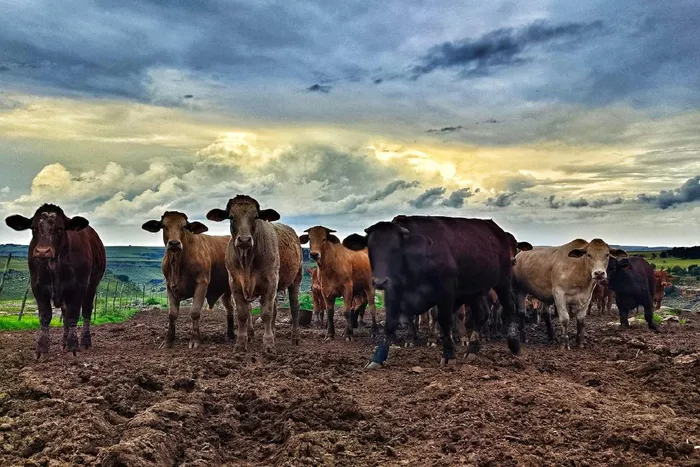
The vaccinations form part of the Western Cape Department of Agriculture’s 21-point action plan to combat the national FMD outbreak in the province.
Image: Murray Swart
The EFF has lashed out at the Department of Agriculture's Foot-and-Mouth Disease (FMD) presentation to Parliament, claiming it “fails to provide a coherent, transparent, and credible account of the scale of the crisis.”
The party’s criticism comes after Parliament’s Portfolio Committee on Agriculture heard from the Deputy Director-General: Agricultural Production, Biosecurity and Natural Resources, Dipepeneneng Serage, and Chief Director for Animal Production and Health, Dr Botlhe Modisane, on Tuesday.
The officials shared that cases of FMD are going up but attributed this to previous under-reporting, and said that there are enough vaccines to manage the outbreaks.
They added that, as the Department of Agriculture, they are also unhappy with the progress being made.
“Are we happy with the progress? No, we are not. What is causing this delay or this somewhat sluggish process? It's because we rely on imported vaccines. Vaccine registration is a long process, and we have not had the appetite, with the private sector in the country… and unfortunately, we have to rely on the importation of vaccines,” Serage said.
“At the same time, our resources on the ground to be able to vaccinate quicker, we are still ramping that up, and we hope for the vaccination rate to improve.”
The EFF was left unimpressed with the presentation, claiming it creates the impression that the situation is being managed, when the data reflects the opposite.
“The most paramount concern is the continued rise in infections across the country. Reported outbreaks have increased sharply from 932 cases on March 2 to 1,502 cases by April 17. Provinces such as the Free State have escalated from 277 to 414 cases, while North West has more than doubled from 119 to 268 cases.
“This sustained upward trajectory cannot be explained by improved reporting alone, as suggested in the presentation. It reflects a failure to contain the spread of the disease and a lack of decisive intervention at a national level,” the party said.
“At the same time, the report notes that there have been no new outbreak reports in the Western Cape, with the province remaining at 13 cases between April 10 and 17. Stability in any province should be welcomed.
“However, it is politically convenient that the only province demonstrating stability is one governed by the DA, while provinces experiencing rapid escalation continue to struggle with rising infections. This reality demands a transparent explanation of how resources, coordination, and interventions are being prioritised across provinces with differing levels of risk,” they said.
The EFF said that what was further alarming was the level of vaccine wastage acknowledged in the report.
“The minister attributes losses of 6-8% to leaking bottles, breakages, and logistical challenges. In real terms, this translates to between 147,000 and 196,000 doses potentially lost. In the context of a rapidly spreading outbreak, this is not a minor operational issue; it is a serious failure of planning, procurement, and distribution systems.”
The party said the report exposes weaknesses in coordination and utilisation.
It also criticised the decision by the Speaker of Parliament to reject its proposal for an urgent debate on this matter.

Minister of Agriculture John Steenhuisen.
Image: Phando Jikelo / Parliament of RSA
The Minister of Agriculture, John Steenhuisen, said that the EFF chooses to grandstand on myths, not facts.
“The disease is being managed using a scientific, risk-based approach, and vaccine allocation is done by the Ministerial Task Team (MTT) and department according to the risk-based strategy,” Steenhuisen said.
Get your news on the go, click here to join the Cape Argus News WhatsApp channel.