Debate heats up over Cape Town's eviction bill amid rising land invasions


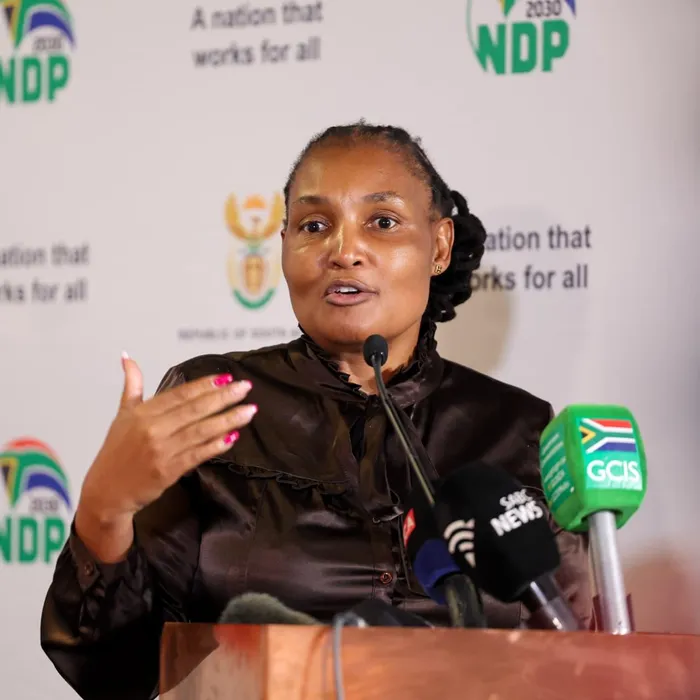
Minister Thembi Simelane says the PIE Amendment Bill has been published for public comment, aiming to strengthen eviction laws, curb illegal land occupations, and improve enforcement and legal clarity.
Image: Department of Human Settlements / X
The proposed overhaul of South Africa’s eviction laws has sparked debate as Cape Town grapples with mounting pressure from unlawful land occupations.
The Prevention of Illegal Eviction from and Unlawful Occupation of Land Amendment Bill, now open for public comment, aims to strengthen enforcement and improve clarity in how evictions are handled.
Human Settlements Minister, Thembi Simelane, said the changes are intended to clamp down on unlawful occupations.
“The proposed amendment seeks to empower municipalities, State entities, and private property owners to respond more decisively to illegal occupations and evictions,” Simelane said.
Key proposals contained in the Bill include: introduction of additional offence - to include those who incite or organise illegal occupations, even where no money is exchanged; imposing a fine of R2 million or imprisonment on a person or individuals who incite people to unlawfully occupy land; an expansion on the definition of “Person in Charge” to enable municipalities to apply for urgent interdict even when it is not the owner of the land that is being invaded.
But Michael Clark, an urban land researcher at the Development Action Group, said several of the proposed amendments raise concerns about how evictions will be handled in practice, particularly for vulnerable households.
“The inclusion of the private person who owns the property as the potential provider of alternative accommodation is unusual and novel,” Clark said.
He stressed that existing case law already places clear obligations on municipalities.
“The duty to provide alternative accommodation is a duty that rests on municipalities, and they are required to plan for, and fund the provision of alternative accommodation from their own budgets if they have to,” Clark said.
He also questioned the Bill’s focus on criminalisation.
“It is unclear why the state has decided to add this kind of offence, when various other offences that have been created in terms of the PIE Act have not been properly used or prosecuted,” Clark said.
Western Cape Infrastructure MEC Tertuis Simmers said the province supports the proposed changes, citing the scale of the problem.
“We believe these reforms will contribute significantly to safer communities, stronger municipalities, sustainable human settlements, and greater certainty for investment and economic growth,” Simmers said.
The provincial government said more than R1 billion was spent between 2019 and 2024 securing land from unlawful occupation.
The City of Cape Town also highlighted the scale of the issue locally.
Mayco member for Human Settlements, Carl Pophaim, said more than 243 812 households are currently living in informal settlements across the metro.
“Every unlawful occupation condemns people to higher risks of fire, flooding and crime and jeopardises service delivery,” Pophaim said.
The City said 186 new informal settlements were established during the Covid-19 lockdown period, bringing the total to 657, with more than 60% considered high risk.
Pophaim said the City is still considering the proposed amendments but welcomed efforts to address what it described as a growing crisis.