What’s next in the sewage discharge crisis affecting Hout Bay, Camps Bay, and Green Point?


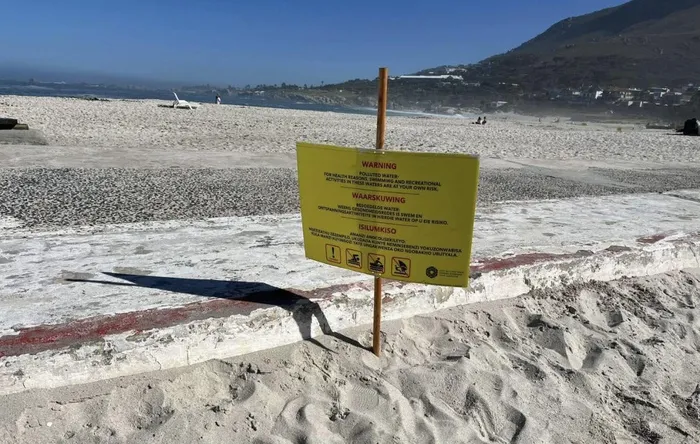
Camps Bay was closed for a period after a sewer spill.
Image: Michael Beaumont
Updated limits on sewage discharge at Hout Bay, Camps Bay and Green Point could come into effect as soon as next month.
This, as sewage discharge into the ocean continues without updated effluent limits currently in force, according to a written reply to parliamentary questions.
Responding to questions from ActionSA MP Dereleen James, the Minister of Forestry, Fisheries and the Environment, Willie Aucamp, said certain effluent discharge limits linked to the City’s coastal permits had been suspended pending the outcome of an appeals process.
Aucamp said a final decision on the appeals could be made by the end of May 2026 following input from an expert panel.
James said the suspension of limits has resulted in continued discharge without enforceable caps.
“This effectively means that, for nearly two years, sewage discharge has continued without enforceable volume limits, an extraordinary failure of environmental governance,” she said.
Mayco member for Water and Sanitation, Zahid Badroodien, said the City is not discharging an uncontrolled volume of screened sewage.
“The City is not discharging an uncontrolled volume of screened sewage through the marine outfalls,” he said.
“The City is complying with the original national Department of Water and Sanitation’s licence conditions pertaining to flow limits.”
Badroodien said independent scientists monitor ocean conditions and that results are reported to the relevant authorities.
“Independent scientists monitor ocean conditions and the City reports to the regulating authority on all necessary parameters,” he said.
According to the City, monitoring conducted between July 2025 and January 2026 included more than 1 100 seawater samples collected around the three outfalls, with 99% within guideline limits and 0.8% exceeding single-sample thresholds for enterococci bacteria, mainly within defined mixing zones near the discharge points.
The City said the outfalls are operating within design capacity and that surrounding coastal waters remain suitable for recreational use.
Professor Leslie Petrik, an environmental chemist at the University of the Western Cape, said the City does not provide transparent and accessible records of daily discharge volumes.
“These marine outfalls daily discharge raw, untreated sewage… straight out to sea,” Petrik said.
“Our studies… attest to the complex chemical mixtures and numerous bacteria… that have a very significant environmental and health impact.”
She said sustained exposure to these substances may affect marine ecosystems.
“Poor sanitation is ecocide,” she said.
ActionSA said it has filed criminal charges against the City, alleging non-compliance with permit conditions, including exceedances in effluent limits and failures in monitoring obligations.
The City said it is implementing upgrades, including a R199 million refurbishment of pump stations linked to the three outfalls, and is conducting feasibility studies into longer-term treatment solutions.
Last month, Department of Forestry, Fisheries and the Environment spokesperson Zolile Nqayi said the Appeal Advisory Panel was finalising its recommendations.
“The Appeal Advisory Panel is in the process of finalising its recommendations on the appeals pending before the Minister,” Nqayi said.
He said the Minister would aim to finalise the appeal within 20 days of receiving the panel’s recommendations.
The Department had not responded to further questions at the time of publishing.