West Coast fishers face income crisis due to crayfish quota delays


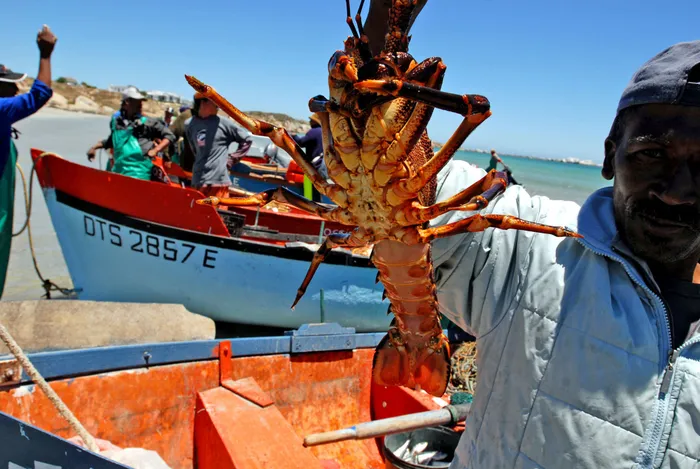
West Coast fishers say delays and discrepancies in crayfish quota allocations have disrupted their ability to earn an income during the short fishing season.
Image: File
Small-scale fishers on the West Coast have been left without meaningful income after delays and discrepancies in crayfish quota allocations, which Masifundise Development Trust said effectively cost them the season.
The concerns come as political leaders gathered in St Helena Bay at the weekend to mark the restoration of nearly 300 small-scale fishing vessel permits in the traditional linefish sector.
Masifundise said issues around crayfish allocations had been raised months before the start of the season, but were not resolved in time.
“The concerns around crayfish allocations were raised as early as November, particularly by small-scale fishers on the West Coast and the Legal Resources Centre, and have been consistently brought to the department’s attention since then,” said Nobathembu Ndzengu.
“On at least two occasions, the response has been that there were computational errors, yet no timely resolution followed.”
Ndzengu said by the time clarity was provided, the fishing season had effectively passed.
“In the meantime, the fishing season has effectively passed, and only now has it been confirmed that there is a reduction in allocations,” she said.
“This lack of clarity and delay has had serious consequences, especially considering that at the start of the season fishers were led to expect an increase.
"Instead, not only did that increase not materialise, but the eventual outcome has left many without meaningful income for the season.”
She said uncertainty and inconsistent communication from the Department of Forestry, Fisheries and the Environment (DFFE) had made it difficult for communities to plan.
DFFE did not respond to requests for comment at the time of publication.
Coastal Links spokesperson, Isaac Philander, said fishing organisations had repeatedly raised concerns with the department.
“We have also sent a lot of letters to the department, but we can see that nothing has really changed,” Philander said.
“We are still struggling to get recognition.”
In February, the Legal Resources Centre submitted a report to the South African Human Rights Commission highlighting challenges in the small-scale fishing sector, including governance and administrative issues affecting access to resources.
Ndzengu said the current allocation system needs to be reconsidered.
“There is a need to move away from a single-species management approach and instead consider the full basket of species that communities rely on,” she said.
“In addition, introducing multi-year allocation planning would provide much-needed stability and allow fishers to plan ahead with greater certainty.”
At the weekend event, Western Cape DA leader Tertuis Simmers said the restoration of permits was aimed at supporting fishing communities.
Newly elected DA federal leader Geordin Hill-Lewis said the move was intended to address past exclusion.
The GOOD Party has also raised concerns about the handling of crayfish quotas.
“Official quotas for crayfish have been delayed, miscalculated, and left unchallengeable, resulting in a massive loss of income for the community,” said GOOD national youth organiser Kaden Arguile.