Economic activity surges as South Africans spend R1.475 trillion, but fuel costs loom large


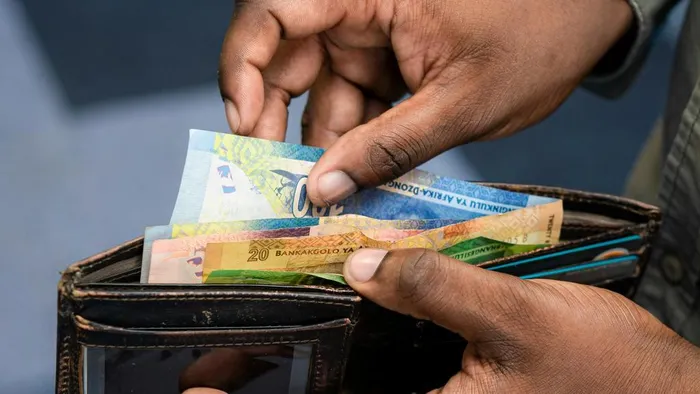
The South African Reserve Bank estimates that 62% of South Africans still rely on cash for daily transactions, PayInc said.
Image: File
Recent data from the PayInc Economic Index indicates a significant rise in South African transactions, climbing from R1.326 trillion in February to R1.475 trillion in March.
“It is evident that the cumulative impact of the tailwinds supporting the economy since 2025 have lifted economic activity,” said Elize Kruger, independent economist.
“These include moderating inflation, real wage increases, interest rate cuts and improved confidence levels.”
Other indicators also pointed to improved activity, as vehicle sales increased by 17.3% year-on-year in March, while new car sales rose by 18.2%, according to Naamsa.
Both the S&P Global South Africa Purchasing Managers’ Index and the Absa Purchasing Managers’ Index have improved, with data pointing to stabilising conditions, although manufacturing – a key economic driver – activity remains in contraction.
However, Kruger cautions that while March’s strong economic performance was encouraging, it was the calm before the storm, as month-to-date data indicates further pressure ahead.
The under-recovery for petrol stood at around R3.20 per litre, while diesel showed a significantly larger under-recovery of R9.61 per litre.
“At least two more months of increases are likely, unless notable progress is made to end the conflict on a meaningful, sustainable basis,” said Kruger.
The impact is already filtering through to the broader economy.
Airlines have introduced fuel surcharges, courier companies have adjusted pricing, and ride-hailing services have increased fares, while agricultural groups have warned of rising food costs.
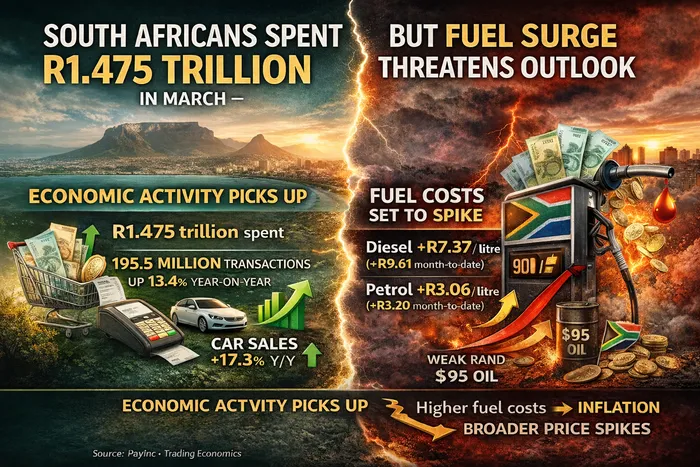
South Africa's economic situation in numbers.
Image: ChatGPT
“It will be impossible for companies to absorb the extent of these projected fuel price increases that will not only cause a spike in consumer inflation but also likely to trigger a widespread upward adjustment in prices across the economy,” said Kruger.
The South African Reserve Bank estimates that 62% of South Africans still rely on cash for daily transactions, PayInc said.
“Cash remains an important payment method in South Africa, despite plans to reduce its dependency in favour of digital transactions,” it added.
“While the economy started the year on a reasonably optimistic footing, the Iran war is now impacting inflation and interest rate expectations and will likely derail South Africa’s fragile economic recovery,” says Kruger.