Debate ignites over Roelf Meyer’s appointment as US ambassador


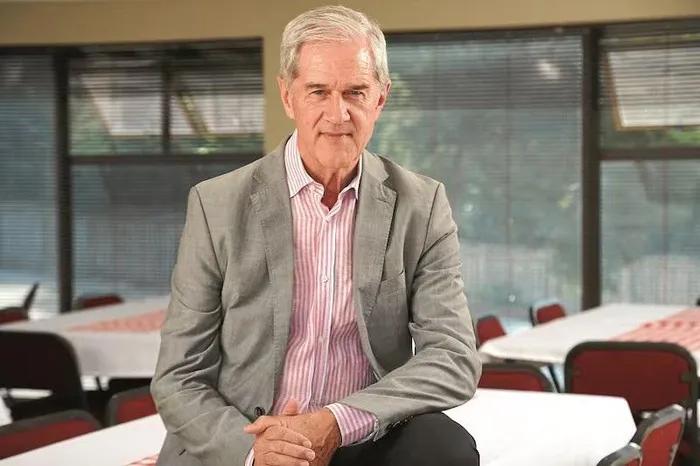
Former apartheid minister Roelf Meyer’s appointment as South Africa's ambassador to the US has sparked debate over his suitability for the role.
Image: FaceBook
The appointment of former apartheid minister Roelf Meyer as South Africa’s ambassador to the US has stirred debate over his suitability for the role.
President Cyril Ramaphosa made the announcement on Tuesday, filling the vacancy left by former ambassador Ebrahim Rasool, who was expelled in March 2025.
Meyer's appointment comes after former finance minister Mcebisi Jonas's credentials were rejected by the US, in May.
It was reported that Jonas had previously blasted Trump's administration, hence his nomination was declined.
“I can confirm that President Cyril Ramaphosa has appointed Mr Roelf Meyer as South Africa’s ambassador to the US,” said presidential spokesperson Vincent Magwenya, noting that Meyer would begin work “immediately following the completion of all protocols in Washington”.
International relations expert, Kingsley Makhubela, voiced concerns about Meyer’s appointment.
“While Meyer’s extensive experience as a negotiator for the National Party is acknowledged, there are valid concerns surrounding both his age and the physical demands of the role,” Makhubela said.
At 78, Meyer is expected to navigate a complex political landscape involving various lobby groups and senators in Washington — a task Makhubela described as “daunting.”
Meyer’s ability to forge meaningful connections, particularly with moderate American voters, has also been questioned.
While the political far right may appreciate the appointment, concerns remain about his engagement with the broader spectrum of American public opinion.
Meyer’s role entails significant sensitivity, especially in light of South Africa’s historically strained relations with the Trump administration.
Meyer brings extensive experience from his previous roles, including serving as chief negotiator for the National Party during South Africa’s transition to democracy, which culminated in the first all-race elections in 1994.
However, his political journey is nuanced.
He co-founded the United Democratic Movement in 1997, a party that struggled to establish a significant foothold in South Africa’s competitive political landscape, before rejoining the ANC in 2006.
Moreover, amid these developments, Ramaphosa recently welcomed US ambassador Brent Bozell, a right-wing media critic, further complicating the diplomatic environment between the two nations.
South Africa, which hosts more than 500 US businesses and a resident population of around 30 000 US citizens, remains the US’s largest trading partner on the African continent, highlighting the vital economic interests at stake.