Western Cape High Court delays cannabis law challenge


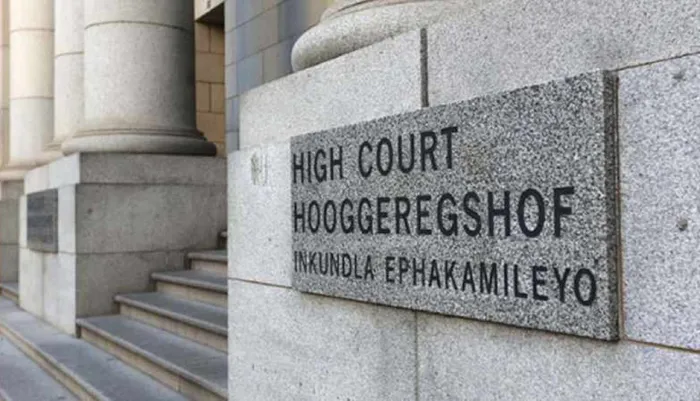
The Western Cape High Court has postponed the cannabis law challenge.
Image: File
An urgent High Court challenge to South Africa’s cannabis laws has been postponed because several ministries failed to file their answering papers.
The application, led by Gareth Prince, the RasTafari Nation Council, and small-scale farmers, seeks relief from ongoing arrests, destruction of cannabis plants, and exclusion of traditional growers from the legal economy. This case is part of a broader constitutional challenge to the Cannabis for Private Purposes Act 7 of 2024 and the Hemp Regulations.
When the matter was called on Tuesday, State respondents, including ministries responsible for policing, trade, and agriculture, told the court they had not filed answering affidavits. They said they needed more time and asked that the case be removed from the urgent roll and placed on the ordinary roll. That move would likely have pushed the hearing to late in the year.
The request was refused by Acting Judge Mnengwana. Instead, the court issued a timetable. The respondents have 20 days to file their affidavits and a further 15 days to submit heads of argument. The matter has been set down for June 8, 2026.
The application highlights a contradiction: despite constitutional protections for private cannabis use and cultivation, the South African Police Service (SAPS) treats practitioners and rural farmers as criminals.
Gareth Prince, the first applicant, contends that the "arrest and detention" of individuals for private cannabis conduct is not only an affront to the right to privacy but a failure of administrative justice. The legal team argues that even if legal intervention is required, authorities are ignoring "less restrictive" measures—such as summons procedures—in favour of heavy-handed detentions that strip citizens of their dignity.
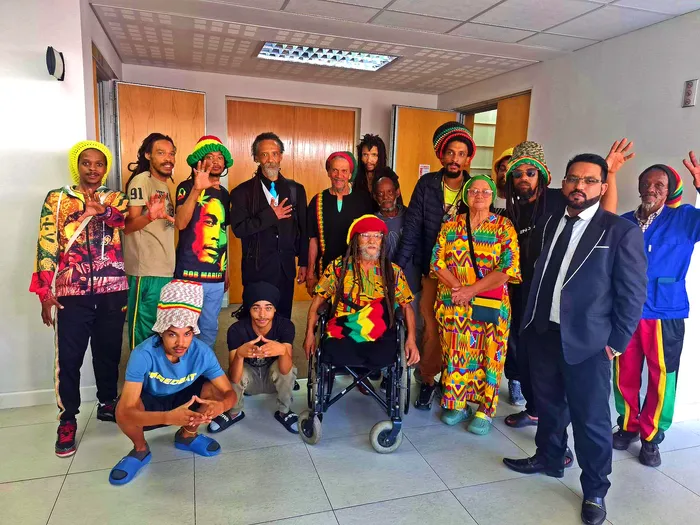
Members of the Ras Tafari community gathered at the High Court in Cape Town where a case was heard on the continued arrest of their members by police for cannabis use and cultivation and the access of small-scale farmers to the cannabis industry.
Image: Hein Scheepers
Beyond the threat of arrest, the application sheds a harsh light on the "arbitrary exclusion" of traditional users from the emerging legal economy. Despite the burgeoning global value of the hemp and cannabis industries, rural cultivators and Rastafari practitioners claim they are being systematically locked out by restrictive regulations.
"The current framework perpetuates structural inequality," the applicants argue, noting that the "emerging legal cannabis economy" seems designed for large-scale corporate entities while leaving historically marginalised communities behind. The third applicants—a collective of small-scale farmers—maintain that the current Hemp Regulations effectively act as a barrier to entry for those who have cultivated the plant for generations as a means of survival.
A particularly emotive point in the filing is the demand for a mandatory order prohibiting state authorities from destroying cannabis plants—referred to by the applicants as "trees"—without prior judicial oversight. For many in the traditional and Rastafari communities, these plants are not merely "crops" or "contraband" but a central part of their religious and cultural identity. The applicants are seeking a declaratory order to prevent what they call the "wanton destruction" of their livelihoods and spiritual sacraments by police.
As the case moves forward, attention will turn to the substance of the legal challenge. For now, the focus remains on whether the state can meet its own procedural obligations in a matter that goes to the heart of rights, regulation, and economic inclusion.