CapeNature warns of intensifying wildfires amid climate change


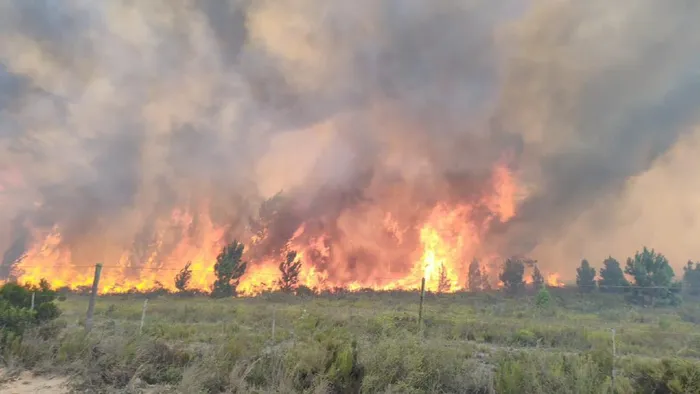
In the Cederberg, fires have damaged unique biodiversity and vegetation that can take years, or even decades, to recover.
Image: Facebook
Wildfires in the Western Cape are becoming more intense and harder to control, with climate change and human activity driving longer and more destructive fire seasons, according to CapeNature.
The warning comes as the agency launches a special emergency series of its Green Noise podcast, offering a frontline look at one of the most challenging fire periods in recent years, including the devastating blaze in the Cederberg Wilderness.
The fire, which started on December 22, 2025 along Uitkyk Pass, burned about 53,000 hectares before it was contained on January 5, 2026. The blaze affected both CapeNature-managed land and adjacent private properties.
At the height of the blaze, firefighters battled multiple active fire lines across steep and inaccessible terrain in areas including Algeria, Driehoek and Kromrivier, underscoring the difficulty of containment.
A written reply to the Western Cape legislature shows that more than 70,000 hectares of CapeNature-managed land had burned by mid-February, already surpassing the total recorded for the entire previous fire season.
Although the fire is no longer active, its impact remains extensive. Several hiking trails, wild camping areas and sites in affected parts of the reserve will remain closed for an extended period while safety assessments, rehabilitation work and ecosystem recovery continue.
The podcast series, released in April, features firsthand accounts from aerial firefighting crews, conservation specialists and climate experts, detailing the scale and complexity of wildfire response, particularly in mountainous terrain.
Firefighting experts in the series stress that aerial support alone cannot extinguish wildfires, highlighting the need for tight coordination between air crews and ground teams to contain and eliminate hotspots.
The episodes also explore the growing strain on firefighting teams, including the physical and mental demands of working in extreme conditions, as well as the environmental and economic toll of fires.
A key theme emerging from the series is the role of climate change in altering fire behaviour.
Monique Ruthenberg, a conservation manager at CapeNature, said fire remains a natural part of fynbos ecosystems, but its intensity and frequency are shifting.
“Fire is a natural and essential part of our fynbos ecosystems, but we are seeing a clear shift in its intensity and frequency. This is increasingly driven by human factors, including greater use of natural areas, expanding settlements, and development near protected areas.
“Human negligence, along with gaps in effective fire mitigation, fuel load management, and co-ordinated response systems, is placing both ecosystems and communities at greater risk.
“In the Western Cape, the 2023 and 2024 floods led to rapid vegetation growth, which, combined with extended hot and dry summer conditions, has created ideal circumstances for severe wildfires,” she said.
World Wildlife Fund South Africa climate specialist James Reeler said changing weather patterns are increasing wildfire risk.
“We are seeing clear signals that climate change is altering fire regimes globally and locally. Warmer temperatures, prolonged dry spells and erratic weather patterns are increasing wildfire risk and extending the duration of fire seasons,” he said.
Beyond firefighting operations, the series also highlights the long-term ecological and human toll.
In the Cederberg, fires have damaged unique biodiversity and vegetation that can take years, or even decades, to recover. Local livelihoods, including farming and small-scale harvesting, have also been affected.