How recycling is creating jobs and opportunities in Khayelitsha


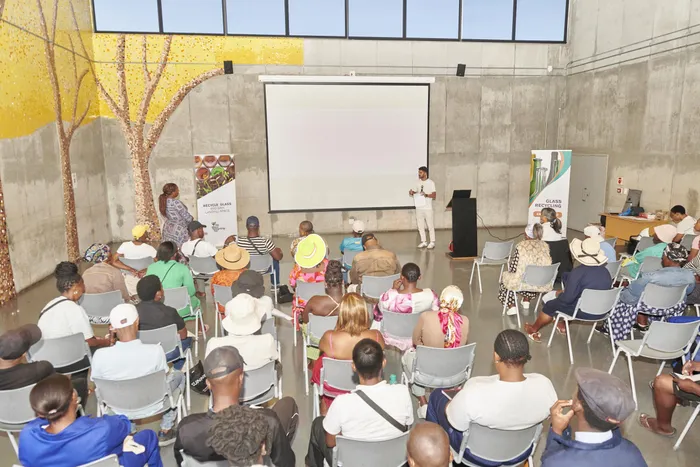
Speaker from the Department of Environmental Affairs and Development Planning (Western Cape).
Image: Supplied
In Khayelitsha, where unemployment is high, recycling has become a vital lifeline. Collectors move through the streets gathering glass, PET, and aluminium, selling it to small buyback centres.
Collectors gather glass, PET, and aluminium to sell at small buyback centres.
The Glass Recycling Company (TGRC) recently hosted a Buyback Centre Bootcamp aimed at strengthening small recycling enterprises and expanding income opportunities within the glass recovery value chain.
Held at the Isivivana Centre, the workshop brought together 65 participants, bringing together buyback centre operators, recycling co-operatives and independent collectors from the Khayelitsha and nearby Philippi areas.
“Collectors and buyback centres are at the heart of South Africa’s glass recycling ecosystem,” said Shabeer Jhetam, chief executive of TGRC, with the workshop focusing on closing the persistent gap in the informal recycling economy.
Training sessions covered business registration, regulatory compliance, financial management, and methods for tracking collection volumes. Attendees were introduced to the “triple bottom line” approach, which balances economic viability with social and environmental impact.
Facilitator Lusanele Mahlutshana spoke about how the programme was aimed at unlocking growth and long-term sustainability in the sector.
“By equipping collectors with business management skills and connecting them with partners, we are helping to create pathways to formalisation and expansion,” Mahlutshana explained.
For John McKerry, founder of Vukusebeze Multipi Recycling, the sector has become a significant source of employment.
McKerry, who entered the industry after being retrenched in 2019, established his company in 2022. It now employs more than 30 people across the Western Cape.
McKerry described the bootcamp as necessary and informative, particularly in exposing gaps in access to support.
"We spoke to different people in the industry," McKerry explains, "Fetola advised on infrastructure and assistance we did not know about. Before that, we mainly knew TGRC, which has helped us get to where we are.”
McKerry said the training has already influenced expansion plans into Philippi.
For Khanyo Stulo of Makhaza Co-op, which began in 2022, the bootcamp has already made a tangible impact on her co-operative, which buys glass, PET, and aluminium from local collectors. ‘Since the training, new waste pickers have joined us,’ Stulo said.”