Debate ignites over Cape Town Stadium's R39.5m subsidy amid rising costs


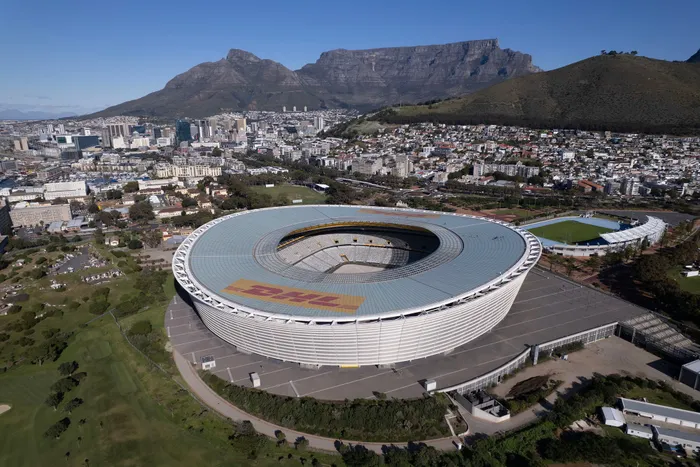
Cape Town Stadium’s R39.5m subsidy sparks debate as tariffs rise.
Image: File
The Cape Town Stadium remains at the centre of a growing debate over public spending, with critics questioning its cost to ratepayers as the City insists the venue is becoming more financially sustainable.
GOOD Party councillor and Stop CoCT founder, Sandra Dickson, said the stadium’s projected “break-even” position masks an ongoing reliance on public funding.
“The Cape Town Stadium’s draft 2026/27 budget projects a break-even position at R123.5 million, yet this figure is only achieved through a R39.5 million City-funded grant,” Dickson said.
“This means the facility’s actual commercial revenue falls significantly short of its operating costs, leaving ratepayers to bridge a structural deficit.”
Speaking in his capacity as a ratepayer and “proud Capetonian”, former Member of Parliament Faiez Jacobs said the issue reflects a broader policy choice.
“Cape Town ratepayers are not just supporting a stadium; they are underwriting a governance choice. When the commercial promise falls short, the public closes the gap,” Jacobs said.
He said the City’s own documents show the stadium is intended to move towards financial independence, yet it continues to rely on operational transfers.
“If the stadium is going to rely on municipal support year after year, then the City must stop treating this as a neutral line item and start treating it as a political decision that competes directly with other urgent needs in a deeply unequal city,” he said.
The City of Cape Town, however, said its financial support for the stadium has declined in recent years due to a “successful commercialisation strategy”.
According to figures provided, the City’s grant to cover operational shortfalls dropped from R33.2 million in 2023/24 to R19.5 million in 2024/25.
Over the same period, the stadium’s revenue increased from R44 million to R71 million, the City said.
Budget documents for 2026/27 show the stadium is expected to generate total revenue of R123.5 million, including R39.5 million in City grant funding, with total expenditure projected at the same level.
Revenue is derived from multiple streams, including rental of facilities, events and commercial activities.
Rental from fixed assets is budgeted at R57.2 million for 2026/27.
On the expenditure side, employee-related costs are budgeted at approximately R11.5 million, while repairs and maintenance of the facility are projected at just over R30 million for the 2026/27 financial year.
The City said these grants are used to cover the gap between income and expenditure, ensuring the facility is maintained and remains fully operational.
“The overall value to Cape Town extends well beyond the entity’s revenue figures,” the City said, describing the stadium as a key economic catalyst that supports tourism, attracts major events, and contributes to job creation.
“It is one of the more sustainable and successful stadiums in the world and a true asset to Cape Town.”
Dickson argued that the subsidy is difficult to justify in the current economic climate.
“It can be argued that this ongoing subsidy is difficult to justify alongside rising municipal tariffs for electricity and water,” she said.
“From this perspective, using public funds to support a professional sports venue during a cost-of-living crisis represents a misprioritisation of resources.”
She said those funds could instead be directed towards essential infrastructure or service delivery relief.
At the same time, she acknowledged that supporters of the stadium view the funding differently.
“It can be argued that the facility serves as a critical anchor for the Western Cape’s tourism and event economy,” she said.
“These events fill hotels, support the hospitality sector, and create jobs, providing a return on investment that may outweigh the direct cost of the municipal grant.”