Die Kraal Sports Grounds reopen to revive community spirit in Paarl


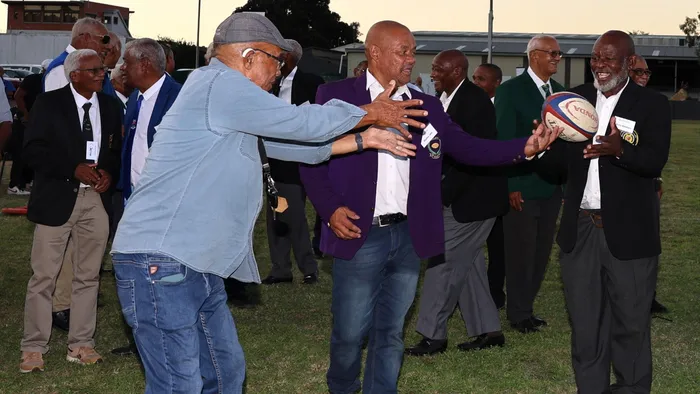
Die Kraal lives again as generations reunite and young players take to the historic Paarl fields.
Image: Supplied
For decades, it lay quiet, its grass no longer worn by boots but by time. This week, however, Die Kraal found its voice again as former players returned to the very fields where their stories began, and a new generation stepped onto ground that never forgot them.
With a sense of nostalgia and pride, Drakenstein Municipality officially reopened the historic Die Kraal Sports Grounds in Paarl on Tuesday, marking a major milestone in a multi-phase restoration project aimed at reviving one of the region’s most treasured community spaces.
For many who gathered, the moment felt less like a ceremony and more like a homecoming.
Established in 1923 on land made available to the local community, Die Kraal became a cornerstone of sporting and cultural life for the Coloured community in Paarl and Wellington. On its fields, generations of players built rivalries, forged friendships and created memories that endured long after the final whistle.
Even during apartheid, when access to facilities and spectatorship were shaped by segregation laws, the spirit of the game remained a unifying force. Families, teammates and supporters were divided physically, but connected through a shared love of sport. Grounds like Die Kraal formed part of a wider network of community spaces where identity and belonging were built despite exclusion.
At its peak, Die Kraal was more than a rugby venue. It was a gathering place, hosting netball, cricket, athletics, choir performances, minstrel events and community celebrations. Saturdays brought packed sidelines and a sense of belonging that extended far beyond the pitch.
But by the 1980s, the once-vibrant grounds fell silent.
Like many community facilities across the Western Cape, its decline is widely seen to have left a gap in the social fabric, particularly for young people who lost access to structured spaces for sport and connection.
That silence lingered for decades until this week, when laughter, storytelling and the sound of children playing returned to the fields.
Among those present were former rugby players and community figures who had helped shape Die Kraal’s legacy. For many, standing on the restored grounds stirred powerful memories.
“It warms my heart to stand here today. Everyone sitting here has stories about Die Kraal, and later on, we will be talking for a long time,” said former rugby player Randy “Yster” Marinus.
The reopening, following an investment of R19.5 million, has restored key facilities including rugby fields, lighting, irrigation systems and spectator infrastructure. The project forms part of a broader long-term vision to develop a modern, inclusive multi-sport precinct.
Deputy president of the South African Rugby Union, Francois Davids, described the project as more than bricks and grass.
“This is not just an infrastructure project, but an investment in people, youth development and the future of South African rugby,” he said.
In communities where opportunities are often limited, access to sporting facilities is widely regarded as a key tool for youth development, offering structure, mentorship and pathways to opportunity.
That future was visible in the day’s most symbolic moment, the first match played on the newly restored fields. School teams from Ebenezer Primary and Paulus Joubert Primary took to the pitch, their energy signalling a new chapter for a space long defined by its past.
For older generations watching from the sidelines, it was a powerful full-circle moment.
Where once they had played, often under difficult circumstances, a new generation now ran freely across the same ground, reclaiming it as their own.
Executive Mayor Stephen Korabie said the reopening was about honouring the past while creating opportunity for the future.
“What you see here is not just development. It is restoration. It is respect for those who came before us, and responsibility toward those who will come after us,” he said.
Even the name, shaped through community consultation, reflects a reclaiming of identity and pride, reinforcing the sense that Die Kraal belongs to those who built its legacy.
The municipality said it will continue working with local clubs, former athletes and residents to ensure the precinct remains rooted in community ownership.