Cape Town's new manufacturing policy aims to boost jobs across 33 industrial hubs


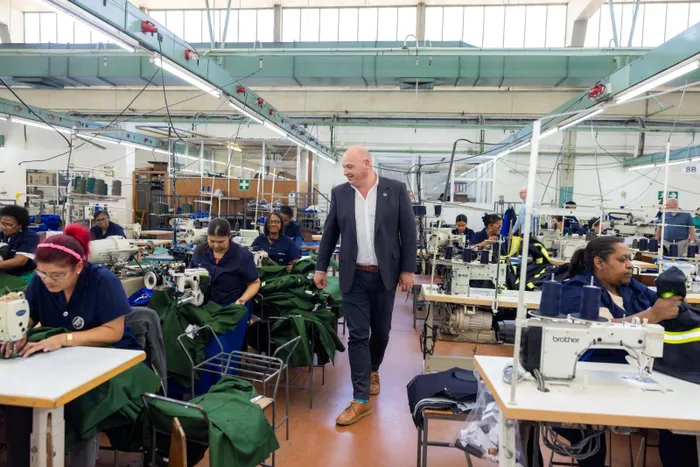
Cape Town expands manufacturing support to 33 industrial hubs, aiming to boost investment and jobs across the metro.
Image: Supplied
The City Cape Town is ramping up efforts to drive jobs and investment, with the City Council approving a new Manufacturing Support Policy aimed at unlocking growth across 33 industrial areas as the sector faces mounting national pressure.
The move marks a significant expansion of the City’s 2018 Investment Incentives Policy, which focused on just six areas, and signals a shift towards a more facilitation-driven approach to attracting investment.
Mayoral Committee Member for Economic Growth, James Vos, said the policy arrives at a critical moment as the City looks to deepen trade ties and attract new investment.
“The new Manufacturing Support Policy not only expands its focus to 33 areas around Cape Town, but is also simpler to administer and implement. It is also arriving at an especially critical time for our manufacturing industry,” Vos said.
Manufacturing remains one of Cape Town’s largest job-creating sectors, supporting employment across skill levels and linking closely with industries such as logistics, warehousing and technology.
The policy retains financial incentives, including measures to fast-track development applications, but places greater emphasis on non-financial support such as reducing red tape and improving investment facilitation, an approach increasingly favoured by businesses.
The City argues this model has already delivered results in other sectors, particularly business process outsourcing, where investment has translated into large-scale job creation across communities such as Mitchells Plain and Khayelitsha.
In that sector, tens of thousands of Capetonians are employed servicing both international and domestic clients, with jobs often reaching beyond traditional commercial hubs into lower-income communities.
Officials have increasingly pointed to this approach as a blueprint for spreading economic activity more evenly across the metro, a principle now underpinning the expansion to 33 industrial areas.
Vos linked the latest policy to wider investment momentum, including projects announced by Cyril Ramaphosa at the South African Investment Conference.
“These investments stem, in part, from ongoing engagements by the City. In these engagements, my officials and I cited our policies as mechanisms that pave the way for major investments that are a significant source of the 470 000 jobs added over the current local government term,” he said.
However, the success of the policy will depend on whether it can translate into real investment amid ongoing challenges facing manufacturers, including energy costs, logistics constraints and weak national growth.
The City has positioned itself as a relatively stable and business-friendly metro, citing infrastructure reliability, governance and energy resilience among its key advantages.
Implementation will begin following Council approval, with the City set to engage stakeholders to roll out the support measures across the targeted areas.