Mental health crisis: Over 300 state patients languish in correctional facilities


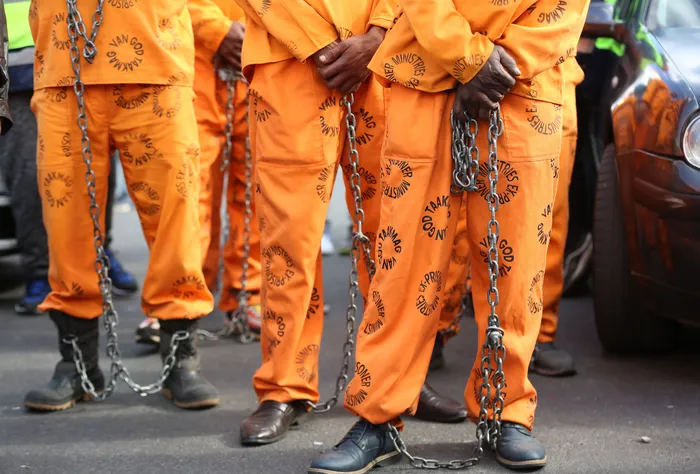
The Correctional Services Committee says delays in placing declared state patients in mental health institutions pose a human-rights risk and require urgent action from several government departments.
Image: Bheki Radebe
Concerns have been raised regarding the 309 declared state patients held in South African correctional facilities, who are awaiting placement in health institutions as of February 28.
The Portfolio Committee on Correctional Services warns that these delays pose human-rights risks and are straining both correctional and public health systems.
This follows a briefing from the Department of Health on the legislative framework for the admission, treatment, review, and reintegration of these patients.
Committee chairperson Kgomotso Ramolobeng said members had noted the department’s outline of the legal and institutional processes involved, but remained concerned about ongoing challenges affecting the system.
These include capacity constraints at designated mental health facilities, delays in periodic reviews and poor coordination between the criminal justice system and health services.
Ramolobeng said declared state patients represented a particularly vulnerable group whose rights had to be protected while also ensuring public safety.
“The committee is encouraged by the department’s commitment to strengthening systems but remains concerned about the pace at which some of these longstanding challenges are being addressed,” she said.
Members of the committee also raised concerns about overcrowding in mental health institutions, the adequacy of rehabilitation programmes, and the need for stronger collaboration between the departments of Health, Justice and Constitutional Development, and Correctional Services.
Ramolobeng said the number of declared state patients had been increasing steadily over the past few years.
“We have seen the number of declared state patients increase steadily over the last few years,” Ms Ramolobeng said.
The committee was also told that this trend was being worsened by courts increasingly declaring individuals convicted of relatively minor offences as state patients.
According to the briefing, South Africa currently has 14 designated health facilities with the capacity to admit state patients, but none are located in Mpumalanga.
The committee also heard that the country has approximately 942 psychiatrists, about 75% of whom are employed in the private sector, while the majority of patients depend on public healthcare services.
It said the equitable distribution of resources between the private and public sectors remained central to addressing the challenge, particularly in line with the principles of universal health coverage.
In the interim, the Department of Health said it was implementing interventions through its Human Resources for Health Strategy to address shortages of psychiatrists and other members of the multidisciplinary team.
The committee has now called for quarterly progress reports on efforts to transfer declared state patients from correctional centres to suitable health facilities.
Ramolobeng said the committee wanted to see practical steps being taken to reduce the growing backlog.
“We want to understand what is being done to mitigate the current crisis and to facilitate the transition of state patients to mental health facilities. We expect to see clear plans, measurable outcomes and tangible progress. If no action is taken, the numbers will continue to rise, as we have already seen,” she said.
The committee noted that the 309 declared state patients awaiting placement in health institutions marked a sharp increase from the 186 recorded in the 2019/20 financial year.
Ramolobeng said the committee was of the view that the current situation posed a possible human-rights risk.
She said keeping individuals who had been declared mentally unfit in correctional environments, often for periods longer than their sentences, undermined the spirit of the Constitutional Court’s De Vos judgment and the Mental Health Care Act.