What the Western Cape High Court's ruling means for the Mowbray Muslim Cemetery"


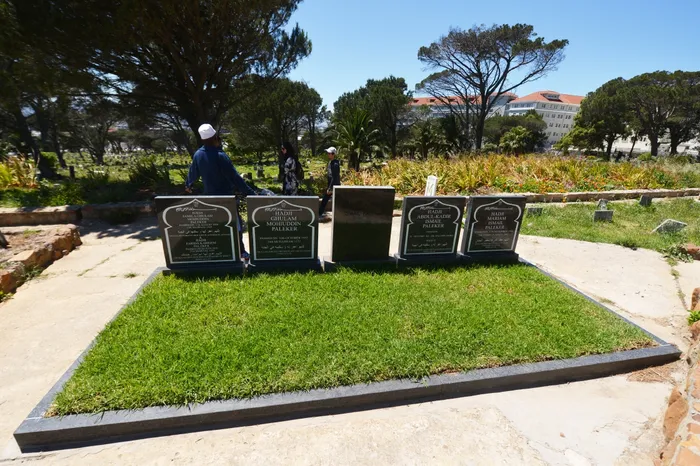
The Western Cape High Court issued a ruling that protects the Mowbray Muslim Cemetery from a mortuary construction on the premises.
Image: File
The Western Cape High Court has issued a final interdict that halts any further plans to construct a mortuary at the historic Mowbray Muslim Cemetery.
Judge Gayaat Da Silva Salie issued the order restraining the Muslim Cemetery Board from constructing, completing, operating, or maintaining any mortuary facility on the property.
The order followed an application by Dr Tolgah Bassier, who challenged the conduct of the Board, which administers the cemetery.
The cemetery has historically been administered as a communal religious institution, associated with the burial of members of the Muslim community in accordance with Islamic rites, including the ritual washing of the deceased (ghusl) and burial in a burial shroud known as “kafan”.
The property bears the characteristics of an endowment (waqf) and is dedicated to a defined religious purpose.
“The characterisation of the property as a waqf carries with it important legal consequences. Those who administer the cemetery do so not as owners, but as custodians or mutawallis (trustees), entrusted with preserving the property and ensuring that it is applied strictly in accordance with the purpose for which it was dedicated,” the judge noted.
Judge Da Silva Salie added that any deviation from, or expansion beyond, the defined purpose of burial is inconsistent with that custodial role.
The Board relied on an amended Constitution adopted in 2020 and argued that the mortuary is a logistical support measure for burial and not a change of purpose.
The mortuary is an infrastructure improvement for which approval is vested in the Board, it told the court.
The Board further argued that the mortuary constitutes a facility ancillary or complementary to burial and that it serves the needs of the Muslim community in facilitating dignified burial practices.
Judge Da Silva Salie did not agree. “I find this contention problematic. Whilst certain preparatory acts may be closely connected to burial, the concept of what is ‘ancillary’ cannot be extended without limit.”
The newly elected body shall determine the future of the existing structure, provided that any use is consistent with the purpose of the cemetery as a burial place, the judge ordered.