City of Cape Town's R6.8bn safety budget faces scrutiny


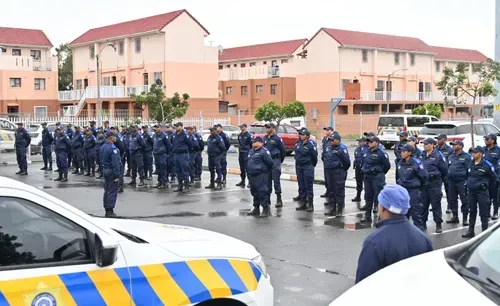
Cape Town’s draft 2026/27 budget proposes a record R6.8bn for safety and security, drawing criticism from opposition parties over priorities and affordability.
Image: Ayanda Ndamane/Independent Newspapers
The City’s safety and security directorate has emerged as a major focus of Cape Town’s 2026/27 budget, with a record R6.8 billion allocation eliciting strong reaction from opposition parties, including criticism of what has been described as a “militarised” approach to safety.
The spending forms part of the City’s broader “City of Hope” budget, which includes a R40 billion three-year infrastructure programme and positions safety as a key pillar of service delivery and economic growth.
“We are building a city of hope for all,” said Mayor Geordin Hill-Lewis.
At the centre of the plan is infrastructure-led growth, with the City projecting around 130 000 construction-related jobs over the current term.
According to the City, the R6.8bn allocation for 2026/27 is its largest safety and security budget to date.
Mayoral committee member for safety and security JP Smith said the funding is largely operational and supports a broad range of services beyond crime prevention, including fire and rescue, disaster management and emergency coordination.
“The proposed budget needs to cover all these departments, and only a section of the budget will be attributed to crime prevention functions,” Smith said.
He added that the City has expanded its enforcement workforce by more than 1 300 officers in recent years, with spending also directed at infrastructure and technology such as CCTV, drones and facility upgrades. Deployment and investment decisions, he said, are guided by crime data, with resources prioritised in high-risk communities.
However, GOOD Party councillor Sandra Dickson criticised what she described as a “militarised” approach to safety, arguing that the focus on technology does not adequately address crime in affected communities.
“We remain deeply concerned by the ‘militarised’ approach to safety,” Dickson said.
She also questioned the City’s infrastructure claims and warned that large budgets risk being ineffective if not fully spent.
ANC spokesperson Sifiso Mtsweni said the budget does not sufficiently address inequality and the needs of poorer residents.
“Any budget must fundamentally respond to the lived realities of the majority of residents,” Mtsweni said.
He said safety and infrastructure spending should be more strongly targeted at historically underserved communities, where crime and service delivery challenges remain most severe, and raised concern about the impact of tariff increases on struggling households.
Despite the focus on safety and service delivery, the budget includes tariff increases that could affect households. Electricity tariffs are set to rise by an average of 6.67%, while water and sanitation tariffs will increase by 4.5%. Refuse collection and city-wide cleaning charges will rise by 3.75%, according to the draft budget.
City officials said the increases are necessary to sustain infrastructure investment and maintain services, particularly in fast-growing areas. Measures to soften the impact include raising the rates-free threshold to R500,000 and expanding relief for pensioners and qualifying households.
Dickson said the budget places an “unsustainable financial burden” on working and middle-class households, particularly those who are “asset-rich but cash-poor”.
Mtsweni said the ANC would instead prioritise a more pro-poor, people-centred approach, including increased investment in basic services, job creation and indigent support.
The draft budget is now open for public comment from March 31 to April 30, giving residents, businesses and civic groups an opportunity to weigh in.