SANDF hits the Cape Flats to tackle crime


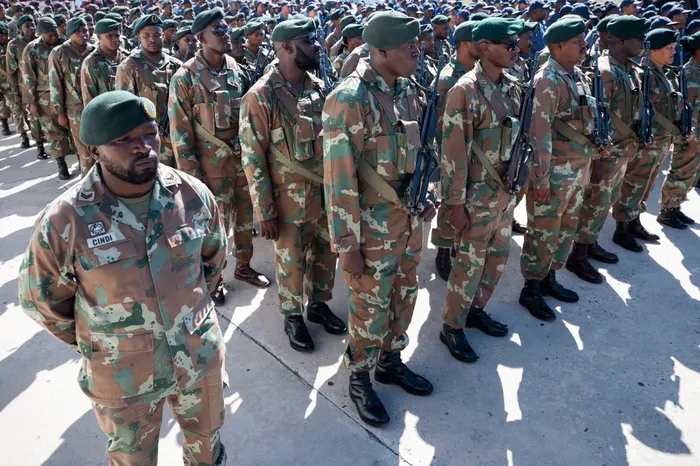
Operation Prosper will target gang violence, extortion, taxi-related conflict, and the proliferation of illegal firearms, with officials emphasising an intelligence-driven approach to dismantle organised crime networks.
Image: Armand Hough/Independent Newspapers
A large-scale security deployment will commence on the Cape Flats on Wednesday, as the South African National Defence Force (SANDF) set to support the South African Police Service (SAPS) in intensified crime prevention efforts.
This follows a joint operational parade at 35 Squadron in Belhar on Tuesday, where SAPS, SANDF, and City of Cape Town officials confirmed their readiness under Operation Prosper.
The intervention comes as communities on the Cape Flats continue to face gang-related shootings, extortion and turf conflicts. These challenges have added to pressure on policing resources and prompted renewed calls for stronger national intervention, particularly in identified high-risk areas and priority policing zones.
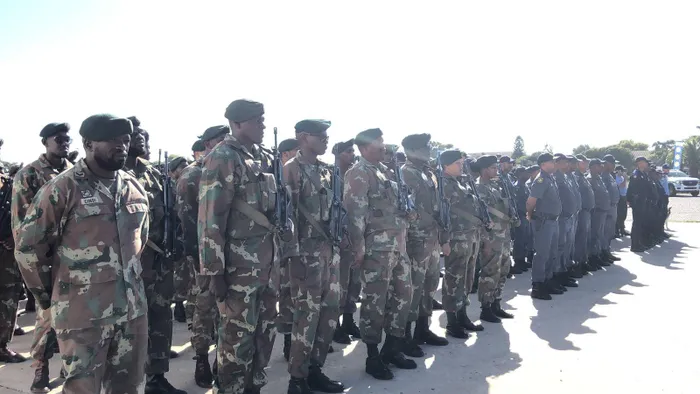
SANDF and SAPS members line up at the parade, held at 35 Squadron, which formed part of final readiness preparations under Operation Prosper.
Image: Lilita Gcwabe
Deputy National Police Commissioner Lieutenant-General Tebello Mosikili said the parade marked a key milestone ahead of deployment.
“This parade marks a critical milestone in ensuring the safety and security of our people in the Western Cape and in the country,” he said.
“The purpose of this gathering is to confirm that we are prepared, united in purpose, and strategically aligned for this joint effort.”
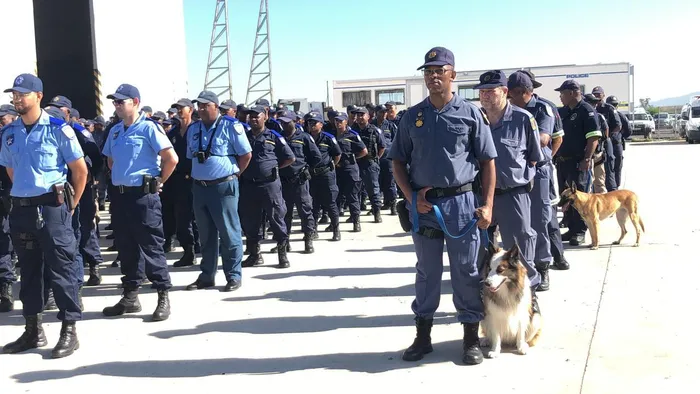
The initiative will see SANDF members deployed to support the SAPS in crime prevention efforts, particularly in gang-affected areas such as the Cape Flats.
Image: Lilita Gcwabe
Mosikili confirmed SANDF members will begin deploying from Wednesday, supporting SAPS efforts to stabilise crime-affected communities across the Cape Flats.
The parade also marked the official commencement of Operation Prosper, with authorities outlining plans for joint patrols, roadblocks and targeted interventions in identified high-risk areas. Officials said operations would be coordinated through joint command structures, with intelligence guiding deployments to specific hotspots where crime patterns have been identified.
SANDF members are expected to support visible patrols, perimeter control and joint operations, while remaining under SAPS command structures.
The operation will focus on gang violence, extortion, taxi-related conflict and the proliferation of illegal firearms. Authorities said the approach would prioritise disrupting organised crime networks and addressing violent and firearm-related offences that continue to threaten community safety and stability.
“Operation Prosper is grounded in the principle that safety is a shared responsibility,” Mosikili said.
Among those in attendance were Western Cape MEC for Police Oversight and Community Safety Anroux Marais, Member of Parliament Dereleen James, Provincial Commissioner Lieutenant-General Thembisile Patekile, SANDF Brigadier General Martin Gopane and City of Cape Town Acting Commissioner Christopher Jones.
Marais’s presence signalled provincial support for the intervention, amid ongoing tensions between provincial and national authorities over policing resources and crime strategy in the Western Cape.
The use of the SANDF in crime hotspots is not new. Previous deployments in the Cape Flats have been associated with short-term stabilisation through increased visibility and patrols, but have also highlighted the difficulty of sustaining long-term safety without broader social and policing interventions aimed at addressing the root causes of crime.
Authorities said the latest deployment is intended to bolster SAPS capacity in high-crime areas, where resources are often stretched. The addition of SANDF members is expected to enhance visibility on the ground, assist with patrols and support coordinated operations, while allowing police to focus more on investigations and targeted enforcement.
Officials also indicated that the success of the intervention would depend on close coordination between agencies, including information-sharing and integrated planning to ensure resources are deployed effectively.
Authorities appealed to residents to cooperate with deployed forces, stressing that community support would be key to the operation’s success.
“We request communities to welcome with open arms the members who are here to protect and serve you,” a law enforcement official said.
“It is a resolve we have made that our communities must be safe. We don’t plan to fail, we plan to succeed.”
Provincial Community Police Forum board chairperson Francina Lukas welcomed the deployment but cautioned that it should not be seen as a long-term solution to deeply rooted crime challenges.
“This deployment of the army must go hand in hand with long-term community-led safety initiatives, because while it is necessary, it is not the only solution,” Lukas said.
While some residents have welcomed the increased security presence as a necessary intervention, others remain cautious, pointing to past deployments that delivered only temporary relief before violence resurfaced. Community leaders have stressed that building trust between residents and law enforcement will be critical to ensuring the intervention has a lasting impact.
Analysts and community leaders have long argued that enforcement alone cannot resolve entrenched crime patterns without parallel investment in social development, youth programmes and economic opportunities.