Local airlines and ACSA confirm stable fuel supply amid Middle East tensions


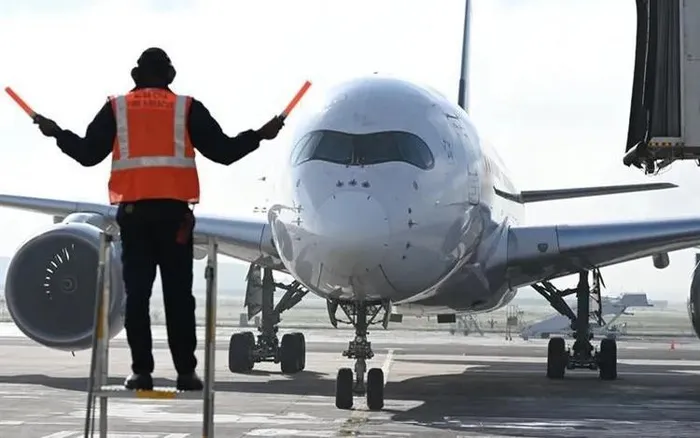
Airline companies have confirmed they have a stable supply of jet fuel.
Image: File
Finance Minister Enoch Godongwana has taken steps to mitigate the socio-economic impact of rising fuel prices by implementing a temporary reduction in the general fuel levy, airline companies have said they have a stable jet fuel supply but are still monitoring the Middle East situation.
Godongwana said that the escalation of conflict in the Middle East has materially increased risks to global energy markets, placing significant upward pressure on domestic fuel prices.
Consultations held between the National Treasury and the Department of Mineral and Petroleum Resources led them to explore measures to provide short-term relief for consumers.
The key relief proposals outlined are: a temporary reduction in the general fuel levy and addressing fuel security, and the Minister of Mineral and Petroleum Resources will continue work to review fuel pricing over the medium term.
On Friday, Sasol also announced that it was impacted by the conflict.
“We are closely monitoring the evolving geopolitical situation in the Middle East and have measures in place to manage potential impacts on our people, operations, and supply chains to the extent possible.
“We continue to support South Africa’s energy security by contributing to reliable fuel and chemical supply, underscoring our strategic importance to the country,” Sasol said.
Sasol explained that it currently supplies approximately 30% of South Africa’s domestic fuels market through their Secunda Operations and the National Petroleum Refiners of South Africa (Natref) refinery.
“We remain focused on maintaining operational stability and meeting customer commitments, while actively managing risks across our value chains. We currently have sufficient fuel inventory to meet committed supply obligations across all grades, supported by stable Secunda Operations with continuous coal feedstock supply.
“At the Natref refinery, a blend of sweet and sour crude is processed. The availability of sour crude from the Middle East has been impacted; however, we have successfully implemented measures to source sour crude from alternative regions outside the Persian Gulf,” Sasol said.
It said that it was also working with the government for access to SA's crude reserves, should it be required, adding that it will continue to monitor the situation and provide updates.
Airlines have also been affected by the Middle East conflict, with the South African Airways (SAA) and FlySafair having announced that they are closely monitoring developments in the Middle East and their potential impact on global jet fuel supply.
Airports Company South Africa (ACSA) Group Spokesperson, Ofentse Dijoe, confirmed on Tuesday that their airport network has sufficient Jet A1 Fuel stocks.
“Fuel suppliers responsible for maintaining jet fuel stocks at the airports have informed us that they will ensure they can fulfil their commitments to customers.”
SAA’s Executive Corporate Affairs, Mphilo Dlamini, said: “At present, our fuel suppliers across all our operating stations have not indicated any immediate shortages in jet fuel supply.
“Suppliers have advised that they are closely monitoring the evolving situation in the Middle East and its potential impact on global fuel availability. We remain in continuous engagement with them and will be promptly informed should any supply risks emerge,” Dlamini said.
“At this stage, we do not anticipate widespread flight delays due to fuel availability. We will continue to closely monitor developments and will provide updates should there be any material changes to the supply situation or operational outlook.”
South African Airways.
Image: Henk Kruger / Independent Newspapers
FlySafair said there is no indication of jet fuel shortages from its suppliers, and referred to its previous statement. The airline’s spokesperson, Kirby Gordon, had previously explained that fuel typically makes up 50–55% of FlySafair's direct operating costs.
“At current price levels, the airline estimates an additional cost of around R35,000 per flight hour for each Boeing 737-800 aircraft in operation. FlySafair has absorbed these increases since the crisis began, but this is simply not sustainable without threatening the long-term viability of affordable air travel in South Africa.”
Gordon had said that with no clear end in sight to the increases in Jet A1 Fuel prices at South African coastal airports, “the airline has reached the point where it must pass on a portion of these costs to ensure the long-term sustainability of the airline and its low-fare offering”.
“The airline is now moving to introduce a temporary fuel surcharge: a measure the airline has resisted throughout its history. The surcharge takes effect from 12 March 2026 and will apply only to flights departing on or before 12 May 2026, reflecting the airline's hope that this is a short-term crisis requiring a short-term response.
“We will be specifically itemising this temporary dynamic fuel surcharge on all tickets to ensure fairness and transparency to our customers,” Gordon said.
Surcharges will vary by route length to reflect the actual fuel consumption required per journey.
“Our teams are modelling fuel prices airport by airport and reviewing potential tankering strategies to ensure the surcharge reflects the minimum required amount,” Gordon added. “This is not a profit mechanism, it’s a measure to maintain service continuity while being upfront with customers.”