How rising prices and supply issues are impacting daily life


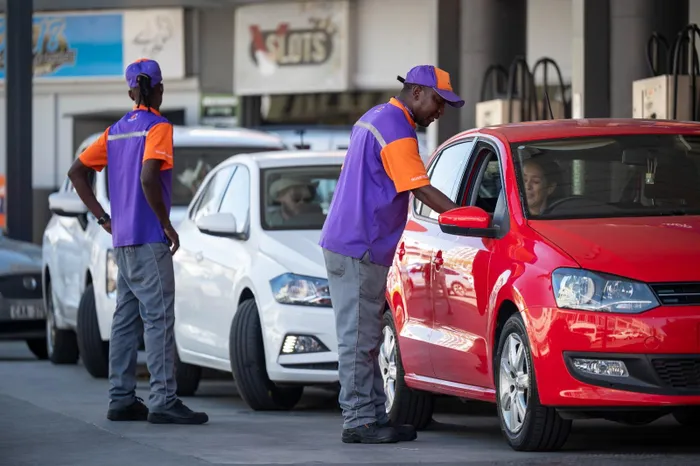
Motorists queue to fill up as fuel demand surges ahead of sharp price hikes.
Image: Armand Hough/ Independent Media
Fuel supply pressures are beginning to affect daily life in Cape Town, with the City of Cape Town confirming temporary restrictions at waste drop-off facilities due to contractor fuel constraints.
The development comes as Finance Minister Enoch Godongwana announced a R3 cut to the fuel levy, effective today, to mitigate the socio-economic impact of rising fuel prices on motorists.
The levy cut follows official fuel price adjustments that came into effect at midnight, with petrol increasing by R3.06 per litre and diesel rising by more than R7 per litre, among the steepest hikes on record. The increases follow a surge in global oil prices and a weaker rand, which have pushed up the cost of fuel imports.
The price hike triggered a rush among motorists and businesses to fill up ahead of the adjustment, placing pressure on the fuel distribution system.
For many motorists, the impact is already being felt at the petrol pump.
Motorists in various parts of the city say they are struggling to find fuel or are being limited in how much they can buy.
“20L rations or zilsch here in Milnerton,” one resident said.
In the Southern Suburbs, another motorist reported that “multiple stations either have nothing, or only petrol or only diesel”.
A motorist in Somerset West said they had struggled to find fuel after running out: “I ran out of petrol yesterday and could not find one gas station that has petrol.”
Similar reports have emerged from the Northern Suburbs, Winelands and other parts of the Western Cape.
The City said its Urban Waste Management Directorate had introduced interim measures affecting garden waste disposal at Community Recycling Centres after a contractor experienced fuel-related challenges.
The measures, which came into effect on Saturday, March 28, require businesses to dispose of garden waste only at Coastal Park and Tygerdal facilities until further notice. Residents may continue using all sites but are limited to one load per day.
“The City acknowledges the inconvenience these temporary measures may cause and appreciates the cooperation of residents and businesses as efforts continue to manage the situation and maintain service continuity,” it said.
The disruption comes as a surge in demand ahead of the price increase placed strain on South Africa’s fuel distribution network, with media reports indicating that more than 140 service stations were without diesel and over 130 without petrol earlier this week.
The disruptions are believed to be driven largely by pre-hike demand rather than a fundamental shortage, as motorists and businesses rushed to fill up in anticipation of sharp price increases.
This placed pressure on storage depots and tanker delivery schedules, leaving some stations temporarily without stock while awaiting deliveries.
Diesel supply appeared to be under the most pressure, reflecting increased demand from freight, agriculture and other fuel-intensive sectors.
Economist Dawie Roodt said the steep hike was unlikely to be the last.
Roodt, of Efficient Group, said if global oil prices and the rand continue on this trajectory, further increases could be on the table in May.
"This is an average over under-recovery," he said.
"The real increase in the oil price happened over the past two weeks or so.
"If prices stay at the current level, there could be another increase in May, because the average for the coming month will be higher than it is at the moment."
For households, the concern is not only availability but cost, with higher fuel prices expected to push up transport expenses and the price of basic goods.
Recent data shows electricity and transport costs already consume more than half of an average worker’s wage, with transport alone estimated at around R1 760 per month, a figure expected to rise further following the latest fuel increase.
Stop CoCT founder Sandra Dickson said motorists were already feeling the strain.
“Motorists are queuing at many petrol stations and there are reports from Stop CoCT members that some petrol stations have run dry,” she said.
There has been no official announcement of fuel rationing in South Africa, and authorities maintain that fuel supply remains available nationally.